
Legal hemp edibles have quickly become a favorite wellness choice for american adults in California who want relaxation without legal worries. With over 60% of cannabis consumers still confused about the difference between hemp-derived and marijuana products, understanding what makes Delta 9 THC edibles compliant with both state and federal laws is essential. This guide unpacks how proper sourcing, precise dosing and new technologies help ensure your wellness routine is safe, fast-acting and fully aligned with trusted standards.
| Point | Details |
|---|---|
| Legal Distinction | Hemp edibles must contain less than 0.3% Delta 9 THC to be federally legal. Mislabeling and analytical testing issues complicate consumer understanding. |
| Types of Edibles | Hemp edibles vary significantly, including THC-infused, CBD and hybrid types. Each type offers different effects, dosing and consumption methods. |
| Regulatory Landscape | The legal status of hemp edibles is governed by complex federal and state regulations; understanding local laws is crucial for compliance. |
| Safety and Compliance | Rigorous testing for THC levels and contaminants is essential for safety. Consumers should prioritize lab-tested products and proper storage. |
Hemp-derived edibles represent a nuanced category of legal cannabis products that often confuse consumers due to complex regulatory landscapes. These products contain federally legal quantities of Delta 9 THC, specifically derived from hemp plants with less than 0.3% THC concentration, making them distinct from traditional marijuana products.
Understanding the legal distinctions requires recognizing that not all cannabis products are equivalent. Analytical testing challenges persist in distinguishing hemp from marijuana, with many products potentially mislabeled regarding their actual chemical composition. The National Institute of Justice highlights that precise measurement of THC levels remains complex, creating significant uncertainty for consumers navigating this emerging market.
Common misconceptions about hemp edibles typically revolve around three key areas:
Consumers must understand that legal hemp edibles are scientifically defined products, not simply unregulated cannabis alternatives. Reputable manufacturers like Edwin’s Edibles & Elixirs utilize rigorous third-party testing to ensure compliance with federal regulations and provide transparent product information.
Pro Consumer Safety Tip: Always request and review comprehensive lab testing results before purchasing any hemp-derived edible to confirm legal THC levels and product purity.
Hemp-derived edibles represent a diverse category of cannabis products that offer consumers multiple consumption options beyond traditional smoking methods. Comprehensive research comparing various cannabis edible forms reveals significant variations in product types, including gummies, chocolates, beverages, baked goods and supplements, each presenting unique characteristics and potential effects.
The primary types of hemp edibles can be categorized based on their primary active compounds and intended use:
Key differences between hemp edible types extend beyond chemical composition to include absorption rates, onset times and duration of effects. Gummies and chocolates typically have slower metabolization compared to fast-acting liquid beverages, which can provide more immediate cannabinoid delivery. Baked goods often present longer-lasting effects due to their complex molecular interactions with digestive systems.
Manufacturers like Edwin’s Edibles & Elixirs carefully formulate products to ensure consistent dosing, flavor profiles and targeted experiences. By understanding these nuanced differences, consumers can select edibles that best match their wellness goals and personal preferences.
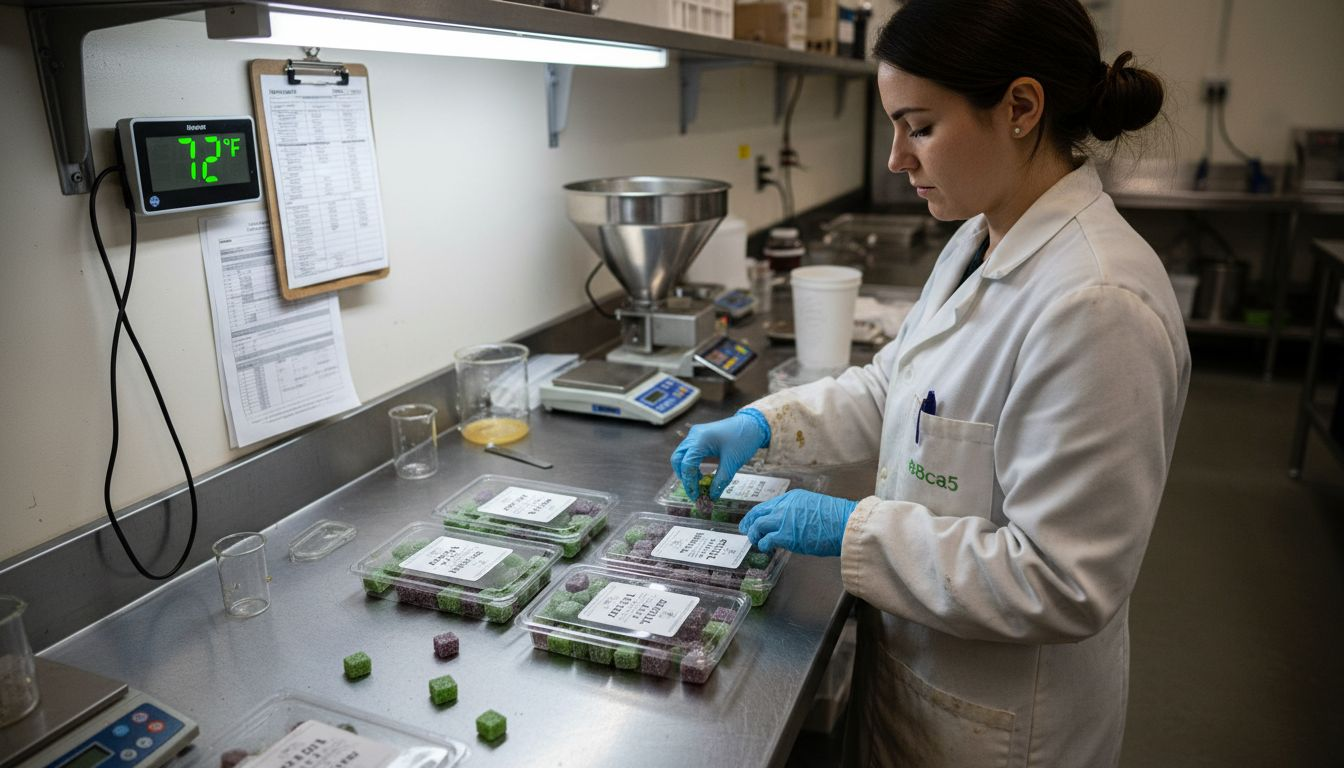
Here is a comparison of major hemp edible types and their primary benefits:
| Edible Type | Main Compound | Typical Effects | Recommended Use Case |
|---|---|---|---|
| Gummies | Delta 9 THC | Mild psychoactivity | Recreational, relaxation |
| Chocolates | Mix (THC/CBD) | Slow, lasting relief | Stress relief, sustained effects |
| Beverages | Fast-acting THC | Quick onset | Immediate wellness or calm |
| Baked Goods | THC/CBD hybrid | Long-acting benefits | Extended relief, sleep support |
| Supplements | Broad-spectrum CBD | Non-intoxicating | General wellness, daily routine |
Pro Selection Tip: Always start with lower dosage edibles and gradually increase intake, paying close attention to individual body responses and specific product characteristics.
Determining the legal status of hemp edibles in the United States involves a complex interplay of federal legislation, regulatory oversight and state-specific regulations. Comprehensive Congressional Research Service insights reveal the intricate mechanisms governing hemp product legality, with the 2018 Farm Bill serving as the foundational framework for defining legal hemp products.
The primary legal criteria for hemp edibles center on three critical components:
Federal agencies maintain overlapping jurisdictions in regulating hemp edibles, creating a nuanced legal landscape. The USDA oversees agricultural production, the FDA monitors product safety and marketing claims and the DEA maintains enforcement protocols. This multi-agency approach means that legal status can shift rapidly based on new research, regulatory interpretations and emerging scientific understanding of cannabinoid products.
Below is a summary of federal agencies’ roles in hemp edibles regulation:
| Agency | Area of Oversight | Regulatory Focus | Example Role |
|---|---|---|---|
| USDA | Agriculture and cultivation | Crop certification | Ensures hemp meets legal standards |
| FDA | Consumer product safety | Labeling and purity | Reviews product claims and safety |
| DEA | Controlled substances | Enforcement protocols | Audits for illegal THC levels |
State-level regulations add another layer of complexity, with some states implementing more restrictive laws that may differ significantly from federal guidelines. Consumers must navigate these varying regulations, understanding that a product legal in one state might be prohibited in another, despite meeting federal standards.
Pro Legal Navigation Tip: Regularly consult state-specific cannabis laws and maintain documentation of product origins, THC content and third-party lab testing to ensure ongoing compliance with local regulations.
Understanding hemp edible dosing requires nuanced insight into individual physiological responses and advanced consumption technologies. Scientific research on cannabis edible metabolic factors reveals complex interactions between absorption, onset time and individual variability, highlighting the critical importance of personalized dosing strategies.
The primary dosing considerations for hemp edibles include:
TiME INFUSION® Technology represents a breakthrough in edible delivery, addressing traditional challenges of inconsistent absorption and delayed onset. By utilizing advanced molecular encapsulation techniques, this proprietary method enables faster cannabinoid absorption, providing more predictable and controlled experiences compared to traditional edible formulations. The technology strategically breaks down cannabinoid molecules to enhance bioavailability, allowing consumers to experience effects more quickly and consistently.
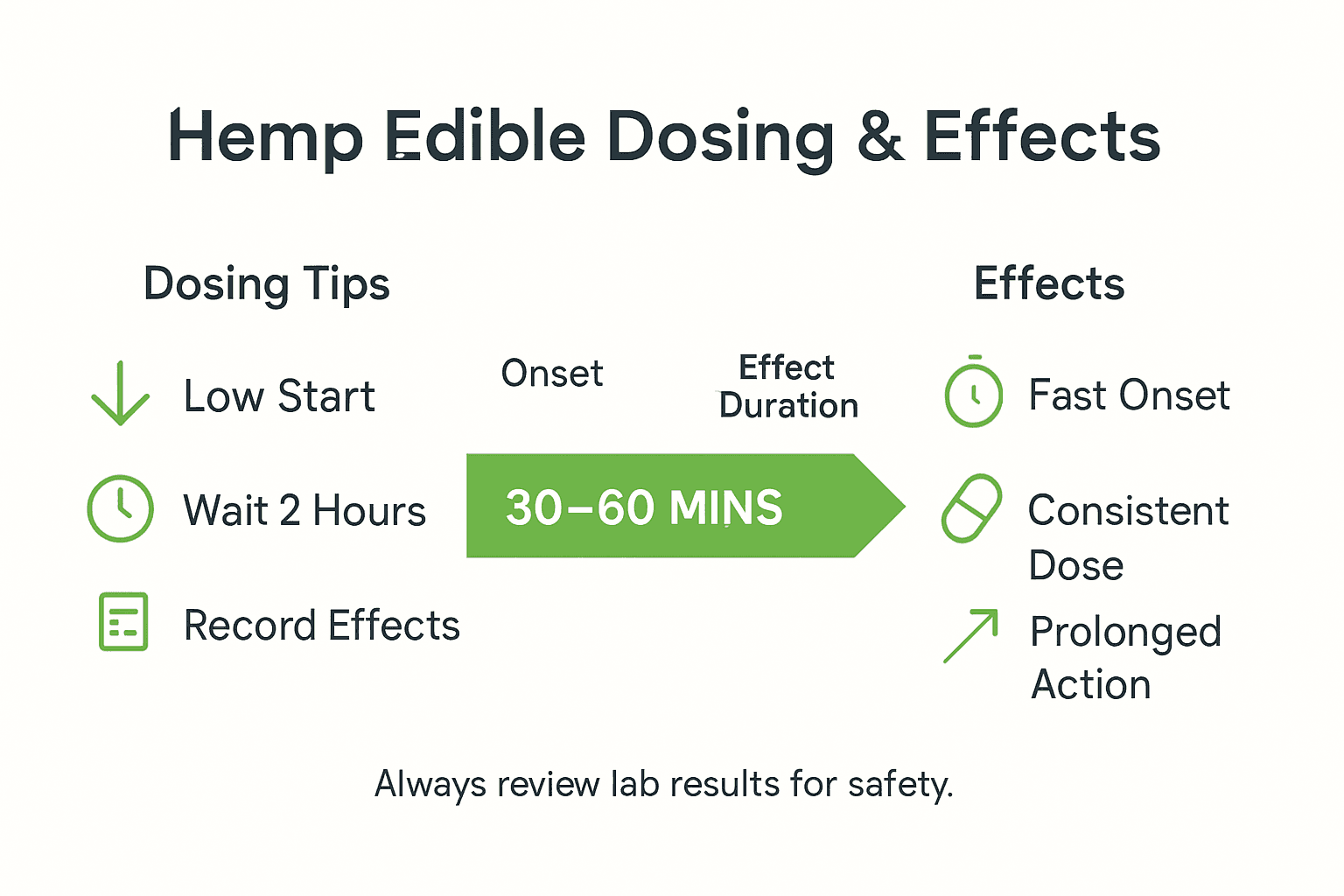
Navigating hemp edible consumption requires understanding personal biochemistry, starting with minimal doses and gradually adjusting based on individual responses. Factors like metabolism, diet and previous cannabis experience significantly impact how one processes and experiences cannabinoid products.
Pro Dosage Tip: Begin with the lowest recommended dose, wait at least 2 hours between consumption and carefully document your body’s unique response to different product strengths.
Navigating the safety landscape of hemp edibles requires understanding complex federal regulatory frameworks and potential health considerations. FDA safety and compliance requirements for hemp-derived products provide critical guidance for consumer protection, highlighting the importance of rigorous quality control and standardized testing.
Key safety considerations for hemp edibles include:
Consumer risks extend beyond regulatory compliance, with potential health implications requiring careful attention. Research indicates increased incidents of accidental consumption, particularly among children, necessitating stringent safety protocols. Manufacturers must implement comprehensive labeling, clear dosage instructions and robust packaging that prevents unintended access.
Compliance challenges in the hemp edible market stem from rapidly evolving legal landscapes and inconsistent state-level regulations. Responsible producers like Edwin’s Edibles & Elixirs prioritize transparent testing, clear product information and adherence to the most stringent federal and state guidelines to ensure consumer safety and product reliability.
Pro Safety Tip: Always store hemp edibles in secure, locked containers out of children’s reach and treat these products with the same caution you would any other controlled substance.
Navigating the complex legal landscape of hemp edibles requires strategic awareness and proactive compliance. Recent legal analyses reveal critical challenges businesses and consumers face in managing hemp edible regulations, highlighting the intricate nuances of state and federal legal requirements.
Common legal mistakes in hemp edible consumption and distribution include:
The most significant legal risks emerge from unintentional regulatory violations. Businesses must maintain rigorous documentation, implement comprehensive compliance protocols and stay current with evolving state and federal regulations. This requires continuous education, regular legal consultations and proactive adaptation to changing legislative landscapes.
Consumers and manufacturers alike must recognize that hemp edible legality is not a static concept. Local jurisdictions may have dramatically different interpretations of federal guidelines, creating potential legal exposure for uninformed participants in the hemp market. Understanding these subtle distinctions can mean the difference between legal compliance and potential legal consequences.
Pro Legal Navigation Tip: Maintain detailed records of product origins, conduct regular compliance audits and consult with legal professionals specializing in cannabis regulations to minimize potential legal risks.
Navigating the complex legal and safety landscape of hemp edibles can be challenging. The article highlights important considerations like dosage accuracy, compliance with THC limits and the benefits of advanced technologies such as TiME INFUSION® to achieve fast, consistent effects. If you want legal hemp edibles crafted with precision and transparency, EE&E offers premium products that prioritize your safety and satisfaction.
Explore our selection of Vegan THC Gummies for carefully measured THC doses, or choose from our soothing Organic CBD Gummies designed for non-intoxicating wellness support. With small-batch, federally compliant products infused using TiME INFUSION® technology, you gain access to reliable, fast-acting hemp edibles tailored to your needs. Ready to experience safe, legal hemp edibles with predictable effects? Visit Edwin’s Edibles & Elixirs now and find the perfect product to elevate your routine.
Legal hemp edibles are cannabis products derived from hemp plants, containing less than 0.3% THC by dry weight. They are distinct from marijuana products and are regulated under federal law.
The recommended dosage generally ranges from 0.5-1.5 mg of THC per 10 pounds of body weight. It’s important to start with a lower dose and gradually increase based on individual response and tolerance.
THC-infused edibles produce psychoactive effects due to higher Delta 9 THC levels, while CBD edibles offer potential wellness benefits without intoxication. Hybrid edibles combine both cannabinoids for a balanced experience.
The legal status is primarily determined by THC concentration (maximum of 0.3% Delta-9 THC), source verification (derived from hemp) and compliance with regulations from federal agencies like the USDA and FDA.