
Tossing and turning after another restless night, you’ve probably tried everything: melatonin, prescription pills, white noise machines, herbal teas. Some work briefly. Most stop working. And many traditional sleep aids carry side effects that leave you groggy, foggy, or physically dependent. It’s no wonder more adults are turning to organic, hemp-derived cannabis edibles for real, lasting sleep relief. The good news is that building an effective cannabis sleep routine isn’t complicated. This step-by-step workflow is designed to help you find the right products, dose smartly, track your results and wake up genuinely rested.
| Point | Details |
|---|---|
| THC/CBN outperform CBD | Most users report better sleep quality when using THC or CBN edibles rather than CBD alone. |
| Routine drives results | A consistent nightly routine with tracking is key to maximizing the sleep benefits of cannabis. |
| Start low, go slow | Begin with a low dose and gradually adjust to reduce side effects and avoid unnecessary tolerance. |
| Track for optimization | Log your responses to catch plateaus, side effects, or the need for formulation changes. |
Before diving into the workflow, it’s crucial to understand how and why cannabis works for sleep — and what to watch out for.
Cannabis contains dozens of active compounds called cannabinoids, but three matter most for sleep: THC (Delta 9 tetrahydrocannabinol), CBD (cannabidiol) and CBN (cannabinol). Each interacts with your body’s endocannabinoid system differently and understanding these differences helps you make smarter choices.
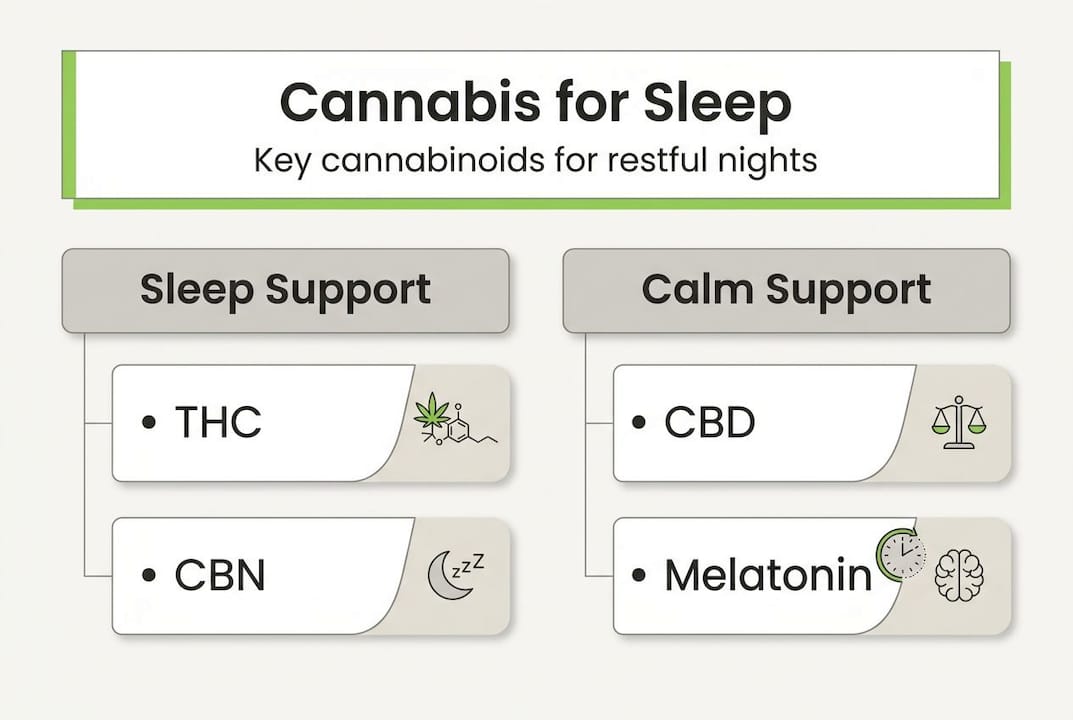
THC’s role in sleep centers on its sedating properties. THC shortens the time it takes to fall asleep and can reduce nighttime waking, making it the most studied cannabinoid for sleep onset. However, it also suppresses REM sleep, the stage associated with dreaming and memory consolidation. Using THC every night may mean less vivid dreaming and, over time, tolerance that diminishes its effectiveness.
CBN and relaxation are closely linked. CBN is a mildly psychoactive compound that forms as THC ages and early research suggests it amplifies the sedating effects of THC when the two are combined. Many sleep-focused edibles now use THC/CBN blends specifically because the combination appears more effective than either alone.
CBD operates differently. It’s non-psychoactive and tends to promote calm rather than sedation directly. CBD versus melatonin is a genuine conversation worth having: some users find CBD helps them stay asleep longer, while others notice little impact on sleep specifically. Current evidence suggests that THC/CBN formulations show stronger sleep quality gains than CBD alone, though CBD remains a popular choice for anxiety-driven sleep disruption.
| Cannabinoid | Primary effect | Best for | Key risk |
|---|---|---|---|
| THC | Sedation, faster sleep onset | Trouble falling asleep | Tolerance, REM suppression |
| CBN | Amplifies THC, mild sedation | Deep sleep, staying asleep | Limited standalone research |
| CBD | Calm, reduced anxiety | Anxiety-related wakefulness | Less effective for sedation |
| THC + CBN blend | Synergistic sleep support | Most sleep issues | Tolerance over time |
Key risks to keep in mind before you begin:
This foundation isn’t meant to scare you — it’s meant to set you up for success. Knowledge is the sharpest tool in your sleep toolkit.
With the scientific background clear, let’s assemble the essentials for your cannabis sleep workflow.
Choosing the right product matters more than most people realize. Not all edibles are created equal and the difference between a quality, small-batch, organic hemp-derived gummy and a low-cost, untested product can mean the difference between restful sleep and a frustrating, unpredictable night. Research consistently shows that cannabis edibles outperform traditional sleep pills in subjective user satisfaction, but that advantage is heavily tied to product quality and consistent routine.
When selecting your edible, consider these factors:
What to actively avoid: Products with no Certificate of Analysis (COA), unlabeled doses, artificial additives, or vague “proprietary blends” that don’t disclose cannabinoid content. These are red flags that signal poor quality and unreliable effects.
| Format | Onset time | Duration | Best for |
|---|---|---|---|
| Traditional gummy | 45 to 90 min | 6 to 8 hours | Planning ahead |
| Fast-acting gummy | 15 to 30 min | 4 to 6 hours | Flexible bedtimes |
| THC drink/beverage | 15 to 45 min | 4 to 6 hours | Hydration and ease |
| Sublingual tincture | 15 to 30 min | 3 to 5 hours | Precise dosing |
Your full sleep toolkit should also include:
Pro Tip: Browse the best THC gummies for sleep to compare cannabinoid profiles side by side, or read our edibles explained guide if you’re starting from scratch and want to understand your options fully before buying.
Now that you’ve got the right products and tools, let’s put them into a repeatable workflow for real results.
Consistency is the engine of every effective sleep routine, cannabis-based or otherwise. Research confirms that routine matters for outcomes, with medical cannabis users showing measurable improvements in sleep quality over months of consistent, structured use. Here’s your five-step nightly workflow:
Step 1: Set a firm sleep window. Decide on a target sleep time (say, 10:30 p.m.) and stick to it, including weekends. Your body responds to rhythm and cannabis works better when layered on top of good sleep hygiene rather than used to compensate for chaotic schedules.
Step 2: Dose 60 to 90 minutes before sleep (or 15 to 30 minutes with fast-acting products). Take your edible at the right moment. For standard gummies, that’s well ahead of your target sleep time. For fast-acting options or THC beverages using TiME INFUSION® technology, you can dose closer to bedtime without the timing guesswork.
Step 3: Begin your wind-down routine. After dosing, dim the lights, turn off screens and spend 30 minutes in low-stimulation activities: reading, gentle stretching, or listening to calm music. This isn’t just nice to do — it signals your brain that sleep is coming, amplifying the relaxing effects of your edible.
Step 4: Track your experience. Keep a short log before bed and upon waking. Note how long it took to fall asleep, how many times you woke up and how you feel in the morning. This data becomes invaluable later.
Step 5: Evaluate and adjust weekly. After 7 nights, review your log. If you’re still struggling to fall asleep, consider a slightly higher dose (increasing by 2.5 mg at a time). If you’re waking up groggy, your dose may be too high or your timing off.
Pro Tip: If you’re exploring using edibles for sleep for the first time, pair your edible with a CBD gummy for sleep earlier in the evening to ease anxiety before your primary dose, creating a layered effect. Always review THC for sleep safety guidelines before increasing your dose.
One critical reminder: cannabis works with good habits, not as a substitute for them. Reducing caffeine after 2 p.m., keeping your bedroom cool and dark and maintaining your sleep schedule on weekends will accelerate results dramatically.
Establishing your routine is only half the journey; ongoing tracking and optimization are key for lasting benefits.
Many people start strong, see initial improvements and then plateau after a few weeks. This is normal. Tolerance and withdrawal can subtly impact your sleep cycles with chronic use, which is why monitoring your experience isn’t optional — it’s essential.
Use this simple daily sleep log template:
| Field | What to record |
|---|---|
| Date | Tonight’s date |
| Product and dose | Name, mg of THC/CBD/CBN taken |
| Time of dose | When you took your edible |
| Lights out time | When you actually tried to sleep |
| Estimated sleep onset | How long before you felt drowsy or asleep |
| Nighttime waking | How many times and how long awake |
| Wake feeling | Scale of 1 to 10 (groggy vs. refreshed) |
| Notes | Anything unusual: stress, alcohol, illness |
Common trouble signs and what they mean:
“We’ve seen it happen again and again in our community. The people who track, adapt and stay honest with themselves get the best results. The ones who just pop a gummy and hope for magic — not so much.”
Signs it’s time to switch formulations or seek guidance:
Exploring your options is easier when you have the right resources. We recommend comparing CBD and THC gummies to understand what formulation shift might help, or reviewing our full breakdown of cannabis benefits and risks to make an informed decision about your next step.
When to consult a healthcare provider: if you have a diagnosed sleep disorder, use prescription medications, have a history of substance use, or experience persistent adverse effects, please speak with a qualified professional before continuing. Cannabis can interact with certain medications and a professional perspective protects you.
Here’s what most guides won’t tell you. Even a perfectly executed cannabis sleep workflow has real limits and pretending otherwise does you a disservice. The American Academy of Sleep Medicine notes that cannabis has not proven superior to Cognitive Behavioral Therapy for Insomnia (CBT-I) or even melatonin for long-term outcomes, citing a lack of robust clinical evidence for chronic use.
This doesn’t mean cannabis doesn’t work — thousands of our customers experience genuine, meaningful improvement. It means that cannabis works best as part of a layered strategy, not as a standalone cure. If your sleep struggles are deeply rooted in anxiety, chronic pain, or clinical insomnia, consider pairing your edible routine with CBT-I techniques, a CBD and melatonin comparison, or professional guidance.
We believe in being honest with our community because honest guidance builds better outcomes — and better relationships. Personal feedback always matters more than trends. If your body is telling you something isn’t working, listen.
You’ve got the knowledge, the workflow and the tracking tools — now it’s time to put it all into action with products you can actually trust. At Edwin’s Edibles & Elixirs, we offer small-batch, hemp-derived Delta 9 THC and organic CBD edibles crafted with care and backed by our TiME INFUSION® fast-acting technology. Start by reading our cannabis edibles explained guide to match your needs to the right product format. From there, explore our curated best THC gummies selection, or get personalized help choosing edibles that fit your sleep goals, lifestyle and experience level. Better nights are within reach.
Most users notice effects within 30 to 90 minutes, with sleep quality benefits building over a few nights of consistent use. Routine use tends to produce measurably better outcomes than occasional or irregular dosing.
A low dose, typically 2.5 to 5 mg of THC or CBN, is best for first-timers; increase only gradually if you don’t feel groggy the next morning and still need improvement.
Most evidence shows THC or CBN works better than CBD alone for sleep, but some people prefer starting with CBD due to its milder, non-psychoactive effects. THC/CBN combinations outperform CBD alone by most subjective measures.
Tolerance, withdrawal insomnia and morning grogginess are the most commonly reported issues, especially with frequent use and higher doses. Chronic users may also experience disrupted sleep cycles if they stop abruptly.