
Many people assume CBD and THC are essentially the same because both come from cannabis plants. This misconception leads to confusion about their effects, legality and appropriate uses. The truth is, these two cannabinoids differ dramatically in how they interact with your body and mind. CBD offers therapeutic benefits without intoxication, while THC produces the characteristic high associated with cannabis. Understanding these differences empowers you to make informed decisions about wellness products, recreational use and legal compliance. This guide breaks down their chemical interactions, effects, legal status and practical applications so you can choose the right cannabis edibles for your needs.
| Point | Details |
|---|---|
| CBD is non-intoxicating | CBD provides therapeutic effects like anxiety relief without causing a high or impairment |
| THC produces psychoactive effects | THC binds to brain receptors causing euphoria, altered perception and the classic cannabis high |
| Legal status differs significantly | Hemp-derived CBD with under 0.3% THC is federally legal, while THC legality varies by state |
| They interact with your body differently | THC directly activates CB1 receptors in the brain, while CBD modulates the endocannabinoid system indirectly |
| Consumption method affects experience | Edibles provide longer-lasting effects than inhalation, with onset times varying by product type |
Your body contains a complex biological network called the endocannabinoid system that regulates essential functions like mood, sleep, appetite, immune response and pain perception. This system consists of cannabinoid receptors, endogenous cannabinoids your body produces naturally and enzymes that break down these compounds. The ECS regulates mood, sleep, appetite, immune function and skin homeostasis, maintaining biological balance across multiple organ systems.
Two primary receptor types exist within this system. CB1 receptors concentrate heavily in your central nervous system, particularly in brain regions controlling memory, cognition, motor coordination and pain perception. CB2 receptors populate immune tissues, peripheral organs and the gastrointestinal tract. These receptors respond differently to various cannabinoids, explaining why CBD and THC produce such distinct effects.
THC functions as a CB1 receptor agonist, meaning it binds directly to these receptors and activates them. This direct binding in brain regions triggers the psychoactive effects associated with cannabis use: altered sensory perception, euphoria, impaired short-term memory and changes in time perception. The strength of THC’s binding affinity explains why even small doses can produce noticeable intoxication.
CBD has low direct affinity for CB1 and CB2 receptors, modulating ECS enzymes instead, which explains its non-intoxicating nature. Rather than activating receptors directly, CBD influences the endocannabinoid system by inhibiting FAAH enzymes that break down anandamide, your body’s natural bliss molecule. CBD also interacts with serotonin receptors, vanilloid receptors involved in pain signaling and other non-cannabinoid pathways.
These contrasting mechanisms create fundamentally different experiences:
Understanding these biological differences helps explain why CBD vs THC edibles differences matter so much for consumers seeking specific outcomes. Your choice between these cannabinoids should align with whether you want psychoactive effects or purely therapeutic benefits.
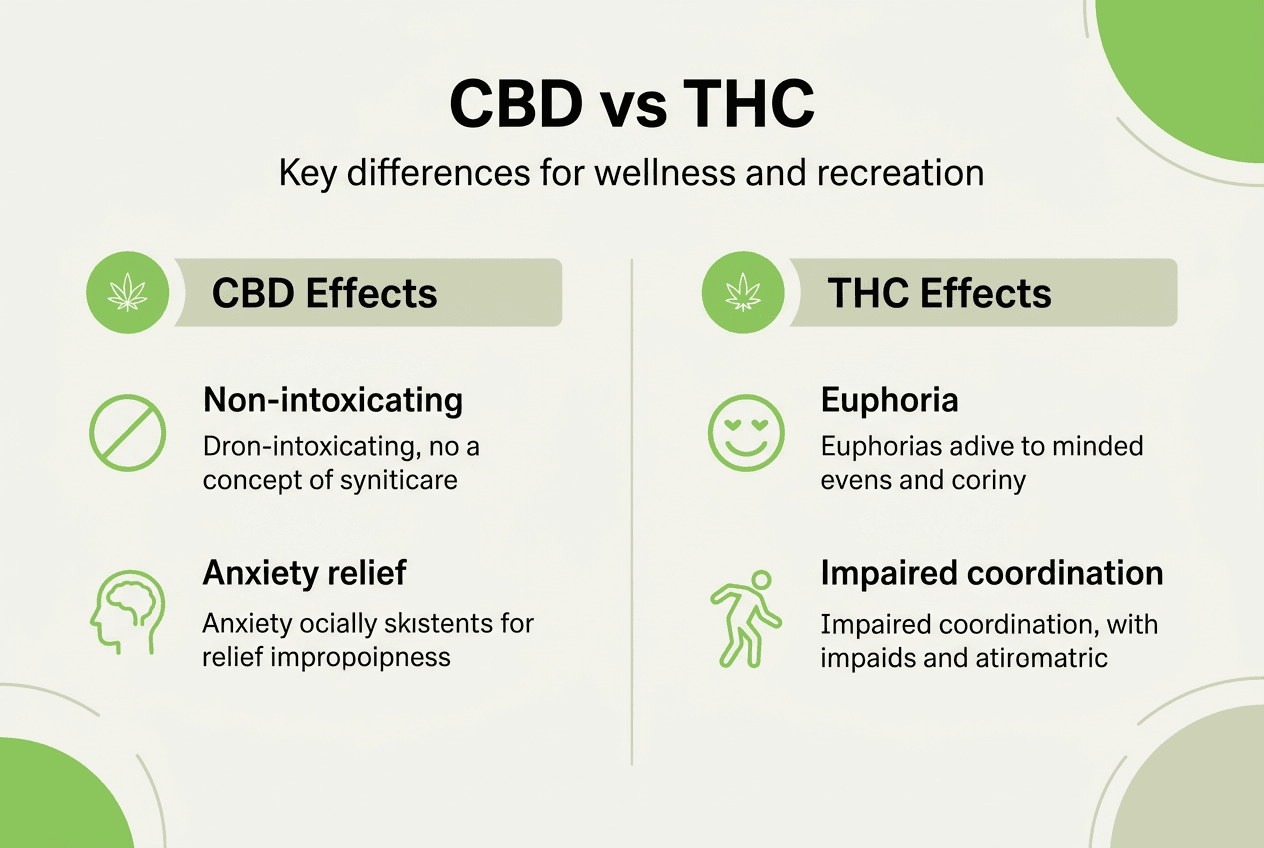
THC is the main intoxicating compound causing euphoria, altered perception and impaired coordination, making it the cannabinoid responsible for the classic cannabis high. When you consume THC, you might experience heightened sensory perception, increased appetite commonly called the munchies, relaxation or sedation depending on strain and temporary impairment of motor skills and judgment. These effects typically peak within 2-3 hours for edibles and can last 6-8 hours or longer.
THC offers legitimate therapeutic applications beyond recreation. Medical cannabis patients use THC for chronic pain management, nausea suppression during chemotherapy, appetite stimulation in wasting conditions and muscle spasticity relief in multiple sclerosis. THC for sleep benefits include reduced sleep latency and increased deep sleep stages, though tolerance can develop with regular use.
CBD provides neuroprotective, anti-inflammatory, anxiolytic and anticonvulsant effects without causing a high, making it appealing for daytime wellness use. CBD’s therapeutic profile includes anxiety and stress reduction without sedation, inflammation control in conditions like arthritis, neuroprotection that may benefit neurodegenerative diseases and seizure reduction in treatment-resistant epilepsy. The FDA approved Epidiolex, a CBD-based medication, specifically for severe childhood epilepsy syndromes.
CBD demonstrates remarkable versatility in addressing wellness concerns:
The relationship between CBD and THC extends beyond their individual effects. CBD can mitigate THC-induced anxiety and paranoia, a phenomenon called the entourage effect where cannabinoids work synergistically. Products containing both compounds in specific ratios can deliver THC’s benefits while CBD buffers unwanted side effects like racing thoughts or increased heart rate.
Pro Tip: If you are new to THC edibles, choose products with balanced CBD:THC ratios like 1:1 or even 2:1 CBD to THC to minimize anxiety and paranoia while still experiencing therapeutic benefits.
Understanding cannabinoids in edibles beyond just CBD and THC reveals additional options. CBN, for example, offers sedative properties that complement THC for sleep support. This growing cannabinoid diversity allows for increasingly targeted wellness applications.
Navigating cannabis legality requires understanding both federal regulations and state-specific laws that vary dramatically across the United States. The legal landscape continues evolving in 2026, with distinctions between CBD and THC remaining critical for consumers.
| Aspect | CBD | THC |
|---|---|---|
| Federal legal status | Legal if hemp-derived with ≤0.3% THC | Federally illegal, Schedule I controlled substance |
| State legality | Legal in all 50 states with hemp source | Legal recreationally in 24 states, medically in 38 states |
| Purchasing restrictions | Available online and in stores nationwide | Restricted to licensed dispensaries in legal states |
| Age requirements | Typically 18+ or 21+ depending on state | 21+ for recreational, 18+ for medical with card |
| Interstate transport | Generally permitted for hemp-derived products | Illegal across state lines even between legal states |
Hemp-derived CBD with ≤0.3% THC is federally legal, thanks to the 2018 Farm Bill that removed hemp from the Controlled Substances Act. This federal legality allows CBD products to be sold across state lines, marketed online and distributed through conventional retail channels. However, some states impose additional regulations on CBD sales, particularly regarding health claims and product testing requirements.
THC remains federally illegal despite widespread state-level legalization. Legal medical cannabis use states allow THC for pain, nausea and muscle spasticity conditions with qualifying medical cards. Recreational legalization continues expanding, with several states implementing adult-use programs in 2025 and 2026. Always verify current laws in your specific state before purchasing or traveling with THC products.
When purchasing cannabis edibles, consider these critical factors:
Understanding legal THC in US markets helps you navigate purchasing options confidently. Hemp-derived Delta 9 THC products occupy a legal gray area, technically legal under federal law if derived from hemp and meeting the 0.3% threshold by dry weight, though some states have banned them explicitly.
Pro Tip: Even legal CBD products may contain trace amounts of THC that can accumulate in your system with regular use, potentially causing positive drug test results if your employer uses sensitive testing methods.
The distinction between CBD vs Delta 9 legal and wellness options matters for employment, travel and personal wellness goals. Delta 9 THC derived from hemp remains controversial despite technical legality, with regulatory clarity still developing in 2026.
Selecting the right cannabis edibles requires matching product characteristics to your specific goals, tolerance level and legal situation. This decision process becomes straightforward once you clarify what you want to achieve.
Start by identifying your primary objective. Do you seek anxiety relief without intoxication? CBD edibles provide therapeutic benefits while keeping you clear-headed for work and daily activities. Want pain management with relaxation? THC edibles offer stronger analgesic effects with accompanying psychoactive experiences. Looking for sleep support? Consider THC or CBN-dominant products that promote sedation. Recreational enjoyment? THC products deliver the euphoric effects associated with cannabis.
Product ratios significantly impact your experience. Pure CBD edibles contain no THC or only trace amounts below 0.3%, ideal for those avoiding intoxication entirely. Balanced 1:1 CBD:THC ratios provide moderate psychoactive effects with reduced anxiety risk. High-THC edibles like 10:1 or 20:1 THC to CBD deliver strong intoxication for experienced users. Understanding choosing cannabis edibles based on these ratios prevents unwanted experiences.
Bioavailability and onset vary by consumption method, affecting how quickly and intensely you feel effects. Gummies and baked goods take 60-90 minutes to onset but last 6-8 hours. Beverages may work slightly faster at 30-60 minutes with comparable duration. Tinctures placed under the tongue provide faster onset at 15-30 minutes. Fast-acting formulations using nano-emulsion technology can work in 15-20 minutes.
Follow these five essential steps for safe and effective edible use:
Your cannabis edible consumption strategy should account for tolerance development. Regular THC users often need higher doses over time, while CBD typically maintains effectiveness without significant tolerance buildup. Taking occasional breaks from THC helps reset your endocannabinoid system sensitivity.
Consider your daily schedule when choosing between CBD and THC. CBD works well for daytime use without impairing function, making it suitable for work hours, driving, or activities requiring focus. Reserve THC edibles for evenings, weekends, or times when you can safely experience intoxication without responsibilities. This practical approach maximizes benefits while minimizing risks.
Now that you understand the differences between CBD and THC, you can make informed choices about which products support your wellness and recreational goals. Edwin’s Edibles & Elixirs offers expertly crafted cannabis edibles featuring both CBD and THC options, each formulated for specific effects and experiences. Our cannabis edibles guide provides detailed information about our proprietary TiME INFUSION® technology, which delivers faster-acting effects than traditional edibles. Whether you want non-intoxicating CBD gummies for daily wellness or premium Delta 9 THC beverages for relaxation, our product selection includes clearly labeled options with third-party testing. Explore our resources on choosing cannabis edibles and discover why discerning consumers select premium cannabis edibles for quality, consistency and transparency.
CBD and THC differ primarily in their psychoactive properties and receptor interactions. THC binds directly to CB1 receptors in your brain, producing intoxication, euphoria and impairment. CBD modulates the endocannabinoid system indirectly without causing a high, offering therapeutic benefits like anxiety relief and inflammation reduction while keeping you clear-headed.
No, CBD cannot produce intoxication regardless of dose because it does not activate CB1 receptors in the way THC does. Pure CBD products may contain trace THC below 0.3%, but these amounts are insufficient to cause psychoactive effects in most people. You remain fully functional and clear-minded when using CBD alone.
Federally illegal THC products cannot be legally shipped across state lines, even to states with recreational legalization. However, hemp-derived Delta 9 THC edibles meeting the 0.3% threshold by dry weight occupy a legal gray area and some companies ship them nationwide. Check your specific state laws, as several states have explicitly banned hemp-derived THC despite federal hemp legality.
CBD generally works better for anxiety without side effects, providing calming effects without intoxication or potential paranoia. THC can reduce anxiety at low doses but may increase anxiety and paranoia at higher doses, especially in sensitive individuals. Many people find balanced CBD:THC ratios like 2:1 or 1:1 offer optimal anxiety relief by combining CBD’s anti-anxiety properties with THC’s relaxation benefits while minimizing negative effects.
Traditional edibles typically take 60-90 minutes to produce noticeable effects, with peak intensity occurring 2-3 hours after consumption. Fast-acting formulations using nano-emulsion or specialized delivery technologies can work in 15-30 minutes. Effects from both CBD and THC edibles last considerably longer than inhalation methods, typically 6-8 hours, making dosing patience essential to avoid overconsumption.
Pure CBD itself does not trigger positive drug tests, but many CBD products contain trace THC amounts that can accumulate with regular use. Standard drug tests screen for THC metabolites, not CBD. If you face drug testing, choose CBD isolate products with zero THC rather than full-spectrum options and be aware that even legal amounts of THC may cause positive results with sensitive testing methods.