
Selecting the right THC beverage can feel confusing when options like still iced teas and sparkling seltzers promise such different effects. For health-conscious American adults navigating these choices, knowing how carbonation impacts onset time and overall user experience is key. This guide breaks down the essential differences between still and carbonated THC drinks, including infusion methods, absorption speed and how each style can shape both wellness and enjoyment.
| Point | Details |
|---|---|
| THC Drink Types | Consumers should understand the differences between still and carbonated THC drinks, as they impact absorption speed and overall experience. |
| Absorption Rates | Carbonated THC drinks typically offer a rapid onset of effects (5–15 minutes), while still drinks provide a slower absorption (30–60 minutes) for a more gradual experience. |
| Flavors and Preferences | Flavor complexity and carbonation level significantly influence consumer choice, with preferences linked to individual wellness goals and desired experiences. |
| Safety Considerations | Always verify a THC beverage’s legal status and ensure third-party lab testing is available to confirm safety and potency before purchasing. |
THC-infused beverages represent an innovative category of wellness and recreational products, with still and carbonated variants offering distinct consumption experiences. Understanding the fundamental differences between these drink types is crucial for consumers seeking targeted effects and enjoyable consumption methods.
In the emerging cannabis beverage market, THC infused drinks vary significantly in their formulation and absorption characteristics. Carbonated THC drinks utilize advanced molecular encapsulation techniques, enabling rapid cannabinoid absorption typically occurring within 5-15 minutes. These effervescent beverages leverage carbonation to potentially enhance absorption rates and provide a quicker onset of effects compared to their still counterparts.
Still THC drinks, in contrast, represent a more traditional approach to cannabis beverage consumption. These non-carbonated options often feature smoother flavor profiles and potentially slower cannabinoid absorption mechanisms. They may appeal to consumers preferring a more gradual, controlled experience or those who find carbonation uncomfortable. The formulation differences between still and carbonated drinks can significantly impact onset time, bioavailability and overall user experience.
Pro tip: When exploring THC drinks, start with low dosages and carefully observe your body’s unique response to different carbonation levels and formulations.
Cannabis beverage technologies have revolutionized THC consumption, with distinct infusion methods dramatically influencing user experience. Nanoemulsion and advanced molecular techniques have transformed how cannabinoids are absorbed, creating significant differences between still and carbonated drink formulations.
Nanoemulsion technologies enable remarkably faster THC absorption compared to traditional edible consumption methods. Carbonated THC drinks leverage these advanced infusion strategies to achieve rapid onset within 15 minutes, providing consumers with a more controlled and predictable experience. The carbonation itself can potentially accelerate molecular dispersion, allowing for quicker cannabinoid integration into the bloodstream.
Still THC drinks, in contrast, typically demonstrate slower absorption mechanisms. These beverages often rely on different molecular encapsulation techniques that result in more gradual cannabinoid release. While carbonated options provide near-immediate effects, still drinks may offer a more extended, nuanced experience with a slower but potentially more sustained impact. This variation in absorption directly influences the duration, intensity and overall wellness trajectory of the THC experience.
Pro tip: Experiment with different drink styles to understand how your body responds to varying infusion technologies and absorption rates.
Here’s a breakdown of how absorption and effects differ between still and carbonated THC beverages:
| Drink Style | Absorption Speed | Typical Onset Time | Experience Duration |
|---|---|---|---|
| Carbonated THC | Rapid (nanoemulsion) | 5–15 minutes | 1–3 hours |
| Still THC | Gradual (encapsulation) | 30–60 minutes | 2–4 hours |
THC-infused beverages have evolved beyond simple consumption methods, transforming into a nuanced wellness experience where flavor and style play critical roles. Consumer preferences for cannabis beverages reveal a complex landscape of taste, carbonation and sensory expectations that extend far beyond traditional edible experiences.
The market demonstrates remarkable diversity in beverage styles, with sweetened iced teas, juices and carbonated waters emerging as popular formats. Different demographic groups exhibit distinct preferences – some consumers gravitate toward the effervescent sensation of sparkling drinks, while others prefer the smooth, subtle experience of still beverages. These preferences are not merely aesthetic but deeply connected to individual wellness goals, ranging from relaxation to functional benefits.
Flavor complexity plays a pivotal role in consumer choice. Beverage manufacturers now craft sophisticated profiles that balance cannabinoid effectiveness with compelling taste experiences. Carbonated options often provide a more immediate sensory engagement, while still drinks offer a more contemplative consumption style. The interplay between drink style, flavor intensity and THC absorption creates a personalized wellness journey that extends far beyond traditional consumption methods.
Pro tip: Explore multiple beverage styles to discover which flavor profile and carbonation level best aligns with your personal wellness objectives and taste preferences.
THC beverage technologies have dramatically transformed wellness consumption, offering unprecedented control and predictability in cannabinoid experiences. Nanoemulsion technologies enable faster THC absorption compared to traditional edible methods, presenting significant implications for targeted wellness interventions.
Carbonated THC drinks distinguish themselves through rapid onset times, typically triggering effects within 15 minutes and maintaining impact for 60 to 180 minutes. These fast-acting beverages provide more precise dosing opportunities, allowing consumers to manage anxiety, pain and stress with greater accuracy. The effervescent nature of carbonated drinks appears to accelerate molecular dispersion, potentially enhancing both absorption speed and overall therapeutic potential.
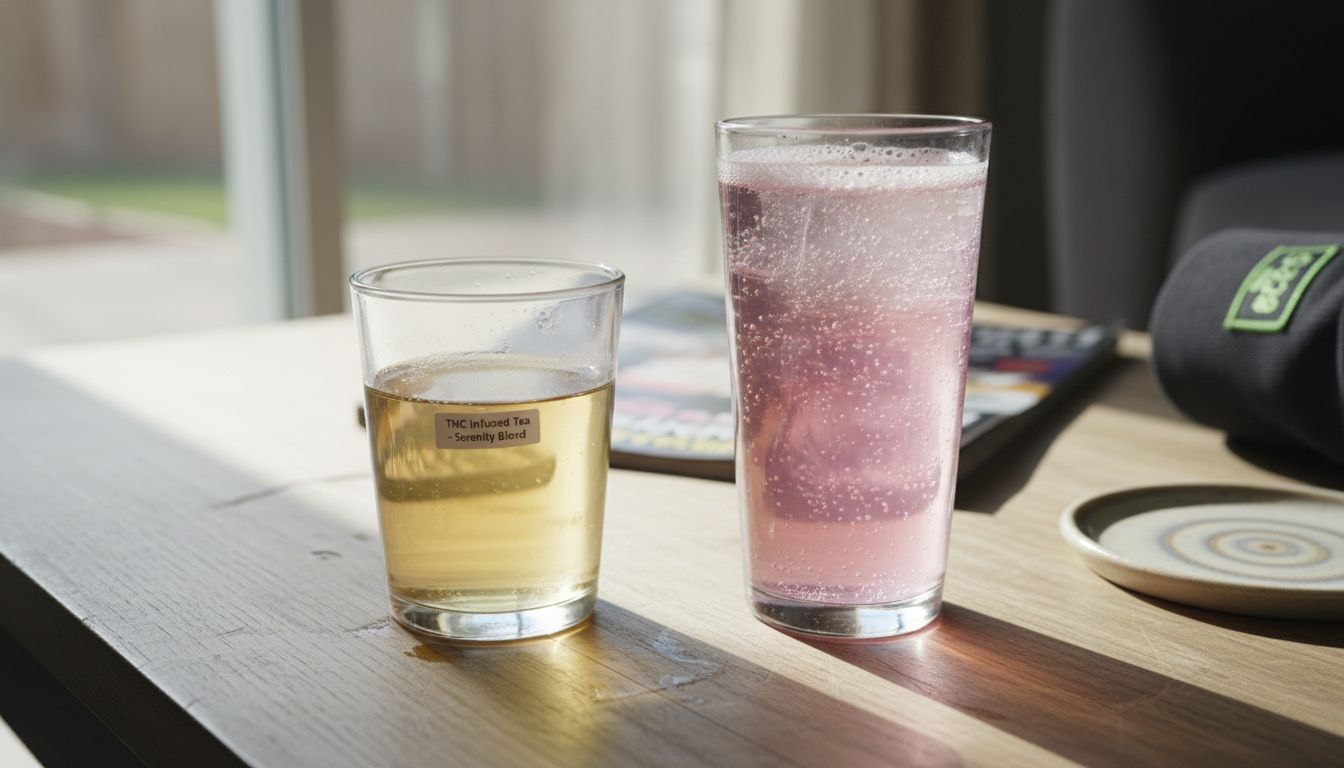
Still THC beverages, while potentially slower in onset, offer a more gradual and sustained experience. This slower absorption can be advantageous for individuals seeking prolonged, steady wellness support. Research suggests that both carbonated and still drinks present unique benefits, with carbonated options providing more immediate relief and still drinks offering more extended, nuanced effects. The choice between styles ultimately depends on individual wellness goals, physiological responses and personal preferences.
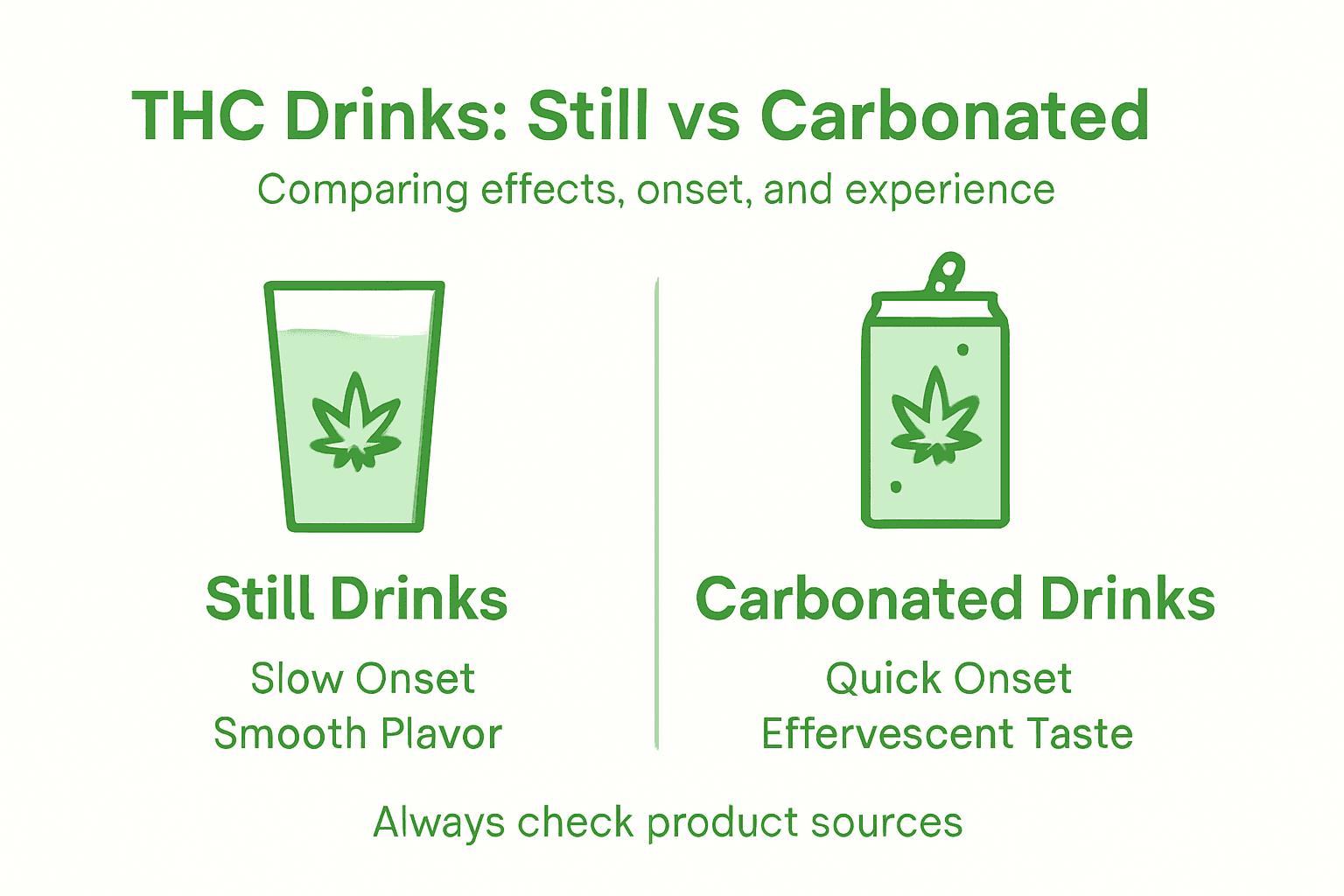
Pro tip: Start with low-dose carbonated THC beverages to understand your individual absorption rate and wellness response before exploring different consumption styles.
THC beverage consumers must navigate a complex regulatory landscape that demands careful attention to legal and safety standards. Hemp-derived THC product regulations vary dramatically across the United States, creating a challenging environment for responsible consumption.
Federal guidelines under the 2018 Farm Bill provide a foundational framework, distinguishing between hemp-derived and marijuana-derived THC products. However, individual states maintain significant discretion in determining allowable THC concentrations, sales protocols and consumer access. This regulatory diversity means that product legality can change substantially between geographic regions, requiring consumers to stay informed about local statutes and restrictions.
Product quality and safety remain paramount concerns in the THC beverage market. Inconsistent testing standards and potential variability in THC concentrations pose significant risks to consumer health. Reputable manufacturers must prioritize comprehensive third-party laboratory testing, accurate potency labeling and transparent production processes. Consumers should seek brands that provide detailed certificates of analysis, demonstrate consistent quality control and clearly communicate the origin and composition of their THC-infused beverages.
Pro tip: Always verify a THC beverage’s legal status in your specific state and request comprehensive lab testing documentation before purchasing.
Compare key factors for selecting a quality THC beverage:
| Consideration | Why It Matters | What To Look For |
|---|---|---|
| Legal Status | Compliance with state laws | Confirm local regulations |
| Potency Labeling | Ensures dosing accuracy | Clear THC amount per serving |
| Lab Testing | Guarantees product safety | Third-party analysis reports |
| Origin of THC | Affects legality and effects | Hemp or marijuana-derived |
Choosing between still and carbonated THC drinks can feel overwhelming given the differences in absorption speed, onset time and overall wellness impact. Whether you seek a fast-acting, precise experience with rapid effects or prefer a smooth, gradual release for longer-lasting benefits, understanding how these styles influence your cannabis journey is key. Edwin’s Edibles & Elixirs offers a curated selection of premium THC drinks crafted with small-batch, hemp-derived Delta 9 and enhanced by our proprietary TiME INFUSION® technology to ensure fast and consistent results.
If you want to explore distinct flavor profiles and tailor your wellness routine based on personal preference and response, start with our THC Drinks collection. For those who appreciate variety, consider pairing beverages with gummies by visiting our THC Drinks and Gummies selection. No matter your choice, our commitment to quality, transparency and education will support your wellness goals fully. Take control of your THC beverage experience today by browsing our offerings at Edwin’s Edibles & Elixirs and find the perfect match for your needs.
Still THC drinks are non-carbonated and typically have a slower absorption rate, while carbonated THC drinks utilize carbonation for faster absorption, usually within 5-15 minutes.
Carbonated THC drinks often provide rapid effects due to advanced infusion technologies, whereas still THC drinks offer a more gradual onset, allowing for a longer-lasting and sustained experience.
Yes, carbonated THC drinks tend to offer a more immediate sensory experience with effervescence, while still THC drinks provide a smoother, more subtle flavor profile that may appeal to different preferences.
It’s important to be aware that THC beverage regulations can vary significantly, so consumers should verify local laws regarding THC concentrations, product sales and safety standards before consumption.