
Infused beverages have a reputation problem. Many people write them off as glorified flavored water or assume they’re just the latest wellness fad destined to fade. But here’s what that dismissal misses: modern infusion technology has genuinely changed what’s possible in a drink. Science-backed formulations now deliver plant compounds, cannabinoids and adaptogens in ways that are faster, more consistent and more enjoyable than almost any other format. If you’ve ever wondered whether these drinks are worth your time and attention, this guide will give you real answers, not marketing fluff.
| Point | Details |
|---|---|
| Infusion enhances delivery | Drinks make plant compounds more accessible and easier to consume. |
| Predictable, hydration-friendly effects | Modern infused beverages offer consistent dosing with enjoyable refreshment. |
| Ingredients determine outcome | The benefits and safety of an infused drink depend on what’s actually infused. |
| Understand risks and storage | Proper labeling and care reduce the chances of accidental ingestion, especially with THC drinks. |
| Routine builds wellness | Sipping infused beverages can reinforce healthy rituals and hydration habits for adults. |
Let’s start with the basics, because the word “infused” gets used loosely. At its core, infusion means transferring active plant compounds into a liquid so they become part of the drink itself. Think of how a tea bag releases flavor and beneficial compounds into hot water. That’s steeping, one of the oldest infusion methods. Modern infused beverages take that concept much further.
There are three primary infusion methods you’ll encounter:
“Infused beverages are used because infusion methods extract plant compounds into a drink, making them easier to consume in a flavorful, hydration-friendly format.”
Popular infusion types include fruit and herbal teas, electrolyte drinks, adaptogen blends and hemp or cannabinoid beverages. The key point is that not all infusions are the same. A simple fruit-infused sparkling water delivers very different effects than a nanoemulsion-based hemp drink. Ingredient choice, extraction quality and infusion method all shape what you actually experience in the glass.
One underrated advantage of beverages over solid formats is how gently they ease you into consumption. Sipping a drink feels natural. It fits into existing habits like your morning routine or a wind-down evening ritual. For a broader look at how this works in the hemp space, our hemp-derived beverage guide walks through the science in plain language.
With infusion mechanics in mind, let’s dig into the most common goals for choosing these beverages, especially if you want wellness or relaxation without unwanted surprises.
Adults reaching for infused drinks are usually looking for one or more of these outcomes: antioxidant support, stress reduction, better sleep, or a gentle recreational lift. Plant-based drinks can deliver all of these in a mellow, non-intimidating format. You don’t need to swallow a capsule or eat a gummy on an empty stomach. You just sip.
Here’s where the real advantages stack up:
Nanoemulsion technology (described above) is a genuine game-changer here. It improves bioavailability, meaning more of the active compound actually reaches your bloodstream rather than being lost in digestion. This is why nanoemulsion innovation has become such a focus in premium hemp beverage formulation.
Statistic to know: Liquid formats plus formulation tech such as nanoemulsions are specifically developed to improve onset timing and dosing consistency relative to traditional edibles. That’s not marketing. That’s the actual product mechanic driving the industry forward.
For those exploring hemp-based options specifically, understanding cannabis for wellness and the underlying hemp-derived CBD benefits will help you match the right product to your actual goals. And if you want to go deep on the science of nano CBD explained, we’ve got that covered too.
Pro Tip: If you’re new to infused beverages, start with a low-dose option and sip slowly. Give yourself 20 to 30 minutes before deciding you need more. The beverage format is designed for gradual, enjoyable consumption, not quick results from gulping it down.
To make an informed choice, it’s helpful to see how infused beverages stack up against edibles in key areas important for wellness routines and recreational safety.
Both beverages and edibles have devoted fans for good reasons. But they behave very differently inside your body and that distinction matters for practical use. Liquid formats and formulation technology are specifically built to improve onset timing and dosing consistency, which addresses one of the most frustrating aspects of edible use: not knowing when it will hit, or how hard.
| Feature | Infused beverages | Traditional edibles |
|---|---|---|
| Onset time | 15 to 45 minutes (nanoemulsion) | 45 to 90 minutes (or longer) |
| Peak effect | Typically earlier, shorter window | Later, often longer duration |
| Flavor experience | Built into the drink, refreshing | Depends on product type |
| Discreetness | Looks like any canned drink | Gummies/chocolates are recognizable |
| Dosing control | Easy to sip and pause | Fixed per piece |
| Hydration benefit | Yes | No |
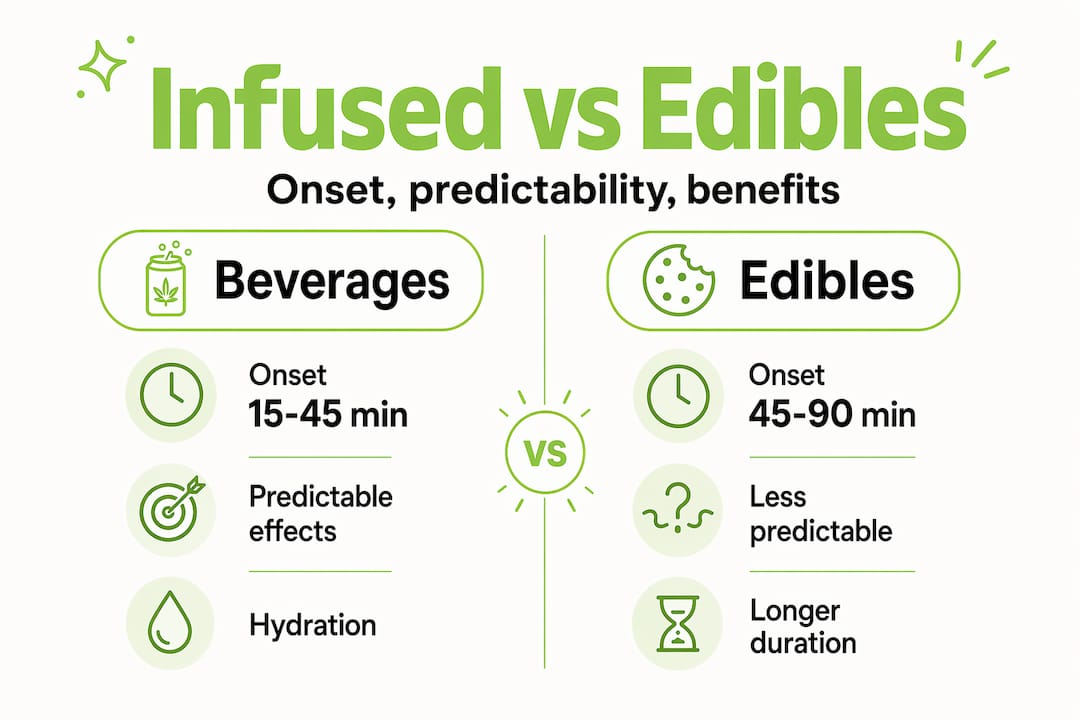
The beverage format shines when you want faster feedback, easier titration and the bonus of staying hydrated. Edibles still win for sustained, longer-duration effects, particularly when sleep support or extended relaxation is the goal.
Here’s how to think through which format fits your situation:
For a thorough breakdown of the practical side of hemp formats, our guide on the hemp edibles benefits covers what each format does well and where each falls short.
Pro Tip: Think of beverages and edibles as tools, not competitors. Many people find a rhythm that uses both depending on the time of day, the setting, or what kind of experience they’re after.
Even with all the upside, choosing the right infused beverage means knowing what’s inside and how to use it responsibly.
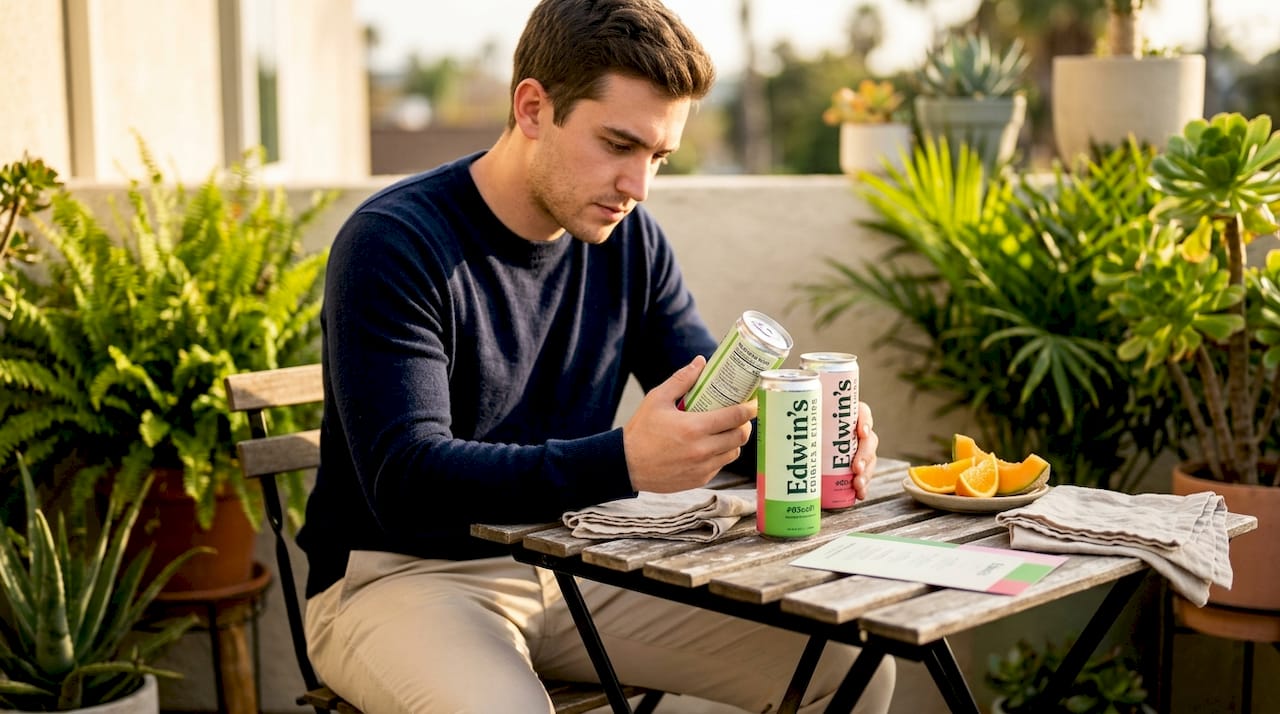
This is where many consumers make expensive mistakes. They reach for something marketed as “wellness” without reading what’s actually in it. The benefit of any infused drink depends heavily on what’s infused and the overall formulation, not just the branding.
Here’s a real-world example: two cans might both say “relaxation blend” on the label. One contains genuine hemp-derived CBD at a meaningful dose with no added sugars. The other has trace CBD, 25 grams of sugar and synthetic flavoring. They’re not the same product, no matter how similar the packaging looks.
| Ingredient | General effect | Caution note |
|---|---|---|
| Hemp-derived CBD | Calm, reduced anxiety | Check dose and source |
| Delta 9 THC | Euphoria, relaxation | Start very low; check legality |
| Adaptogens (e.g., ashwagandha) | Stress reduction | Can interact with medications |
| Caffeine | Alertness, energy | Avoid late in the day |
| Electrolytes | Hydration support | Watch sodium for hypertension |
| Added sugars | Palatability | Can undermine wellness goals |
| Artificial flavors | Taste only | No functional benefit |
Label reading tips you should apply every time:
“Public health guidance emphasizes labeling and locked storage as key risk-reducing measures when THC-infused products are available in consumer households.”
For continued guidance on smart purchasing decisions, our beverage safety guidance covers what to look for and what to avoid when shopping for infused drinks.
Here’s the angle most articles won’t take: the biggest advantage of infused beverages isn’t the ingredient. It’s the habit.
We’ve watched wellness trends come and go. Tinctures, capsules, powders, protein bars. All of them require you to remember to take them, then remember whether you already took them, then wonder if the dose was right. That friction quietly kills the consistency that makes any wellness routine actually work.
Beverages don’t have that problem. Drinking is one of the most deeply ingrained human behaviors there is. When you attach a wellness or recreational benefit to something you already do multiple times a day, the habit practically builds itself. Behavioral scientists call this “habit stacking,” attaching a new behavior to an existing one. Infused drinks are a natural fit for this pattern in a way that edibles and supplements simply are not.
But here’s the uncomfortable truth we want you to hear: the ritual only works if you respect the science underneath it. CBD absorption science shows that bioavailability varies enormously based on formulation. A poorly made beverage with cheap emulsification delivers a fraction of what a premium nanoemulsion product does, even at the same listed dose. You can build the perfect ritual around the wrong product and never feel the difference you’re seeking.
The consumers we see getting the most out of infused beverages are the ones who treat the label like a menu and the product like a precision tool. They match the strain or compound to their goal. They pick Sativa-leaning blends for daytime energy and Indica formulations for evening wind-down. They read the COA. They store products responsibly. And they sip slowly, letting the experience arrive rather than chasing it.
That patience and intentionality is what separates a life-changing habit from a fleeting trend. The beverage format earns its place not just because it tastes good, but because it fits so naturally into the architecture of a life well-lived.
If you’re ready to move from curiosity to confident action, we make it easy to find products that match your goals. At Edwin’s Edibles & Elixirs, we craft small-batch, hemp-derived Delta 9 THC drinks and organic CBD options using our proprietary TiME INFUSION® technology, designed for fast-acting, consistent effects that you can actually feel. Browse our curated premium infused beverage options to see what fits your lifestyle, whether you’re after calm, creativity, or a better night’s rest. And if you want to understand the full landscape before you buy, our cannabis edibles explained guide gives you the full picture. Great choices start with great information and we’re here for both.
Infused beverages usually deliver active compounds faster and with more predictable effects because nanoemulsion formulations improve absorption in liquid formats compared to the slower digestion process that governs solid edibles.
Safety depends entirely on what’s infused, the dose per serving and how clearly the product is labeled; always read ingredient lists carefully and follow CDC-recommended storage guidance for any THC-containing product in your home.
Infused beverages offer the triple benefit of hydration, enjoyable flavors and a satisfying sipping ritual, all while delivering plant compounds through a flavorful format that makes consistency far easier to maintain than swallowing a pill.
Yes, accidental intoxication is a real risk when products are mislabeled or improperly stored; the CDC’s MMWR highlights clear labeling and locked storage as essential safeguards that every responsible consumer should follow.