
Many believe edibles just delay THC effects compared to smoking, but your body transforms THC into a more potent compound after eating. Understanding THC’s metabolic and receptor interactions helps explain differences in onset, intensity, and duration. This article explains THC’s effects on your body, focusing on edible cannabis for informed, safe consumption.
| Point | Details |
|---|---|
| THC binds to CB1 receptors causing psychoactive effects | These brain receptors control mood, memory, and perception when activated by THC. |
| Edibles create stronger, longer effects through metabolism | Your liver converts THC into 11-hydroxy-THC, a metabolite 4x more potent than inhaled THC. |
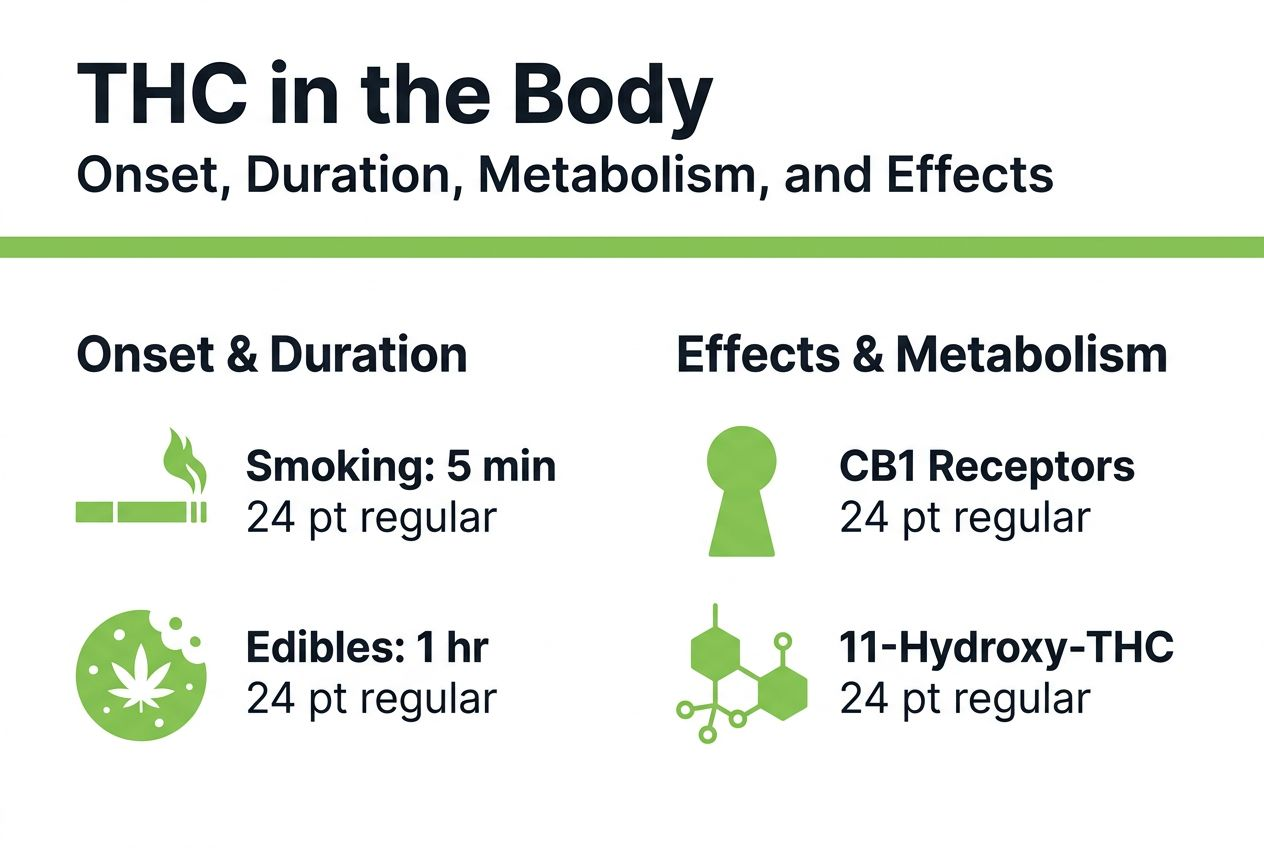
| Onset timing varies dramatically by consumption method | Smoking acts in minutes while traditional edibles take 30-120 minutes to kick in. |
| Blood THC levels don’t reliably indicate intoxication | Peak blood concentration occurs before peak psychoactive effects, especially with edibles. |
| Proper dosing knowledge maximizes safety and enjoyment | Understanding metabolism helps you time doses correctly and avoid overconsumption. |
THC is the primary psychoactive compound in cannabis that creates the characteristic “high.” Your body contains an endocannabinoid system regulating mood, memory, appetite, and pain perception. THC primarily binds to CB1 receptors concentrated in brain regions like the hippocampus, basal ganglia, and cerebellum.
When THC activates these receptors, it disrupts normal brain signaling. This binding triggers altered mood, impaired short-term memory, and changed sensory perception. The hippocampus handles memory formation, explaining why THC affects recall. The cerebellum controls motor coordination, which is why balance and reaction time suffer.
Your body also has CB2 receptors, mainly in the immune system. THC binds less strongly to CB2 receptors, which may influence inflammation and immune responses but produces minimal psychoactive impact. Understanding delta 9 and THC helps clarify what you’re consuming.
Key functions impacted by THC include:
The endocannabinoid system research reveals how THC mimics natural endocannabinoids but with stronger, longer-lasting effects. Your brain’s natural cannabinoids regulate these same functions, but THC overstimulates the system.
Your consumption method dramatically changes how THC enters your bloodstream. When you smoke or vape cannabis, THC absorbs directly through lung tissue into blood vessels. Smoking or vaporizing THC delivers effects within minutes because it bypasses digestive processing.
Edibles follow a completely different path. After you swallow a THC gummy or beverage, it travels through your stomach into the small intestine. The onset time for edibles ranges between 30 minutes to 2 hours due to slow gastrointestinal absorption and first-pass liver metabolism.
Your liver transforms THC during this first-pass metabolism. Enzymes convert THC into multiple metabolites, with 11-hydroxy-THC being the most significant. This metabolite has stronger psychoactive effects than THC itself, creating the intense experience edible users report.

The potency difference is substantial. Research suggests 11-hydroxy-THC can be up to 4 times more psychoactive than regular THC. This explains why a 10mg edible feels much stronger than smoking an equivalent amount. Understanding THC absorption in edibles helps you predict your experience.
Key differences in absorption and metabolism:
Your digestive state affects absorption speed too. Taking edibles on an empty stomach speeds onset, while fatty foods can enhance absorption but slow initial effects. Body weight, metabolism speed, and liver enzyme activity all influence how quickly you feel results.
Different consumption methods create distinct experiences. This table compares how smoking, vaping, traditional edibles, and fast-acting edibles affect timing and intensity:
| Method | Onset Time | Peak Effects | Duration | Intensity |
|---|---|---|---|---|
| Smoking | 2-10 minutes | 30 minutes | 1-3 hours | Moderate |
| Vaping | 5-15 minutes | 30-60 minutes | 2-4 hours | Moderate |
| Traditional Edibles | 30-120 minutes | 2-4 hours | 6-8 hours | High |
| Fast-Acting Edibles | 5-15 minutes | 60-90 minutes | 4-6 hours | High |
Smoking delivers the fastest onset because THC enters your bloodstream through lung capillaries. You feel effects almost immediately, making it easier to control your dose. However, smoking effects onset in minutes and last 1-3 hours with intensity declining steadily.
Traditional edibles require patience. The delayed onset causes many users to overconsume, taking a second dose before the first kicks in. Once effects begin, they intensify for 1-2 hours before plateauing. The 11-hydroxy-THC metabolite sustains effects much longer than inhaled THC.
Fast-acting edibles reduce onset time while maintaining edible-like duration. Proprietary infusion technologies increase absorption speed without sacrificing the extended effects users want. These products bridge the gap between smoking’s quick onset and traditional edibles’ long duration.
Pro Tip: If you’re new to edibles, fast-acting forms support better dose control and reduce anxiety about waiting. You’ll know within 15-20 minutes if you need more, preventing accidental overconsumption.
Common considerations when choosing your consumption method:
Vaping occupies a middle ground with faster onset than edibles but slightly delayed compared to smoking. Temperature control and device technology affect absorption rates. Understanding edibles versus smoking effects helps you match method to situation.
Your activity plans should guide method choice. Smoking works for short-term relief or social situations where duration isn’t critical. Edibles suit longer experiences like outdoor adventures or evening relaxation. Exploring THC beverage vs edible differences reveals even more options for matching consumption to context.
Three major misconceptions create confusion and safety risks:
Why these misconceptions persist: Marketing often oversimplifies cannabis effects. Comparing edibles to smoking using familiar terms makes products seem less intimidating but obscures real differences. Legal frameworks sometimes rely on blood testing despite scientific evidence showing its limitations.
Practical consequences of these misconceptions:
The THC edible myths debunked guide addresses these and other common errors. Understanding metabolism helps you adjust expectations and make safer choices.
Your liver’s enzyme activity varies based on genetics, medications, and health status. Two people taking identical edible doses may have completely different experiences. This individual variation makes personalized dosing essential rather than following generic recommendations.
Safe THC consumption requires understanding non-linear dose effects. Doubling the dose can more than double effects, increasing adverse experience risk exponentially. Start with 2.5-5mg for edibles if you’re new, even if that seems conservative.
Wait at least 2 hours before considering a second dose with traditional edibles. Fast-acting products allow assessment within 20-30 minutes, but patience remains crucial. The delayed onset catches many users off guard, leading to overconsumption.
Tolerance develops with frequent use. Cannabis users develop tolerance via CB1 receptor downregulation, causing variability in effects among individuals. Your receptors become less sensitive, requiring higher doses for similar effects. This creates a cycle where you need more THC but experience diminished benefits.
Signs of overconsumption include:
If you overconsume, remember THC isn’t lethal. Find a calm, comfortable environment. Hydrate with water and try eating something light. CBD may help counteract THC’s effects. The experience will pass, typically within 6-8 hours for edibles.
Pro Tip: Track your dose and effects in a journal for safer, personalized consumption. Note the product, dose, timing, and how you felt at 30 minutes, 1 hour, and 2 hours. Patterns emerge quickly.
Best dosing practices:
Consulting resources like THC safe consumption dosing provides specific guidance for different experience levels. Understanding why edible dose matters reinforces the importance of precision.
Your body weight, metabolism, and recent food intake all affect THC processing. Heavier individuals may need slightly higher doses, but the relationship isn’t strictly proportional. Metabolism speed varies genetically, with some people processing THC much faster or slower than average.
Fast-acting edibles offer advantages for dose titration. Shorter onset times let you assess effects and adjust accordingly. This reduces overconsumption risk while maintaining the benefits of metabolic conversion to 11-hydroxy-THC. Learning about safe THC dosing and fast edibles helps optimize your approach.
THC’s interaction with your endocannabinoid system creates complex effects influenced by metabolism, receptors, and consumption method. Edibles undergo liver processing that produces stronger, longer-lasting effects than smoking through 11-hydroxy-THC conversion.
Your consumption method affects onset speed, peak intensity, and duration dramatically. Traditional edibles take 30-120 minutes to begin but last 6-8 hours. Fast-acting alternatives reduce onset while preserving extended effects.
Proper dosing informed by metabolism knowledge maximizes positive experiences and minimizes adverse events. Understanding how your body processes THC helps you choose appropriate products and doses for your wellness goals.
Apply this scientific understanding when selecting cannabis edibles and planning consumption. Your informed choices lead to safer, more enjoyable experiences whether using THC for relaxation, wellness, or recreation.
Edwin’s Edibles & Elixirs offers high-quality, precisely dosed cannabis edibles designed for different experience levels and desired effects. Our comprehensive cannabis edibles guide helps you understand product options and make confident choices.
We provide detailed information on dosing and onset timing through our edible consumption guide, supporting your safety and satisfaction. Whether you’re new to edibles or an experienced user, our products combine quality ingredients with reliable potency.
Our proprietary TiME INFUSION® technology delivers fast-acting effects while maintaining the longer duration edible users prefer. Learn more about choosing cannabis edibles that match your wellness and recreational goals. We’re here to help you apply scientific knowledge to real-life enjoyment.
Duration depends on consumption method, metabolism rate, and dose size. Smoking typically lasts 1-3 hours while edibles extend to 6-8 hours. Edibles are processed into potent metabolites that prolong effects compared to inhaled THC. Your individual metabolism and tolerance also influence duration significantly.
Edibles must be digested and metabolized by your liver before THC reaches the brain. This process takes 30 minutes to 2 hours depending on stomach contents and metabolism speed. Smoking delivers THC directly to your bloodstream through lungs, bypassing digestive processing entirely for almost immediate effects.
Blood THC levels peak before peak psychoactive effects, especially with edibles. Your blood concentration drops while you remain significantly intoxicated because metabolites continue producing effects. Blood tests are poor indicators of current impairment level, though legal systems sometimes rely on them for enforcement.
Tolerance lowers CB1 receptor availability through downregulation, requiring careful dose increases. Start with small increments of 2.5-5mg and monitor effects rather than doubling doses. Consider tolerance breaks to restore receptor sensitivity. Consult THC dosing for tolerance guidance for personalized strategies that maintain effectiveness while minimizing risks.