
Countless consumers assume their favorite cannabis edibles are safe because they’re purchased legally, yet uneven cannabinoid distribution leads to label failures in surprisingly many products. Without rigorous lab testing, edibles can contain inconsistent THC levels, dangerous contaminants, or inaccurate labels that mislead users seeking reliable effects. This article explains how lab testing ensures cannabis edibles meet safety standards, deliver consistent potency and comply with strict regulations, empowering you to make informed choices about the products you consume.
| Point | Details |
|---|---|
| Potency verification | Lab testing confirms THC and CBD doses match labels, preventing unsafe variability. |
| Contaminant screening | Tests detect pesticides, heavy metals, microbes and solvents protecting consumer health. |
| Proficiency standards | Accredited labs undergo regular proficiency testing ensuring accurate, reliable results. |
| Comprehensive profiling | Cannabinoid and terpene analysis provides transparency about effects and product quality. |
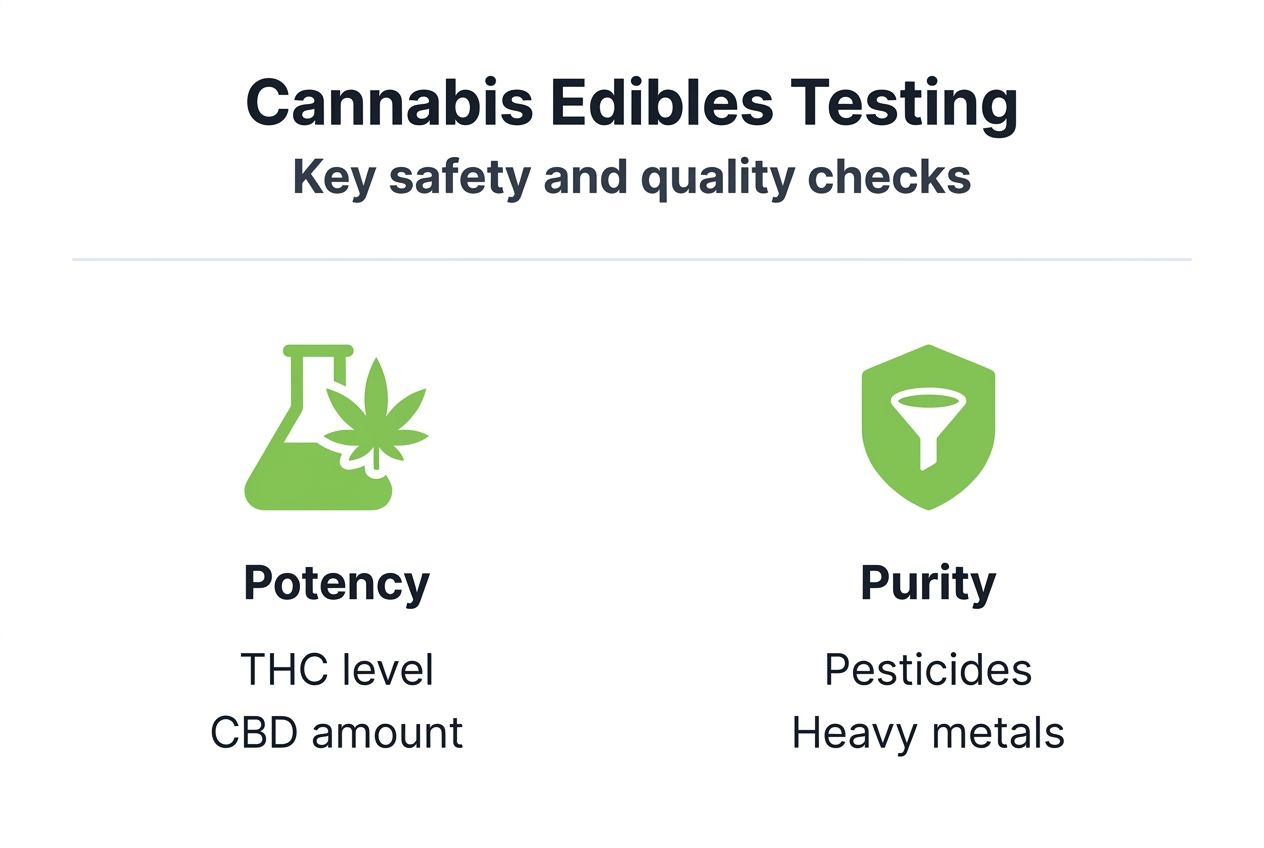
Consistent lab testing forms the backbone of safe cannabis edible consumption. Without it, you risk ingesting products with wildly inconsistent THC or CBD levels that can lead to unpredictable effects, from underwhelming experiences to overwhelming discomfort. Homogenization during production prevents uneven potency, but only testing verifies that each gummy or brownie contains the advertised dose.
Beyond potency, testing for contaminants covers microorganisms, metals, pesticides and residual solvents that pose serious health risks. Microbes like salmonella or E. coli can cause illness, while heavy metals accumulate in your body over time. Pesticides used during cultivation may remain in final products unless screened out through rigorous testing protocols.
Regulatory frameworks depend entirely on lab verification. States like New York cap THC at 10 mg per serving and labs confirm compliance before products reach shelves. Without testing, manufacturers could accidentally or intentionally exceed legal limits, exposing consumers to intoxicating doses and facing regulatory penalties.
Trust in cannabis edibles hinges on transparent, verified testing results. When you see a certificate of analysis from an accredited lab, you know the product meets safety standards and delivers what it promises. This verification process protects both your health and your experience, ensuring every dose aligns with your wellness goals.
Pro Tip: Always request or check for a certificate of analysis (COA) before purchasing cannabis edibles. Reputable brands provide these readily, showing potency and contaminant test results.
Understanding why test CBD products helps you appreciate the broader safety infrastructure protecting all cannabis consumers.
Laboratories primarily rely on Liquid Chromatography with Photodiode Array detection (LC-PDA) to measure cannabinoid profiles in edibles. This sophisticated technique separates individual cannabinoids like THC, CBD, CBG and CBN, then quantifies each by measuring how much UV light they absorb. The result is a precise breakdown of every cannabinoid present in your edible.
LC-PDA determines cannabinoid profiles by separating and quantifying cannabinoids with exceptional accuracy. This method works particularly well for edibles because it doesn’t require heating the sample, preserving the integrity of heat-sensitive compounds. The photodiode array detects multiple wavelengths simultaneously, creating a comprehensive cannabinoid fingerprint.
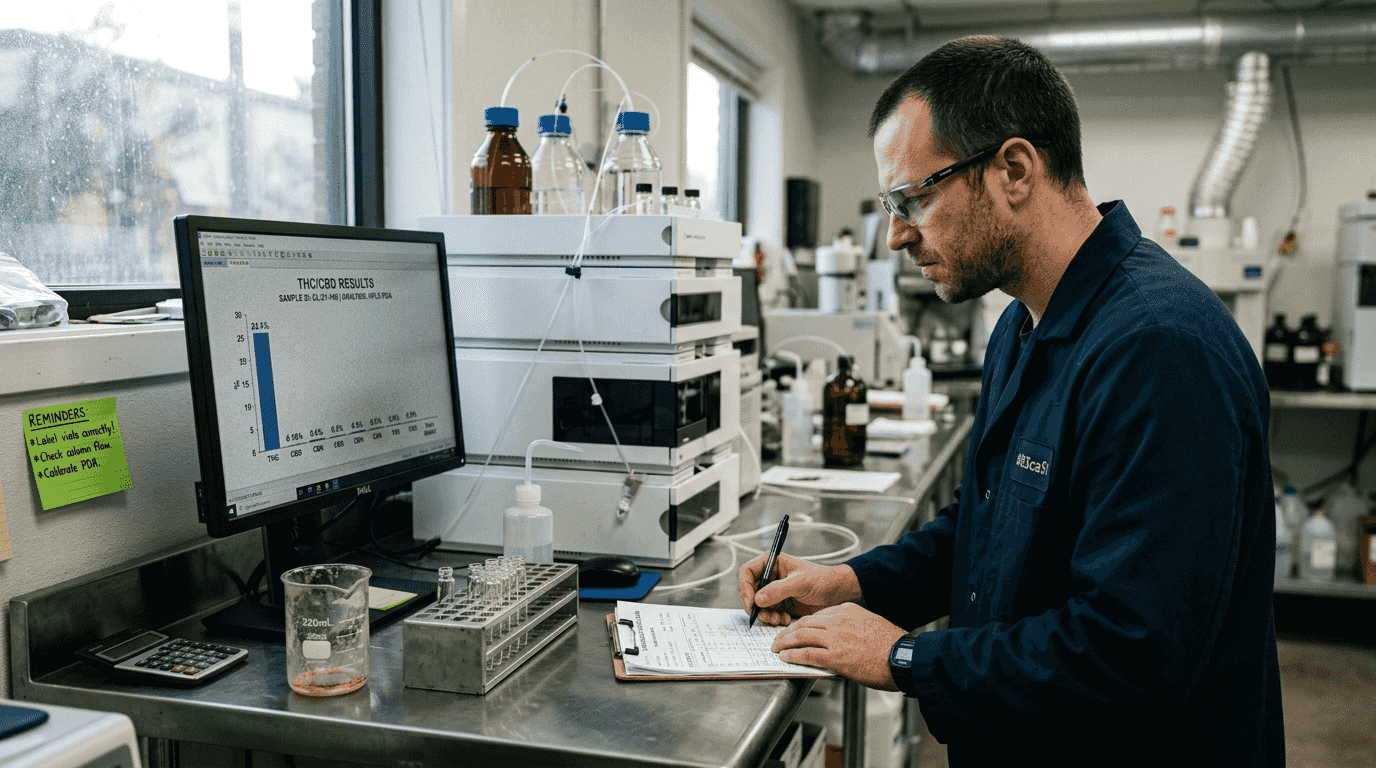
Potency testing faces inherent challenges because total THC varies within batches and plants, sometimes dramatically. Even flowers from the same plant can show different cannabinoid concentrations, making consistent extraction and homogenization critical for edibles. A poorly mixed batch might have some gummies with 15 mg THC and others with 5 mg, despite labels claiming 10 mg uniformly.
To ensure accuracy, manufacturers must homogenize edible mixtures thoroughly before lab sampling. Here’s how the process typically works:
Regulators set strict potency limits per serving and tests verify compliance before products reach consumers. If a batch fails potency testing by exceeding tolerance ranges, it cannot be sold legally. This gatekeeping function protects you from unexpectedly strong or weak doses.
Learning about THC potency in edibles helps you understand how different strengths affect your experience and wellness outcomes.
Regulatory agencies enforce strict standards governing how labs test cannabis edibles, creating a safety net for consumers. Potency must fall within specific tolerance ranges, typically ±10-25% of labeled values, to avoid label failures and regulatory violations. Products outside these ranges cannot be sold, protecting you from misleading dosage claims.
Contaminant testing requirements are equally rigorous. New York requires potency variance within ±25% per serving and mandates comprehensive contaminant screening under 9 NYCRR Part 130. These tests screen for:
| Test Category | Purpose | Typical Limits |
|---|---|---|
| Cannabinoid potency | Verify label accuracy | ±10-25% of stated value |
| Pesticides | Prevent toxic exposure | Action levels per compound |
| Heavy metals | Block accumulation risks | Parts per million thresholds |
| Microbes | Eliminate pathogens | Zero tolerance for E. coli, salmonella |
| Residual solvents | Remove chemical residues | Parts per million limits |
Labs must participate and pass proficiency testing programs regularly to maintain certifications. Proficiency tests help ensure reliable results by sending blind samples to labs and comparing their results against known values. Labs that consistently miss the mark lose accreditation and cannot test commercial products.
ISO 17043 accreditation strengthens proficiency test program credibility by establishing international standards for competence. Programs like the ASTM Hemp Flower Proficiency Test Program provide standardized samples and scoring, ensuring labs maintain accuracy across different matrices and cannabinoid concentrations.
Proficiency testing benefits public health by catching laboratory errors before they affect consumer products. When a lab fails proficiency tests, regulators can intervene immediately, preventing potentially dangerous products from reaching shelves. This oversight creates accountability throughout the testing ecosystem.
Pro Tip: Look for edibles tested by ISO/IEC 17025 accredited labs. This accreditation proves the lab meets international quality standards for testing competence.
Exploring the legal hemp edibles guide clarifies how regulations protect consumers while enabling access to quality products.
Comprehensive lab testing extends far beyond measuring THC and CBD levels. Terpenes, the aromatic compounds that give cannabis its distinctive scents, contribute significantly to flavor, aroma and how cannabinoids affect your body. Testing for these compounds helps you understand the complete sensory and experiential profile of your edibles.
The entourage effect implies multiple cannabinoids and terpenes influence effects, requiring comprehensive testing to capture the full picture. A gummy containing THC plus myrcene and limonene will produce different effects than one with THC alone, even at identical doses. Myrcene promotes relaxation, while limonene offers uplifting, mood-enhancing properties.
Understanding full compound profiles empowers you to select products aligned with desired wellness outcomes. If you seek relaxation before bed, look for edibles with significant myrcene and linalool content. For daytime energy and focus, products rich in limonene and pinene serve you better. Testing makes these informed choices possible.
Labs may test for additional analytes as regulatory frameworks evolve:
This broad analysis supports product transparency and informed consumer choices. When manufacturers provide complete test results showing cannabinoid ratios, terpene profiles and contaminant screenings, you gain confidence in product quality and safety. Transparency builds trust between brands and consumers, elevating industry standards.
Discovering the role of terpenes in edibles deepens your understanding of how these aromatic compounds shape your cannabis experience.
Edwin’s Edibles & Elixirs offers premium cannabis edibles rigorously tested for potency and safety, ensuring every product delivers consistent, reliable effects. Our proprietary TiME INFUSION® technology creates fast-acting formulations backed by transparent lab results, so you know exactly what you’re consuming. Whether you prefer THC gummies, infused beverages, or CBD products, every batch undergoes comprehensive testing for cannabinoids and contaminants.
Learn more through our cannabis edibles guide to understand how different products work and which options suit your wellness needs. Discover why choose premium cannabis edibles to appreciate the quality differences that lab testing reveals. Our resources help you choose cannabis edibles naturally, making informed decisions based on verified test results and transparent ingredient lists.
Lab testing verifies cannabinoid potency (THC, CBD levels), screens for contaminants like pesticides and heavy metals and confirms products meet regulatory safety standards. Tests also check for microbes, residual solvents and sometimes terpene profiles.
Labs use validated methods like LC-PDA to separate and quantify cannabinoids with precision. They participate in proficiency testing programs and maintain ISO/IEC 17025 accreditation to prove measurement accuracy and reliability.
Natural variation in plant cannabinoid content, inconsistent extraction efficiency and inadequate homogenization cause potency differences. Proper lab testing catches these variations before products reach consumers, ensuring label accuracy.
Tests screen for pesticides, heavy metals (lead, arsenic, mercury, cadmium), microorganisms (E. coli, salmonella), residual solvents and mycotoxins. These screenings protect you from health risks associated with contaminated products.
Proficiency tests send blind samples with known values to labs, comparing results against standards. Labs that consistently produce accurate results maintain certification, while those failing lose regulatory approval to test commercial products.
Many comprehensive tests now include terpene profiling to show the full compound spectrum. Terpenes influence effects through the entourage effect, helping you select products matching your desired experience and wellness goals.