
Most American adults searching for wellness find themselves navigating a crowded market, but only a few products offer the distinctive relaxation that CBN provides. With studies showing that over 40 percent of Americans struggle with consistent restful sleep, the need for alternatives is clear. This overview uncovers how CBN stands apart from traditional THC and CBD, helping health-conscious adults discover the unique benefits and options available for targeted, fast-acting relief.
| Point | Details |
|---|---|
| Unique Properties of CBN | Cannabinol (CBN) is a non-psychoactive cannabinoid with potential therapeutic benefits, including sleep support and anti-inflammatory effects. |
| Innovative Edible Formats | CBN edibles come in various forms like gummies, capsules and infused beverages, offering tailored wellness experiences and better bioavailability. |
| Legal Considerations | CBN edibles are federally legal if derived from hemp, but state regulations may vary, necessitating careful navigation by consumers and manufacturers. |
| Comparative Effects | CBN offers mild sedation compared to THC’s high psychoactivity and CBD’s non-intoxicating effects, making it an interesting option for sleep and relaxation. |
Cannabinol (CBN) represents a unique phytocannabinoid that challenges traditional understanding of cannabis compounds. Unlike its more famous counterparts THC and CBD, CBN emerges through a fascinating biochemical transformation process. Scientifically, CBN is primarily formed through the oxidation and degradation of THC, making it a secondary metabolite with distinctive characteristics.
The molecular profile of CBN distinguishes it from other cannabinoids in several critical ways. Pharmacological interactions reveal that CBN exhibits partial agonist activity at cannabinoid receptors, which results in minimal psychoactive effects. This nuanced behavior sets CBN apart as a compound with significant potential for therapeutic applications without the intense psychoactive experiences associated with THC. Its unique biosynthesis pathway involves specific oxidation processes that transform THC into a more subdued molecular structure.
Key characteristics that make CBN exceptional include:
Researchers are increasingly interested in CBN’s subtle yet powerful therapeutic potential. While historically overlooked, this cannabinoid represents an exciting frontier in understanding cannabis biochemistry and potential wellness applications.
Pro tip: When exploring CBN products, prioritize those from reputable sources that provide comprehensive third-party lab testing to ensure quality and accurate cannabinoid profiles.
CBN edibles represent a diverse and innovative category of wellness products designed to deliver targeted therapeutic benefits. Product formulations have expanded significantly, offering consumers multiple consumption options that optimize cannabinoid delivery and bioavailability. These edible varieties range from traditional formats to cutting-edge delivery systems, each engineered to provide specific wellness experiences.
Edible Categories include several distinctive product types:
Extraction and formulation techniques play a critical role in determining the quality and effectiveness of these CBN edible products. Advanced manufacturing processes like supercritical CO2 extraction ensure maximum preservation of cannabinoid compounds, allowing manufacturers to create products with consistent potency and targeted therapeutic potential. The diversity of available formats means consumers can select products that best match their specific wellness goals, whether seeking sleep support, relaxation, or general health maintenance.
Modern CBN edibles are distinguished by their sophisticated approach to cannabinoid delivery. Innovative technologies now enable manufacturers to create products with improved bioavailability, faster onset times and more predictable effects. This scientific approach transforms CBN from a niche compound into a versatile wellness tool.

For a quick reference, review the major factors that influence CBN edible quality and effectiveness:
| Factor | Impact on Edible Quality | Consumer Benefit |
|---|---|---|
| Extraction method | Preserves cannabinoid profile | Consistent potency |
| Delivery format | Alters absorption speed | Personalized onset experience |
| Lab testing | Verifies purity and dosage | Safety and confidence |
| Formulation purity | Reduces contaminants | Enhanced wellness results |
Pro tip: Always start with a low dosage when trying new CBN edibles and gradually increase to find your optimal personal consumption level.
Endocannabinoid system interaction forms the cornerstone of CBN’s physiological effects, revealing a complex biochemical dance within human biology. CBN acts primarily by interacting with CB1 and CB2 receptors through partial agonism, demonstrating a nuanced approach to modulating neurotransmitter systems. This subtle receptor engagement distinguishes CBN from more aggressive cannabinoids, allowing for targeted wellness benefits without overwhelming psychoactive experiences.
The mechanism of action involves multiple intricate pathways:
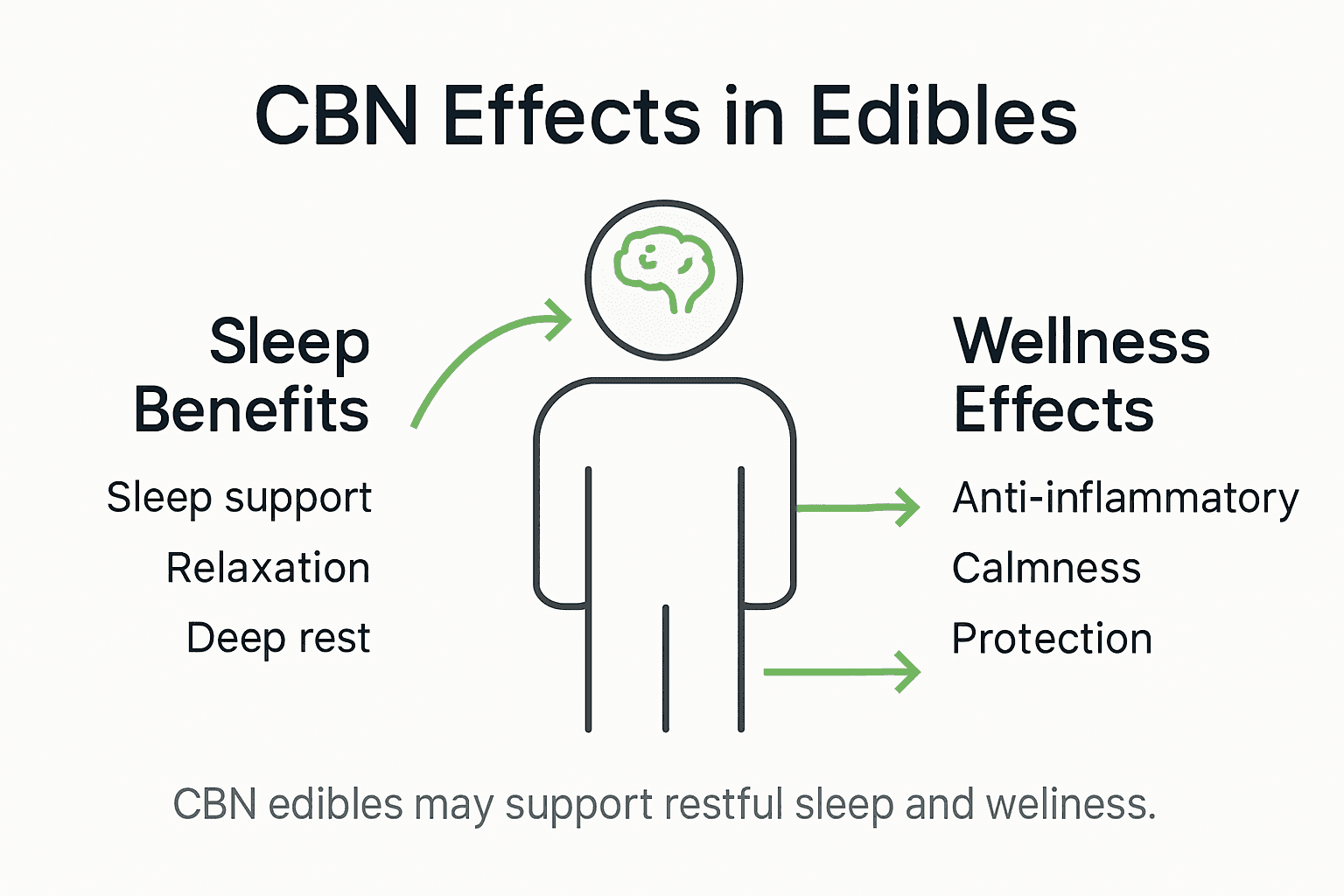
Preclinical studies have demonstrated CBN’s remarkable ability to enhance sleep quality by positively impacting both NREM and REM sleep phases. This unique characteristic stems from its sophisticated interaction with the body’s neurological systems, particularly those governing sleep regulation. Unlike traditional sleep medications, CBN works with the body’s natural rhythms, potentially offering a more harmonious approach to rest and recovery.
Beyond sleep modulation, CBN exhibits promising anti-inflammatory and neuroprotective properties. Its metabolites contribute to a broader spectrum of potential wellness benefits, suggesting a holistic approach to bodily homeostasis. The compound’s ability to work subtly within biological systems positions it as an intriguing option for those seeking natural, minimally invasive wellness solutions.
Pro tip: Consult with a healthcare professional to understand how CBN’s unique physiological interactions might complement your individual wellness goals.
The legal landscape surrounding CBN edibles represents a complex and evolving regulatory environment in the United States. Fundamentally, CBN derived from hemp containing less than 0.3% THC is federally legal under the 2018 Farm Bill, which provides a baseline framework for hemp-derived cannabinoid products. However, the regulatory nuances extend far beyond this basic definition, creating a sophisticated legal terrain that consumers and manufacturers must carefully navigate.
Key legal considerations for CBN edibles include:
Currently, CBN products occupy a regulatory gray area where they are marketed as wellness supplements rather than medical treatments. The FDA has not yet established comprehensive guidelines specifically for CBN, which means manufacturers must exercise significant caution in product development and marketing claims. This regulatory uncertainty creates both opportunities and challenges for businesses operating in the cannabinoid market.
Consumers should remain aware that while CBN edibles are widely available, local jurisdictions may have specific restrictions or interpretations of hemp-derived product regulations. The legal status can vary dramatically between states, with some implementing more stringent controls than federal guidelines suggest. Ongoing clinical research and potential future FDA rulings could significantly impact the regulatory landscape for CBN edibles in the coming years.
Pro tip: Always verify local regulations and purchase CBN edibles from reputable sources that provide transparent third-party lab testing documentation.
Cannabinol represents a nuanced wellness compound with a promising yet complex profile of potential therapeutic benefits and measured risks. Scientific research indicates CBN offers multiple wellness advantages, including enhanced sleep duration, anti-inflammatory responses and potential neuroprotective mechanisms. Unlike more aggressive cannabinoids, CBN presents a subtle approach to supporting bodily systems with minimal intrusive effects.
Potential Benefits of CBN include:
The risk profile for CBN remains relatively moderate, with most potential side effects being mild and transient. Consumers might experience occasional gastrointestinal discomfort, subtle sedation, or mild interactions with other medications. These potential risks underscore the importance of responsible consumption and consultation with healthcare professionals before integrating CBN into wellness routines.
Beyond individual symptom management, CBN’s emerging research suggests a holistic approach to supporting bodily homeostasis. Its unique interaction with the endocannabinoid system positions it as a promising compound for those seeking natural wellness alternatives. However, the scientific community continues to emphasize the need for more comprehensive, large-scale clinical trials to definitively establish its long-term efficacy and safety profile.
Pro tip: Start with low doses of CBN and maintain a symptom journal to track individual responses and potential interactions with your existing health conditions.
Cannabinoid interactions represent a complex biochemical landscape with each compound offering unique therapeutic potential. CBN, THC and CBD demonstrate dramatically different mechanisms of action within the human body, creating a nuanced spectrum of physiological effects. Understanding these distinctions helps consumers make informed choices about their wellness strategies.
Key Comparative Characteristics:
Here’s a concise summary of how CBN, THC and CBD differ in their properties and effects:
| Cannabinoid | Psychoactivity | Primary Therapeutic Use | Mechanism of Action |
|---|---|---|---|
| THC | High | Euphoria, pain relief | Direct CB1 activation |
| CBD | None | Anxiety, inflammation | Indirect modulation |
| CBN | Mild | Sleep support, neuroprotection | Partial agonist activity |
Each cannabinoid contributes uniquely to potential wellness outcomes, with CBN emerging as a particularly interesting compound for sleep and relaxation support. While THC produces pronounced psychoactive experiences and CBD offers broad anti-anxiety properties, CBN provides a more subtle approach to supporting bodily homeostasis. Its gentle mechanism allows for potential therapeutic benefits without the intense effects associated with more aggressive cannabinoids.
The scientific community continues to explore the intricate interactions between these compounds, recognizing that their combined and individual effects represent a sophisticated approach to natural wellness. CBN’s emerging profile suggests it might serve as a complementary component in cannabinoid-based wellness strategies, bridging the gap between the more well-known THC and CBD.
Pro tip: Consult with healthcare professionals to understand how different cannabinoids might interact with your specific health profile and wellness goals.
If you are seeking natural relief for better sleep and enhanced relaxation the unique properties of CBN offer a promising solution. This article highlights CBN’s ability to gently support sleep quality and wellness without overwhelming psychoactive effects making it an ideal choice for those who want subtle yet effective benefits. Understanding how CBN interacts with the body’s endocannabinoid system can guide you toward smarter, safer consumption choices.
Explore our selection of Organic CBD Gummies and THC Gummies crafted with proprietary TiME INFUSION® technology designed for fast-acting relief and consistent dosing. EE&E brings you high-quality, hemp-derived products that align perfectly with your wellness goals. Take control of your sleep and relaxation routine today by visiting Edwin’s Edibles & Elixirs to find the best CBN-enhanced edible options tailored for your needs.
CBN, or cannabinol, is a cannabinoid derived from the oxidation of THC. Unlike THC, CBN has mild psychoactive effects and is primarily known for its potential in sleep support and relaxation. In comparison to CBD, which has no psychoactive effects, CBN offers a unique mechanism of action that can promote sleep without the intensity associated with THC.
CBN edibles work by interacting with the body’s endocannabinoid system, specifically through partial agonism at CB1 and CB2 receptors. This interaction influences neurotransmitter release, potentially enhancing sleep architecture and improving both NREM and REM sleep phases, leading to better overall sleep quality.
While CBN is generally considered safe, potential risks include mild side effects such as gastrointestinal discomfort or subtle sedation. It’s important to consult with a healthcare professional before incorporating CBN into your wellness routine, especially if you are taking other medications.
When starting with CBN edibles, it is advisable to take a low dosage and gradually increase it as needed to find your optimal level. Keeping a symptom journal can help you monitor your responses and adjust the dosage effectively.