
Choosing the right hemp-derived THC edible can be overwhelming when quality and safety are top priorities for American consumers. Rigorous THC extraction methods play a huge role in producing fast-acting products that deliver consistent results for relaxation and wellness. In fact, CO2 extraction is widely recognized as the gold standard for purity and potency, helping health-conscious adults find edibles with maximum cannabinoid benefits and minimal contaminants.
| Point | Details |
|---|---|
| THC Extraction Importance | THC extraction is crucial for producing high-quality hemp edibles by isolating potent cannabinoid compounds. |
| Extraction Methods Overview | There are two primary extraction approaches: solvent-based (e.g., CO2, ethanol) and solventless (e.g., rosin pressing), each with unique benefits. |
| Legal Compliance Essentials | Extraction processes must adhere to regulations, notably keeping THC concentrations ≤ 0.3% and obtaining third-party testing for safety. |
| Quality Indicators for Consumers | Consumers should prioritize products from licensed manufacturers with transparent, scientifically validated extraction methods and comprehensive lab testing. |
THC extraction is the sophisticated scientific process of isolating cannabinoid compounds from hemp plant material, transforming raw botanical ingredients into concentrated forms used in high-quality edible products. This precise technique allows manufacturers to extract powerful active compounds while maintaining their potency and therapeutic potential.
The extraction process involves carefully separating cannabinoids like THC from plant biomass using multiple potential methods. Cannabinoid concentration techniques can be broadly categorized into two primary approaches: solvent-based and solventless extraction. Solvent-based methods typically utilize substances like CO2, ethanol, or hydrocarbon solvents to dissolve and extract cannabinoids, while solventless techniques like rosin pressing use mechanical pressure and heat to release essential compounds.
Key extraction methods include:
Pro tip: Always verify that your THC extraction method prioritizes preserving the plant’s natural terpene profile and cannabinoid integrity for the most effective edible experience.
Professional THC extraction requires sophisticated techniques that transform hemp plant material into concentrated, potent cannabinoid extracts. Industrial extraction techniques encompass multiple methodologies designed to isolate and preserve the plant’s most valuable compounds with precision and efficiency.
The primary extraction methods can be categorized into two fundamental approaches: solvent-based and solventless techniques. Solvent-based methods leverage chemical substances to dissolve and extract cannabinoids, while solventless approaches rely on mechanical processes. Advanced extraction technologies include several specialized techniques:
Solvent-Based Extraction Methods:
Solventless Extraction Methods:
Each extraction method offers unique advantages, with CO2 extraction emerging as the industry gold standard due to its safety, environmental friendliness and ability to precisely target specific cannabinoids and terpenes.
Here’s a comparison of major THC extraction methods, highlighting their efficiency and safety considerations:
| Extraction Method | Efficiency Level | Safety Profile |
|---|---|---|
| CO2 Extraction | High purity, precise | Minimal contamination risk |
| Ethanol Extraction | Good for large scale | Potential solvent traces |
| Hydrocarbon Extraction | Fast, high recovery | Highest purification needed |
| Rosin Pressing | Clean, solvent-free | Labor-intensive but safe |
| Dry Sift | Simple processing | Lower cannabinoid yield |
Pro tip: Always select an extraction method that maintains the natural terpene profile and ensures maximum cannabinoid preservation for the most authentic and effective edible experience.
Cannabis extraction techniques play a critical role in determining the overall quality, safety and effectiveness of THC products. The extraction method directly influences three key characteristics: potency, purity and consumer safety, making it a fundamental process in creating high-quality edibles.

Different extraction approaches yield dramatically different results in cannabinoid concentration and product integrity. Solvent-based methods like hydrocarbon extraction can efficiently extract compounds but require meticulous purification to eliminate potential toxic residues. In contrast, supercritical CO2 extraction emerges as a superior technique, offering precise cannabinoid recovery with minimal risk of contamination.
Key factors influencing extraction quality include:
Professional extraction demands rigorous standards to guarantee that consumers receive safe, potent and pure THC products. Cannabinoid extraction technologies continue to evolve, with researchers developing increasingly sophisticated methods to maximize extract quality while minimizing potential health risks.
Pro tip: Always request third-party lab testing results to verify the purity and potency of THC extracts before consuming any cannabis products.
Federal hemp regulations establish critical guidelines for THC extraction and production of hemp-derived edibles across the United States. The 2018 Farm Bill fundamentally transformed the legal landscape by defining legal hemp products as those containing no more than 0.3% THC by dry weight, creating a complex regulatory framework for manufacturers and consumers.
Key legal considerations for THC extraction include strict monitoring of cannabinoid concentrations, rigorous product testing and comprehensive documentation. Extraction companies must navigate a complex regulatory environment that involves multiple government agencies, including the Food and Drug Administration (FDA), Drug Enforcement Administration (DEA) and individual state regulatory bodies. Each jurisdiction may impose additional requirements beyond federal standards, making compliance a sophisticated and dynamic challenge.
Critical legal compliance requirements for THC extraction include:
The legal landscape continues to evolve, with ongoing discussions about standardizing extraction methods and establishing uniform national guidelines. Extraction regulatory frameworks demand constant vigilance from manufacturers to ensure full compliance with shifting legal standards.
To help ensure safe and compliant products, below are key compliance checkpoints for THC extraction in the U.S.:
| Compliance Area | Critical Consideration | Regulatory Authority |
|---|---|---|
| THC Content Limit | Must be ≤ 0.3% by dry weight | USDA, State Agencies |
| Third-Party Testing | Lab-verified purity and potency reports | Independent Labs, FDA |
| Accurate Labeling | Clear cannabinoid content disclosure | FDA, State Departments |
| Approved Methodology | Use techniques that minimize impurities | State Health Departments, FDA |
Pro tip: Always consult current state and federal regulations, as cannabis laws can change rapidly and vary significantly between different jurisdictions.
Cannabis extraction safety involves understanding the critical factors that determine the quality and purity of THC extracts used in edible products. Consumers must be vigilant about selecting extracts produced through rigorous, scientifically validated methods that prioritize safety, potency and comprehensive quality control.
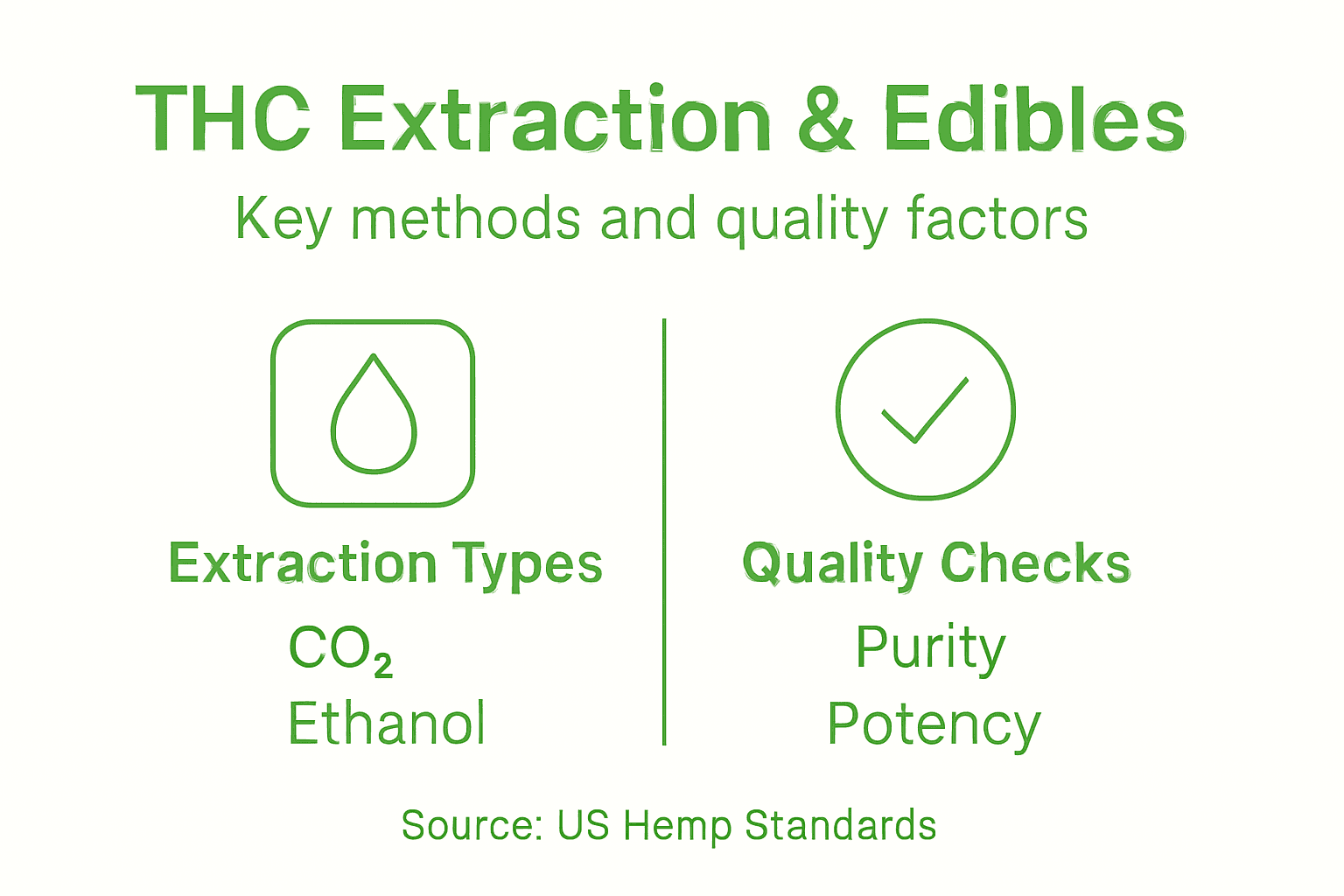
Quality extraction requires a multifaceted approach focused on eliminating potential contaminants and preserving the integrity of cannabinoid compounds. Professional manufacturers utilize advanced techniques like CO2 and ethanol extraction, which offer superior methods for producing clean, reliable extracts. These processes involve sophisticated filtration, winterization and distillation steps designed to remove potential impurities such as pesticides, heavy metals and microbial contaminants.
Key indicators of high-quality THC extracts include:
Safe edible production demands continuous monitoring and adherence to strict regulatory standards. Consumers should prioritize products from licensed producers who demonstrate commitment to comprehensive safety protocols and transparent manufacturing practices.
Pro tip: Always request and carefully review detailed lab testing certificates before consuming any THC extracts, ensuring they provide comprehensive information about purity, potency and potential contaminants.
Understanding what goes into THC extraction reveals just how critical quality and purity are for your enjoyment and safety. If you are looking for products that honor the science behind clean cannabinoid extraction, Edwin’s Edibles & Elixirs offers an exceptional selection of hemp-derived, small-batch edibles made using advanced methods designed to preserve potency and terpene profiles. From fast-acting THC Gummies to thoughtfully crafted Vegan THC Gummies, you can trust our proprietary TiME INFUSION® technology to deliver effects that feel authentic and consistent.
Elevate your edible experience today by choosing products that reflect the care and precision explained in this article. Visit Edwin’s Edibles & Elixirs now to explore how expert extraction translates into delicious, effective and safe cannabis-infused treats designed for your wellness and relaxation. Don’t wait to enjoy premium quality—your perfect edible is just a click away.
THC extraction is the scientific process of isolating the cannabinoid compounds from hemp plant material, resulting in concentrated forms used in high-quality edible products.
The primary methods of THC extraction are solvent-based methods like CO2, ethanol and hydrocarbon extraction, as well as solventless methods such as rosin pressing and dry sift.
The extraction method significantly affects potency, purity and safety of edibles. CO2 extraction is known for providing maximum purity and minimal contamination risk, while hydrocarbon extraction requires rigorous purification to remove toxic residues.
Third-party lab testing ensures the purity, potency and safety of THC extracts, providing consumers with verified information regarding cannabinoid content and the absence of harmful contaminants.