
The right cannabinoid ratio can mean the difference between gentle, lasting relief and an experience that leaves you feeling more anxious than before. Yet most people choosing cannabis edibles or organic CBD products have never been told what numbers like 1:1, 10:1, or 20:1 actually mean for their body. This guide changes that. We’ll explain what cannabinoid ratios are, what research actually shows about their effects and how you can use this knowledge to make smarter, more confident choices whether you’re drawn to fast-acting edibles or organic CBD for everyday wellness.
| Point | Details |
|---|---|
| Ratio drives effects | The balance of CBD to THC—more than strain or marketing—determines how cannabis edibles and CBD products work in your body. |
| Synergy supported by science | Studies show that certain ratios can dramatically boost effectiveness, especially for pain and wellness. |
| Personalization is key | The ideal ratio depends on your goals, body and experience—start low and experiment carefully for the best result. |
| Terpene impacts limited | Unlike popular belief, recent lab research shows terpenes rarely change effects at real-world edible doses. |
A cannabinoid ratio simply describes the proportion of one cannabinoid to another in a given product, most often CBD (cannabidiol) to THC (tetrahydrocannabinol). A product labeled 10:1 CBD:THC contains ten times as much CBD as THC. A 1:1 product contains equal amounts of both. Simple math, but the effects it produces are anything but simple.
Understanding the CBD and THC differences is the foundation for reading ratios well. CBD is non-intoxicating, calming and associated with pain and anxiety relief. THC drives the classic psychoactive experience, but it also carries real therapeutic weight. When you shift the ratio, you shift the entire character of the product.
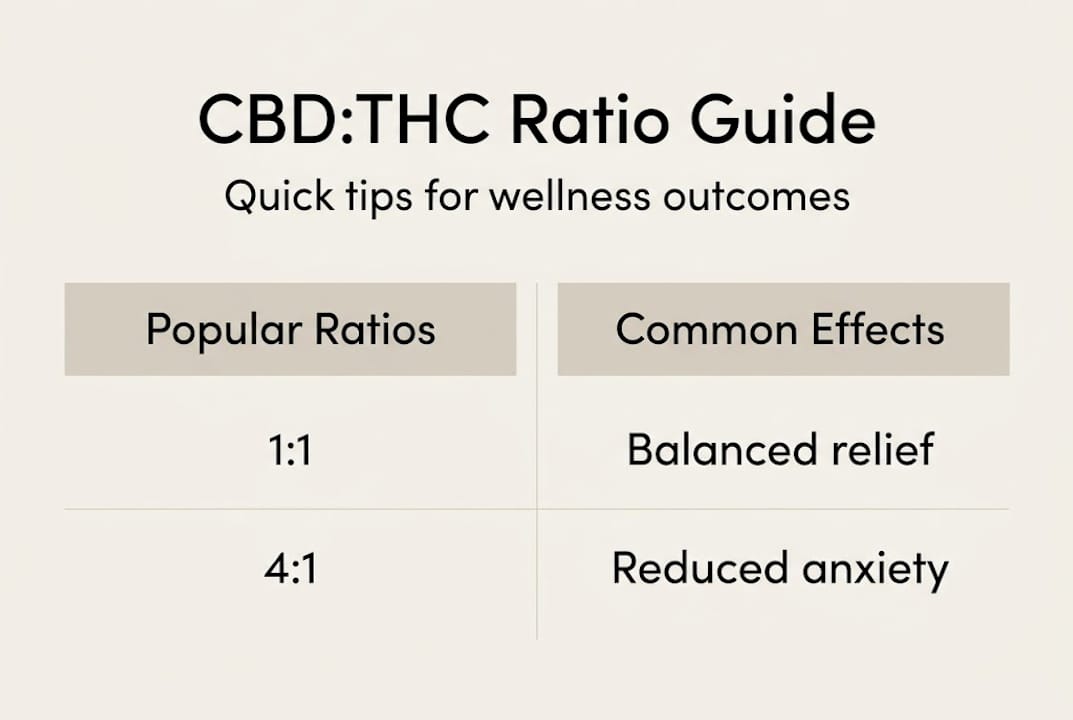
Here’s a quick reference table to anchor the concept:
| Ratio (CBD:THC) | Character | Common uses |
|---|---|---|
| 20:1 or higher | Minimal psychoactivity | Daytime wellness, anxiety, beginners |
| 10:1 | Mild, grounded | Stress, light pain, focus |
| 4:1 | Balanced lean | Moderate pain, sleep support |
| 1:1 | Fully balanced | Pain relief, relaxation, mood |
| 1:4 (THC-rich) | Notable psychoactivity | Stronger pain, deeper relaxation |
The key insight is that these ratios do more than adjust how high you feel. Research shows THC:CBD synergy can increase therapeutic efficacy for certain conditions without adding side effects. In other words, combining cannabinoids thoughtfully isn’t just a preference. It’s a strategy.
“The ratio is where the real science lives. Strain names are marketing. The cannabinoid balance is what actually shapes your experience.” — Edwin’s Edibles & Elixirs team
Here’s why ratios matter to you as a consumer:
Thinking about ratios first is how you move from guessing to knowing.
With a basic grasp of ratios, it’s time to see what scientific research tells us about which ratios work and for what.
The most striking finding in cannabinoid science comes from animal models. Low-dose THC:CBD synergy was shown to boost pain relief 200-fold in mouse neuropathy studies. That’s not a typo. Two hundred times the pain relief compared to either compound alone at matched doses. The implication: combining CBD and THC at smart ratios creates something far more powerful than either molecule working solo.

Animal research also shows metabolic benefits that vary by ratio. THC-rich, 1:1 and 2:1 CBD:THC oils each produced distinct improvements for metabolic syndrome markers in rats, while CBD-rich oil specifically helped lower blood pressure. Different ratios, different outcomes. The ratio isn’t a dial on a single effect. It’s more like a set of keys, each opening a different door.
Here’s a comparison of what animal versus human studies tell us right now:
| Study type | Findings | Confidence level |
|---|---|---|
| Animal (mouse/rat) | Strong synergy, 200-fold pain boost, metabolic benefits | High for mechanism |
| Human clinical trials | Promising but mixed; small sample sizes | Moderate, more needed |
| Lab pharmacology | Clear receptor interaction between CBD and THC | High |
For human trials, synergistic effects in cancer and pain studies have shown early promise but remain inconclusive due to small sample sizes and study design variation. This doesn’t mean ratios don’t work for people. It means the science is still catching up to what many consumers already experience.
Three key research takeaways for you:
Explore more about combining CBD and THC for a deeper look at how these compounds interact in your body. And if you’re curious about gentler approaches, the evidence around low dose THC benefits is genuinely worth your time.
Armed with the evidence, let’s break down how real consumers can use ratios to make more personalized choices.
No single ratio is universally right. The best ratio for you depends on your wellness goal, your sensitivity to THC and the delivery format you’re using. Fast-acting edibles using technology like TiME INFUSION® hit your system faster than traditional gummies, which changes how you should approach dosing and ratio selection. Refer to solid THC dosage guidance before adjusting your approach.
Here’s a practical breakdown by wellness goal:
Rat studies also show that ratio impacts on blood sugar and liver health differ across cannabinoid profiles, reinforcing that this isn’t just about how you feel in the moment. Ratios may have longer-term metabolic implications worth watching.
Pro Tip: Always start at the lowest effective dose, regardless of ratio. Give your body at least a full week at a consistent ratio before deciding to shift. Your endocannabinoid system needs time to respond, especially with edibles.
Here are four steps to test and adjust your ratio with confidence:
Compare CBD vs THC edibles to understand the format differences that also shape your experience alongside ratio.
Many sources still discuss the entourage effect and terpenes, but what does up-to-date science actually say?
The entourage effect is the idea that all cannabis compounds, including cannabinoids, terpenes and flavonoids, work better together than in isolation. It’s a compelling concept. And it’s partly true. But the part most marketers highlight, that terpenes actively modify how cannabinoids behave in your body, is much weaker than advertised.
Here’s what we actually know:
“Lab studies consistently show that terpenes, at the concentrations present in cannabis products people actually consume, do not alter cannabinoid effects at physiological levels. The THC:CBD synergy has strong evidence; terpene modulation does not.”
This is an important distinction for buyers. When a brand tells you that their lemon-scented product will energize you because limonene is a stimulating terpene, that claim isn’t supported by current lab evidence. What is supported is that the cannabinoid ratio in that product shapes your experience in a real, measurable way.
Does this mean terpenes are worthless? Not at all. They contribute to flavor, aroma and overall product enjoyment. Understanding terpene effects explained is still worth your time for preference reasons. But don’t let terpene marketing distract you from the ratio on the label. And when you’re exploring the role of terpenes in edibles, keep that lens calibrated.
The practical takeaway: read the cannabinoid ratio first. Let terpenes influence your flavor preference second.
We’ve helped a lot of people navigate this space and here’s something we’ve noticed: most wellness-focused buyers spend enormous energy chasing strain names and terpene profiles while barely glancing at the cannabinoid ratio on the label. That’s backwards.
The ratio is the true lever. Strain names are often inconsistent across growers and retailers. Terpene profiles, as we’ve covered, don’t reliably predict effects in edibles. But the ratio? That’s the one number that genuinely controls the character of your experience.
We’ve seen customers switch from a branded “Indica” product to a well-crafted 4:1 CBD:THC edible and finally get the sleep support they’d been chasing for months. Not because of the strain. Because the ratio was right for their body.
Our advice: treat the ratio as your starting point for every cannabis wellness decision. Then fine-tune strain preference and flavor profile once you’ve found a ratio that works. Keep notes, listen to your body and don’t be swayed by flashy marketing that puts terpenes before transparency. Confidence in your choices comes from understanding the fundamentals and the cannabinoid ratio is exactly that.
At Edwin’s Edibles & Elixirs, we believe you deserve full transparency on what’s in every product you choose. Every item in our lineup comes with clear cannabinoid ratio labeling so you can apply everything you’ve just learned, right from your first purchase. Whether you’re curious about our cannabis edibles guide to get oriented, ready to explore options through our choosing cannabis edibles resource, or looking for something gentle and plant-based with our organic CBD gummies, we’ve built every offering around your wellness goals. Our TiME INFUSION® technology means fast-acting results you can actually feel and track, making ratio testing accurate and straightforward.
A 1:1 ratio means the product contains equal amounts of CBD and THC, which often balances therapeutic effects while reducing the intensity of THC’s psychoactivity. Research confirms synergy at equal ratios can increase efficacy without added side effects.
Not always. Low-dose synergy studies show that balanced ratios with moderate THC can produce dramatically stronger relief than high CBD alone, though individual responses vary widely.
The THC:CBD synergy part of the entourage effect is well-supported by lab data, but terpene modulation at real-world doses is not. In edibles, your ratio matters far more than the terpene blend.
Start with a high CBD:THC ratio and a low dose, then adjust slowly based on your wellness goal. Animal research shows ratio impacts on metabolism vary meaningfully, so personalized, gradual testing with professional guidance is the wisest approach.