
Finding the right balance with premium Delta 9 THC edibles can feel challenging when your body starts reacting differently over time. THC tolerance is a real and measurable process, not just a feeling and modern cannabis products often contain significantly higher THC levels than in past decades. Understanding how tolerance develops and separates fact from myth helps American adults enjoy edibles more safely and see better results without risking overconsumption.
| Point | Details |
|---|---|
| THC Tolerance is Biological | THC tolerance is a measurable neurological process requiring larger doses for similar effects over time. |
| Individual Variability is Key | Tolerance development varies based on genetics, consumption patterns and individual health factors. |
| Myths Versus Reality | Common myths surrounding THC tolerance can mislead consumers regarding safe cannabis use and effects. |
| Effective Management Strategies | Implementing tolerance reset strategies, such as abstinence and mindful consumption, can help restore receptor sensitivity. |
THC tolerance is a complex physiological response where the body becomes less sensitive to cannabis’s psychoactive effects after repeated exposure. Cannabis use impacts neurological receptors, creating a biological adaptation that requires progressively larger doses to achieve similar experiences.
The development of THC tolerance involves several key mechanisms:
Contrary to popular misconceptions, THC tolerance is not just a psychological phenomenon but a measurable neurological process. Marijuana potency variations significantly influence tolerance development, with modern cannabis products containing substantially higher THC concentrations compared to previous decades.
Tolerance does not equal addiction, but repeated escalation of consumption can increase risks of developing cannabis use disorder.
Common myths surrounding THC tolerance often mislead consumers about its implications:
Pro tip: Monitor your personal cannabis consumption patterns and be aware of gradual tolerance increases to maintain safe and intentional use.
Here’s a summary of common THC tolerance myths compared to scientific facts:
| Myth | Scientific Fact | Impact on Consumers |
|---|---|---|
| All users develop the same tolerance | Tolerance varies by individual factors | Prevents personalized consumption |
| Tolerance allows unlimited safe use | Higher tolerance does not eliminate risks | May cause harmful overconsumption |
| Tolerance develops instantly and uniformly | Development is gradual and variable | Can lead to misunderstanding effects |
| Higher tolerance means greater expertise | Tolerance is unrelated to skill level | Might encourage unsafe practices |
THC tolerance is a complex neurobiological process involving intricate interactions between cannabis compounds and the human endocannabinoid system. Cannabinoid receptor interactions transform neural sensitivity, creating a sophisticated adaptive mechanism within the brain and body.
The primary mechanisms of THC tolerance development include:
Genetic variations play a significant role in individual tolerance development. Some people metabolize THC more rapidly, while others experience slower receptor adaptations. Neuropharmacological changes impact THC metabolism and directly influence how quickly tolerance emerges.
Tolerance is not a uniform process and varies dramatically between individuals based on genetic, metabolic and consumption patterns.
Key factors accelerating THC tolerance include:
Pro tip: Track your personal cannabis consumption patterns and be mindful of gradual changes in your body’s physiological response to maintain safe and intentional use.

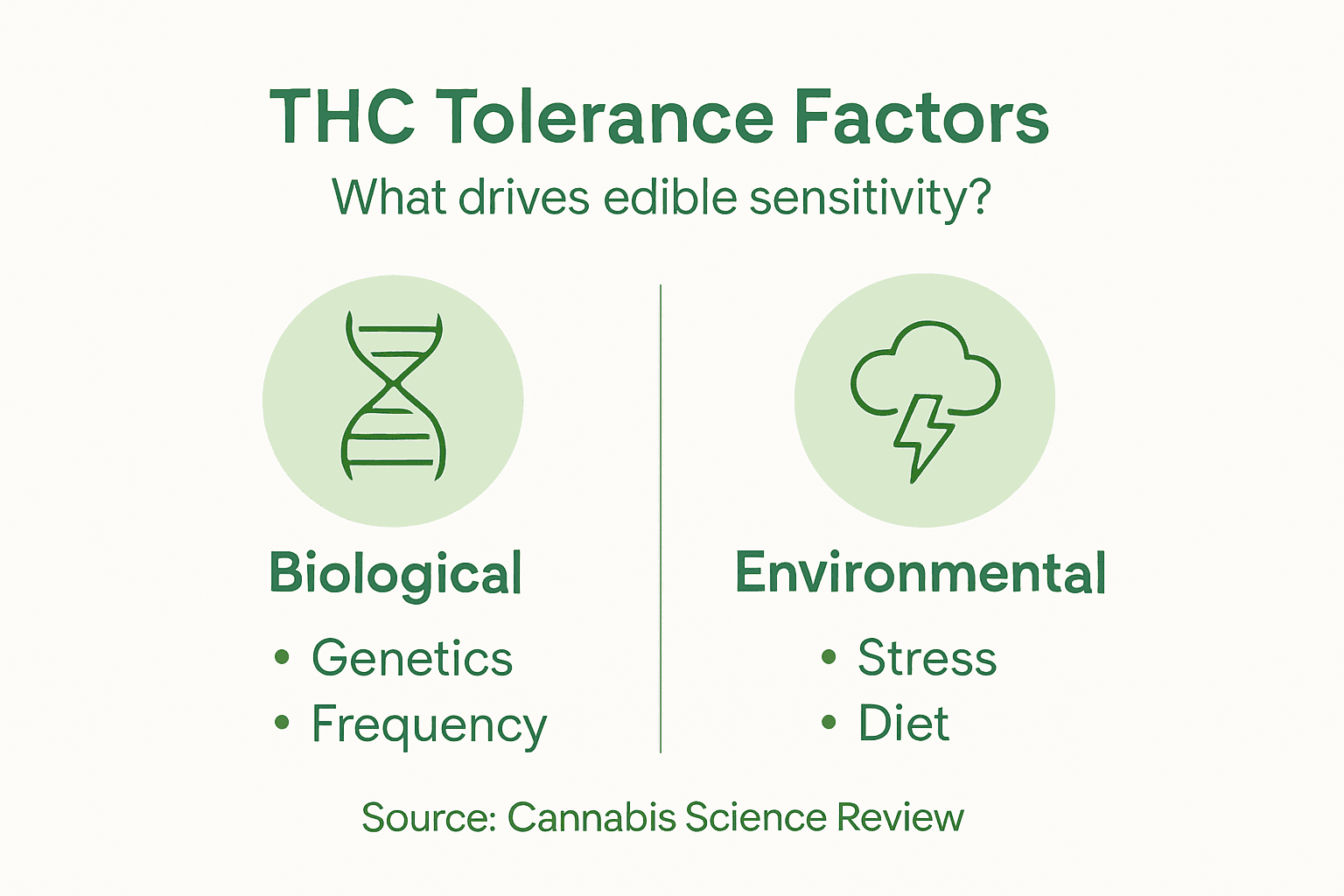
THC sensitivity varies dramatically across individuals, with multiple biological and environmental factors determining how cannabis compounds interact with the human body. Individual differences shape cannabis response, creating a complex landscape of tolerance and physiological reactivity.
Key biological factors influencing THC tolerance include:
Cannabis potency significantly impacts tolerance development, with higher concentration products accelerating neurological adaptation. Younger individuals typically experience more rapid changes in receptor sensitivity, while older adults may have slower metabolic responses to THC compounds.
Tolerance is not a linear progression, but a complex interaction between individual biochemistry and consumption patterns.
Environmental and psychological factors also play critical roles in THC sensitivity:
Pro tip: Maintain a personal journal tracking cannabis consumption, physiological responses and environmental factors to better understand your unique tolerance development.
Compare major factors influencing THC tolerance and their likely effects:
| Factor | Effect on Tolerance | Example Influence |
|---|---|---|
| Genetics | Alters metabolism and receptor sensitivity | Rapid or slow adaptation |
| Product Potency | Accelerates tolerance increase | High-THC cannabis, edibles |
| Consumption Frequency | Promotes faster desensitization | Daily vs. occasional use |
| Age and Health | Modifies metabolic processing | Younger vs. older adults |
THC tolerance manifests through subtle yet significant changes in an individual’s physiological and psychological response to cannabis consumption. Receptor sensitivity diminishes with repeated use, creating a complex landscape of neurological adaptation.
Key signs of developing THC tolerance include:
Tolerance reset strategies involve strategic abstinence, with recommended break periods varying based on individual consumption patterns. Successful tolerance management requires a nuanced approach that considers personal physiology, consumption history and overall health.
A tolerance break is not about deprivation, but about recalibrating your body’s cannabinoid receptors and restoring sensitivity.
Effective tolerance reset strategies include:
Pro tip: Document your cannabis consumption patterns and physiological responses to develop a personalized, science-backed tolerance management approach.
Cannabis consumption, particularly through edibles, presents complex health considerations that require careful navigation. Cannabis consumption carries multiple health risks, demanding a thoughtful and informed approach to use.
Key potential risks associated with THC consumption include:
Cardiovascular health remains a critical concern with prolonged cannabis use, highlighting the importance of understanding individual health dynamics. Edibles present unique challenges due to their delayed onset and extended duration of effects, which can lead to accidental overconsumption.
Responsible cannabis consumption requires understanding personal health limits and maintaining mindful, informed approaches.
Safer consumption strategies involve:
Pro tip: Maintain a detailed consumption journal to track personal responses, dosages and potential side effects for more informed cannabis use.
Understanding THC tolerance is key to enjoying cannabis edibles without increasing your dose dangerously or losing the desired effects. This article highlights the challenge of how tolerance builds through frequent use and high potency products. If you have noticed a need for larger doses or reduced effects it means your body is adapting neurologically. Managing these changes takes intentional strategies including thoughtful product selection and dosing.
Explore our range of Fast-acting THC Gummies that use proprietary TiME INFUSION® technology to deliver consistent and reliable effects. Our products help you maintain control over your tolerance by offering precise, small-batch doses to fit your personal cannabinoid needs. Learn more about cannabis effects and how different formulas interact with your body to avoid tolerance buildup on Cannabis Terpenes. Start your mindful cannabis experience at Edwin’s Edibles & Elixirs today to balance enjoyment with safe consumption.
Take control of your cannabis journey now. Visit us and find the perfect edible to manage tolerance and enhance your experience safely.
THC tolerance is a physiological response where the body becomes less sensitive to the effects of THC, requiring larger doses to achieve similar psychoactive experiences.
THC tolerance can develop through regular consumption of cannabis edibles, as the body adapts to the compounds, reducing receptor sensitivity and altering neurological responses over time.
Signs of THC tolerance include reduced intensity of effects, needing increased amounts to achieve desired experiences and diminished overall sensory responses from typical doses.
To manage or reset THC tolerance, consider taking a tolerance break of 2-4 weeks, gradually reducing consumption frequency and alternating potencies or consumption methods. Keeping track of your consumption patterns can also aid in managing tolerance effectively.