
Cannabinoids are biologically active compounds that regulate mood, sleep, immune function and appetite by interacting with the body’s endocannabinoid system (ECS). Understanding why cannabinoids are important goes far beyond recreational use. The ECS is a signaling network present in virtually every tissue in the human body and cannabinoids, whether produced internally or consumed through hemp-derived products, are its primary activators. FDA-approved medications like Epidiolex, dronabinol and nabilone confirm that cannabinoids have earned a legitimate place in clinical medicine. For adults exploring cannabinoids for wellness and relaxation, the science behind these compounds is the foundation for making confident, informed choices.
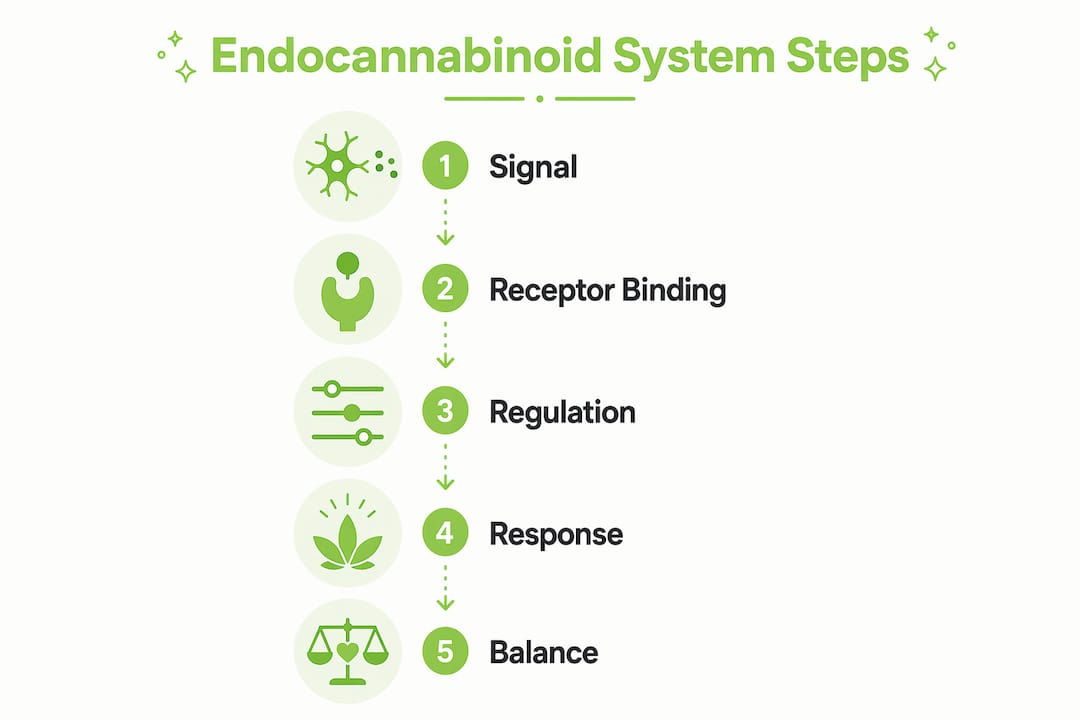
The endocannabinoid system is the biological framework that makes cannabinoids matter. It consists of two primary receptor types, CB1 and CB2, along with naturally produced compounds called endocannabinoids and the enzymes that break them down. CB1 receptors concentrate in the brain and central nervous system, governing mood, memory and pain perception. CB2 receptors are distributed throughout immune tissue and peripheral organs, influencing inflammation and immune response.

Cannabinoids act on the ECS to regulate immune function, mood, memory, sleep and appetite. That single fact explains why cannabinoid research spans oncology, psychiatry, neurology and sleep medicine simultaneously. No other compound class touches this many physiological systems through one unified mechanism.
The distinction between endocannabinoids and phytocannabinoids is worth understanding clearly. Endocannabinoids like anandamide and 2-AG are produced by your own body on demand. Phytocannabinoids like THC (delta-9-tetrahydrocannabinol) and CBD (cannabidiol) come from the cannabis plant and mimic or modify those internal signals. When you consume a hemp-derived Delta 9 product, you are essentially supplementing a system your body already relies on every day.
Key physiological processes the ECS directly influences include:
Pro Tip: If you are new to cannabinoids, think of the ECS as a dimmer switch rather than an on/off toggle. Cannabinoids adjust the intensity of biological signals rather than overriding them entirely, which is why dose and product composition matter so much.
The clinical case for cannabinoids is real, specific and still evolving. Three FDA-approved cannabinoid medications anchor the evidence base. Dronabinol and nabilone are synthetic THC analogs approved for chemotherapy-induced nausea and appetite stimulation in HIV/AIDS patients. Epidiolex, a purified CBD formulation, is approved for Dravet syndrome and Lennox-Gastaut syndrome, two severe pediatric epilepsy conditions. These approvals confirm that cannabinoids in medicine are not theoretical. They are prescribed, monitored and reimbursed.
A 2026 systematic review published in Lancet Psychiatry added important nuance to the broader picture. The review found that cannabinoids benefit sleep time in insomnia and reduce symptoms of cannabis use disorder, but the evidence for anxiety and PTSD remains insufficient to draw firm conclusions. That distinction matters. It means cannabinoids are not a blanket solution for mental health, but they do show genuine, measurable benefit in specific conditions.
| Condition | Evidence strength | FDA-approved medication |
|---|---|---|
| Chemotherapy-induced nausea | Strong | Dronabinol, Nabilone |
| Appetite loss in HIV/AIDS | Strong | Dronabinol |
| Severe pediatric epilepsy | Strong | Epidiolex (CBD) |
| Insomnia (sleep time) | Moderate | None currently |
| Cannabis use disorder | Moderate | None currently |
| Anxiety and PTSD | Weak/Insufficient | None currently |
Clinical prescribing of cannabinoids typically involves interprofessional teams spanning oncology, palliative care and pharmacology, with pharmacists monitoring dosing and drug interactions. That level of coordination reflects how seriously the medical community takes both the benefits and the risks. For adults using cannabinoids outside a clinical setting, this context is a useful reminder that dose, ratio and individual biology all shape outcomes.
Pro Tip: When evaluating any cannabinoid product for wellness, look for brands that publish cannabinoid ratios and third-party lab results. Knowing exactly how much THC and CBD you are consuming is the single most practical step toward predictable results.
THC and CBD are both cannabinoids, but they work through different mechanisms and produce meaningfully different experiences. THC causes psychoactive effects by binding directly to CB1 receptors in the brain. CBD does not bind strongly to CB1 receptors and instead modulates the ECS indirectly, which is why it does not produce intoxication. CBD can also reduce THC’s intensity by competing for receptor sites, which is why product composition directly shapes the user experience.
For adults focused on relaxation and wellness, the THC-to-CBD ratio in a product is one of the most consequential variables. Naturalistic studies report that CBD is more consistently linked to anxiety reduction, while THC can increase anxiety, particularly at higher doses or in individuals with low tolerance. This finding has direct implications for product design and personal use.
Here is how the two cannabinoids compare across key wellness dimensions:
| Dimension | THC | CBD |
|---|---|---|
| Psychoactivity | Yes, binds CB1 directly | No, indirect ECS modulation |
| Relaxation effect | Dose-dependent, can cause anxiety at high doses | Consistently associated with calm |
| Sleep support | May help sleep onset; disrupts REM at high doses | May support sleep quality without sedation |
| Anxiety response | Can increase anxiety in sensitive individuals | Associated with anxiety reduction |
| Legal status (hemp-derived) | Legal under 0.3% Delta 9 threshold | Broadly legal |
Wellness-focused cannabinoid use tends to favor balanced or CBD-dominant products for daytime calm, with low-dose THC products favored for evening relaxation and sleep support. Indica-leaning hemp strains are commonly associated with body relaxation, while Sativa-leaning profiles tend toward mental clarity. Hybrid formulations sit between those poles, offering flexibility for different times of day and personal preferences.
Choosing cannabinoid products wisely starts with understanding what you are trying to achieve. Relaxation, sleep support and general wellness each call for different cannabinoid profiles, doses and delivery formats. Edibles and infused beverages metabolize differently than inhaled cannabis, producing slower onset but longer-lasting effects. That pharmacokinetic difference is not a flaw. It is a feature for adults who want sustained, predictable results rather than an immediate spike.
Follow these steps to approach cannabinoid use responsibly:
Cannabinoids carry real risks for some individuals, including cognitive impairment and psychiatric symptom exacerbation. Adults with a personal or family history of psychosis or bipolar disorder should exercise particular caution with THC-dominant products and consult a physician before use.
Pro Tip: Edibles and beverages made with fast-acting technology, like the TiME INFUSION® process used by Edwin’s Edibles & Elixirs, can significantly reduce the guesswork around onset time. Faster onset means you spend less time waiting and less time accidentally over-consuming.
The conversation around cannabinoids carries more mythology than almost any other health topic. Clearing up the most persistent misconceptions helps you make decisions grounded in evidence rather than hype or fear.
The therapeutic use of cannabinoids in clinical practice often outpaces the available evidence, which makes informed, skeptical engagement with product claims a genuine skill worth developing.
Cannabinoids are important because they activate the endocannabinoid system, a universal regulatory network governing mood, sleep, immunity and appetite, with clinical applications confirmed by FDA-approved medications and ongoing research.
| Point | Details |
|---|---|
| ECS is the mechanism | CB1 and CB2 receptors explain why cannabinoids affect mood, sleep, immunity and appetite. |
| Clinical evidence is condition-specific | FDA approvals cover epilepsy, nausea and appetite; sleep evidence is moderate; anxiety evidence is weak. |
| THC and CBD serve different roles | CBD consistently supports calm; THC is dose-dependent and can increase anxiety at high doses. |
| Dose and ratio determine outcomes | Individual ECS variability means starting low and tracking your response is the most reliable approach. |
| Myths distort decision-making | Cannabinoids are neither cure-alls nor universally risky; evidence-based, personalized use produces the best results. |
Jamison here. After years of following cannabinoid research and watching the wellness industry grow around it, the thing that strikes me most is how rarely people talk about the ECS as a personal baseline. Two people can take the same 5 mg Delta 9 gummy and have completely different experiences, not because one product is better than the other, but because their endocannabinoid systems are operating from different starting points. Stress, sleep debt, diet and genetics all influence ECS tone before a single cannabinoid enters the picture.
The clinical literature reflects this. The 2026 Lancet Psychiatry review did not find that cannabinoids fail for anxiety universally. It found that the evidence is insufficient to generalize. That is a very different statement. It means some people experience real anxiety relief from CBD-dominant products and the science just has not caught up with the mechanism yet.
What I find genuinely exciting is how product design is starting to account for this variability. Fast-acting delivery formats, precise cannabinoid ratios and strain-specific formulations give adults real tools for personalizing their experience. The days of guessing whether an edible will hit in 45 minutes or two hours are fading. That shift matters enormously for anyone using cannabinoids for wellness and relaxation rather than recreation.
My honest advice: treat cannabinoids the way you would treat any supplement with real physiological effects. Respect the dose, know your product and give yourself time to learn what works for your specific biology. The science is on your side when you approach it that way.
— Jamison
At Edwin’s Edibles & Elixirs, we believe that understanding cannabinoids is the first step toward choosing products that genuinely support your wellness goals. Our small-batch, hemp-derived Delta 9 THC gummies and organic CBD gummies are crafted with transparent cannabinoid ratios and third-party lab verification, so you always know exactly what you are consuming. Our proprietary TiME INFUSION® technology delivers faster onset times, taking the uncertainty out of edible experiences. Whether you are exploring cannabis edibles for the first time or refining a wellness routine you already love, our edible consumption guide gives you the practical knowledge to get the most from every product. Come explore what thoughtful cannabinoid craftsmanship feels like.
The endocannabinoid system is a biological signaling network of CB1 and CB2 receptors found throughout the brain, immune tissue and organs that regulates mood, sleep, appetite and immune function. Cannabinoids are important because they directly activate this system, producing therapeutic and wellness effects.
Yes. Dronabinol, nabilone and Epidiolex are FDA-approved cannabinoid medications used for chemotherapy-induced nausea, appetite stimulation in HIV/AIDS and severe pediatric epilepsy respectively.
THC binds directly to CB1 receptors and produces psychoactive effects that are dose-dependent, while CBD modulates the ECS indirectly without intoxication. CBD is more consistently associated with anxiety reduction; THC can increase anxiety at higher doses.
For Delta 9 THC edibles, 2.5 to 5 mg is the standard starting point for adults with low tolerance. CBD typically requires 15 to 25 mg for noticeable wellness effects. Starting low and tracking your response is the most reliable method given individual ECS variability.
Yes. Cannabinoids can cause cognitive impairment, fatigue, diarrhea and in some individuals may exacerbate psychiatric symptoms. Adults with a history of psychosis or bipolar disorder should consult a physician before using THC-dominant products.