
Most american consumers do not realize that more than 60 percent of edible cannabis products contain artificial additives or synthetic pesticides. This matters because what goes into your favorite treat can impact both your health and the environment. Understanding the truth behind organic edibles helps you cut through the noise, separate myth from fact and choose cannabis products that truly match your values.
| Point | Details |
|---|---|
| Understanding Organic Certification | Organic edibles undergo rigorous certification ensuring adherence to stringent agricultural standards, prioritizing ecological practices and consumer safety. |
| Benefits of Choosing Organic | Organic cannabis edibles reduce chemical exposure and promote better nutritional quality through minimally processed, clean ingredients. |
| Key Differences from Conventional Edibles | Organic edibles utilize natural pest management and avoid synthetic additives, which enhances product integrity and supports sustainable farming practices. |
| Importance of Transparency | Consumers should seek clear certification marks and understand production standards to make informed choices about organic products. |
Organic edibles represent a carefully curated category of cannabis-infused products produced through environmentally responsible, sustainable agricultural practices. According to nrcs.usda.gov, these products undergo rigorous certification processes that ensure they meet stringent national standards for organic production, distinguishing them from conventional cannabis edibles.
Organic edibles are not just a marketing buzzword but a comprehensive approach to product creation that prioritizes natural cultivation methods. Foodprint.org clarifies that while organic farming permits certain natural pesticides, their use is significantly more limited compared to conventional agriculture. This means consumers can expect edibles with fewer synthetic chemicals and a more environmentally conscious production process.
Common myths about organic edibles often stem from misunderstandings about their production and quality. Many people mistakenly believe that organic automatically means pesticide-free or that these products are inherently superior in every way. In reality, organic certification involves a nuanced set of guidelines that balance ecological sustainability with safe, responsible agricultural practices. When selecting organic cannabis edibles, consumers should look for clear certification marks and understand the specific standards that define organic production.
Key characteristics that distinguish genuine organic edibles include:
By understanding these principles, consumers can make more informed choices about the cannabis edibles they consume, appreciating the careful processes behind truly organic products.

Organic edibles represent a diverse array of cannabis-infused products that leverage natural ingredients and sustainable production methods. ScienceDirect provides an extensive overview of organic food products, highlighting the complexity and variety of ingredients used in organic production. For cannabis edibles, this translates to carefully selected components that prioritize natural cultivation and minimal processing.
According to pubs.ext.vt.edu, organic edibles can be categorized into several key types, each with unique characteristics and production standards. These typically include:
For consumers interested in exploring these options, how to choose cannabis edibles naturally can provide additional guidance on selecting high-quality organic products. The key ingredients in these edibles often include organic plant-based components, natural sweeteners like agave or honey and carefully extracted cannabinoids that maintain their integrity through minimal processing.
Key considerations for organic edible ingredients include:
By understanding the nuanced world of organic edible ingredients, consumers can make more informed choices about the cannabis products they consume, appreciating the careful craftsmanship behind truly organic offerings.
Organic cannabis edibles offer a comprehensive approach to wellness that extends far beyond traditional consumption methods. ScienceDirect highlights the significant advantages of organic food products, emphasizing reduced pesticide exposure and potential nutritional benefits that directly apply to cannabis and hemp edibles. This approach prioritizes consumer health through carefully selected, minimally processed ingredients that maintain the natural integrity of cannabinoids.
NCBI research reveals that consumer trust in organic products stems from their commitment to transparent, clean production methods. Organic cannabis and hemp edibles distinguish themselves through several key benefits:
For those seeking a more targeted wellness approach, cannabis edible consumption guide for optimal results can provide additional insights into maximizing the potential benefits of organic edibles. The holistic approach of organic cannabis products goes beyond simply avoiding harmful chemicals; it represents a commitment to whole-plant wellness that considers the intricate relationship between cultivation methods and final product quality.
Key considerations for understanding the benefits include recognizing the comprehensive impact of organic production:
By choosing organic cannabis and hemp edibles, consumers make a conscious decision to prioritize their health, support sustainable practices and experience a more authentic, minimally processed approach to wellness.
Organic certification represents a rigorous process that ensures the highest standards of product quality and consumer safety. NRCS provides comprehensive insights into the stringent requirements that govern organic production, emphasizing a holistic approach to agricultural practices that go far beyond simple chemical avoidance.
According to pubs.ext.vt.edu, the USDA organic certification process involves multiple critical stages of evaluation and verification. These standards ensure that organic products meet strict guidelines for:
For consumers seeking deeper understanding, why choose organic CBD gummies can provide additional context about the certification’s importance. The certification process is not a one-time event but a continuous commitment to maintaining the highest standards of agricultural and production integrity.
Key safety considerations in organic certification include:
By understanding these detailed certification processes, consumers can make informed choices that prioritize their health, support sustainable agriculture and ensure the highest quality organic products.
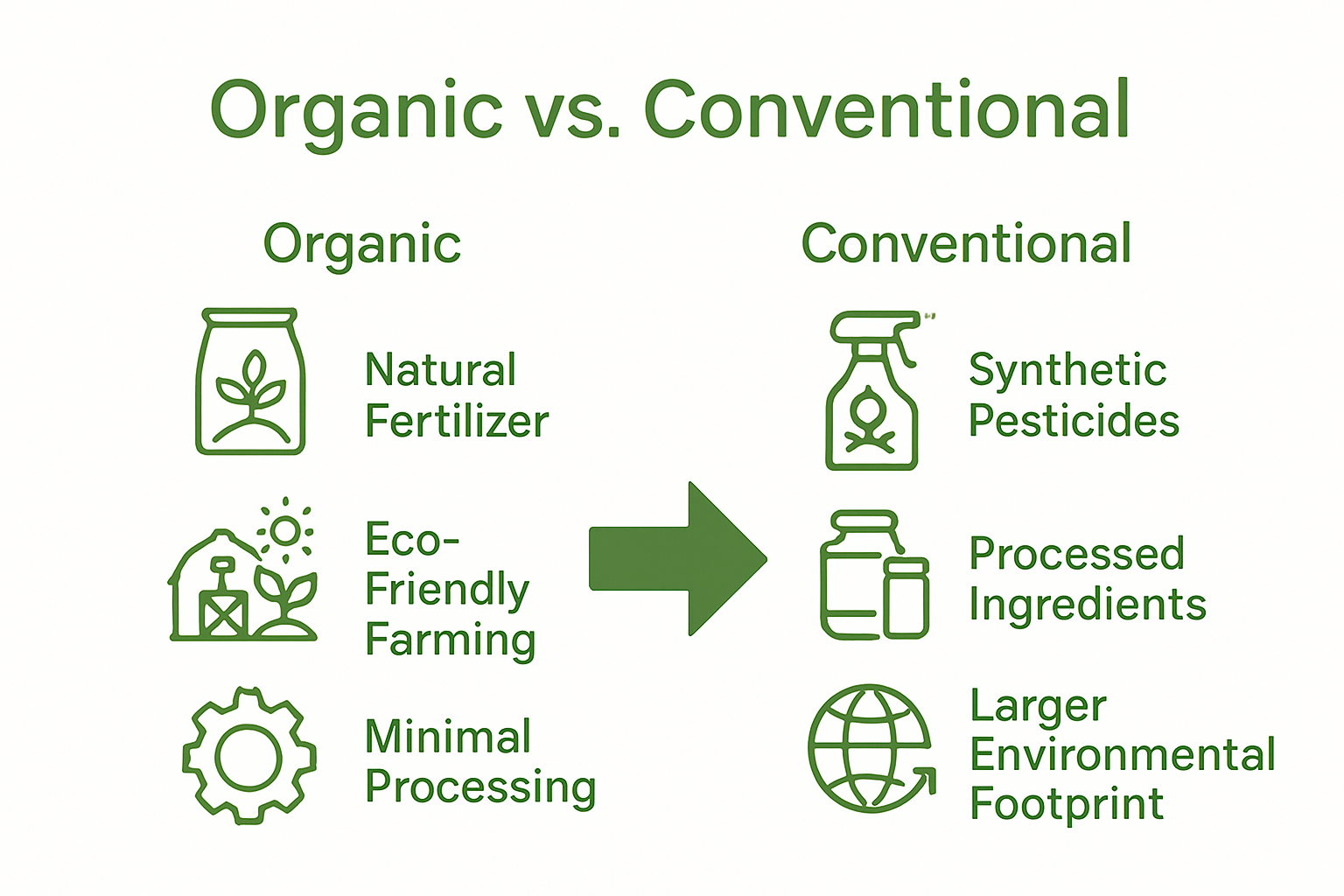
Organic and conventional edibles represent two fundamentally different approaches to cannabis product production, each with distinct characteristics that impact quality, safety and environmental sustainability. FoodPrint provides a comprehensive comparison that highlights the nuanced differences between these production methods, revealing that the distinctions go far beyond simple marketing claims.
ScienceDirect research reveals key differentiators in their approach to cultivation, processing and overall product integrity. The primary distinctions can be understood through several critical dimensions:
For consumers seeking deeper insights, types of THC edibles explained for wellness seekers can provide additional context about product variations. The fundamental difference lies not just in production methods, but in a holistic approach to creating cannabis products that prioritize consumer health and environmental responsibility.
Key comparative considerations include:
Ultimately, the choice between organic and conventional edibles represents a broader decision about personal health, environmental impact and support for sustainable agricultural practices.
Choosing organic edibles means prioritizing your health and the environment by avoiding synthetic chemicals and supporting sustainable, transparent production methods. If you want cannabis products made with care, using natural ingredients and rigorous certification standards, it is essential to select trusted options that uphold these values. Edwin’s Edibles & Elixirs offers a curated selection of premium, hemp-derived products that bring these benefits straight to you.
Discover our impressive range of Organic CBD Gummies crafted to deliver fast-acting effects with our proprietary TiME INFUSION® technology. For those seeking a refreshing experience, explore our innovative THC Drinks & Edibles made with organic ingredients and balanced formulations. Ready to elevate your wellness routine with quality you can trust? Visit EdwinsEdibles.com now and make the switch to organic cannabis edibles that truly support your health and lifestyle.
Organic edibles are cannabis-infused products created through sustainable agricultural practices that meet strict national organic certification standards. They are produced without synthetic fertilizers and use approved natural pesticides in a limited capacity.
Organic edibles prioritize natural cultivation methods, using minimal synthetic chemicals and emphasizing environmental sustainability, while conventional edibles often involve synthetic preservatives and fertilizers, impacting both product quality and environmental health.
Choosing organic cannabis edibles can lead to reduced chemical exposure, enhanced preservation of cannabinoids, improved environmental sustainability and higher nutritional quality due to the use of minimally processed, natural ingredients.
To identify genuine organic edibles, look for clear certification marks, ensure that the products are sourced from certified organic farms and verify third-party testing for purity and potency. Understanding the production methods and ingredient sourcing is also key.