
Selecting the right dose for edible cannabis often feels complicated, especially when potencies vary so much between brands and products. For health-conscious adults in the United States aiming to use Delta 9 THC edibles for wellness or relaxation, precise dosing is essential for both safety and desired results. Understanding what dose truly means in edible cannabis empowers you to enjoy predictable effects, minimize adverse reactions and confidently integrate organic, lab-tested edibles into your routine.
| Point | Details |
|---|---|
| Understand Dosage | Always check the THC content on edible cannabis products and start with a low dose, especially if you are a beginner. |
| Effects and Timing | Edibles take longer to kick in (30 minutes to 2 hours) due to digestion, so be patient and avoid taking more before assessing the effects. |
| Know the Differences | Recognize the differences between THC and CBD edibles; THC is psychoactive while CBD offers therapeutic benefits without intoxication. |
| Follow Legal Limits | Be aware of legal dosage limits in your state to ensure safe consumption and to avoid overconsumption risks. |
When you pick up an edible product, you’ll notice a number on the label that typically reads something like “10mg THC” or “25mg Delta 9.” That number is the dose and it represents the total amount of THC (tetrahydrocannabinol) contained in that specific product. Think of it like the nutrition label on a food package, except instead of calories or grams of protein, you’re looking at the amount of active cannabinoid you’re consuming. This distinction matters tremendously because understanding dose helps prevent adverse effects that can range from mild discomfort to more serious reactions like anxiety or paranoia.
The challenge with edible dosing is that modern cannabis products have become significantly more potent than they were even a decade ago. The quantity of cannabinoids such as THC and CBD you consume directly affects your mood, perception and overall experience. What makes this particularly important for wellness and safety is the wide variation in potency across different products. Two gummies from different manufacturers might both be labeled as “edible cannabis products,” but one could contain 5mg of THC while another contains 20mg. Without understanding what your dose actually means, you could accidentally take four times the amount you intended. This variability is why responsible manufacturers like Edwin’s Edibles & Elixirs emphasize clear labeling and consistent dosing in every single product. When you know your dose, you gain control over your experience and can make informed decisions about what works best for your body and wellness goals.
Dose also matters because it’s the foundation of personalized wellness. Your ideal dose depends on several factors: your body weight, metabolism, tolerance level, whether you’ve eaten recently and whether you’re new to cannabis or an experienced user. A beginner might find their sweet spot at 2.5mg to 5mg, while someone with regular experience might prefer 10mg to 20mg or higher. The dose determines not just whether you’ll feel effects, but what kind of effects you’ll experience. Someone consuming a microdose (1-2.5mg) might experience subtle relaxation and mental clarity, while someone taking 15mg might feel deeper relaxation and more noticeable body effects. This is why starting low and understanding what each dose range does for your individual system is so critical. When you understand your personal dose, edibles become a predictable, reliable tool for wellness rather than an unpredictable guessing game.
Pro tip: Start with the lowest effective dose (2.5mg to 5mg for beginners) and wait at least two hours before assessing effects, since edibles take longer to kick in than other consumption methods and their effects can be intensified by food in your stomach.
When you consume an edible, your body doesn’t process it the same way it processes inhaled cannabis. Instead of entering your bloodstream through your lungs, edibles travel through your digestive system, getting broken down by stomach acid and enzymes before being absorbed through your intestinal walls. This journey through your digestive tract is what makes edibles fundamentally different from smoking or vaping and it’s why understanding absorption and metabolism matters so much for predicting how you’ll feel and when you’ll feel it. How THC absorbs through your digestive system determines both the timing and intensity of effects you experience, making it crucial knowledge for anyone using edibles intentionally.
Once THC reaches your intestines and enters your bloodstream, it travels directly to your liver, where the real transformation happens. Your liver converts THC into 11-hydroxy-THC, a compound that’s significantly more potent and psychoactive than the original THC you consumed. This hepatic metabolism (that’s what scientists call liver processing) is the game changer. The 11-hydroxy-THC your liver produces has stronger effects on your brain and body than the equivalent dose of smoked cannabis would produce. This is why edibles hit harder and last longer than other consumption methods. Because your dose has to travel through your entire digestive system before reaching your liver, there’s a built-in delay. Most people experience onset of effects somewhere between 30 minutes to two hours, though it can take even longer depending on whether you’ve eaten, your metabolism and the specific product. The payoff for this patience is that once those effects arrive, they’re substantial and can last anywhere from 4 to 12 hours, making edibles ideal for sustained wellness support rather than quick relief.
Your individual metabolism plays a huge role in how quickly and intensely you feel edible effects. Some people have faster metabolisms and process THC rapidly, experiencing effects sooner but with them wearing off faster. Others metabolize more slowly, meaning a longer wait but potentially more prolonged effects. Body weight, age, liver health and even genetics influence this process. Someone who ate a large meal before consuming an edible will absorb it more slowly than someone on an empty stomach. Fat also matters because THC is fat-soluble, meaning it binds to fats in food. An edible consumed with fatty foods might absorb differently than one taken alone. This is why two people taking the exact same dose can have wildly different experiences. The endocannabinoid system in your body mediates all of this absorption and metabolism and understanding how it works gives you the power to time your edibles strategically. If you want sustained, reliable effects throughout your evening, edibles are your answer. If you need faster onset, you might prefer alternative consumption methods. Knowing your own metabolic response to edibles takes experimentation, but once you understand your personal absorption pattern, you can use edibles with precision and confidence.
Pro tip: Consume edibles with a meal containing healthy fats (like avocado, nuts, or olive oil) to enhance absorption consistency and plan your consumption for times when you can wait 60 to 120 minutes before expecting full effects to arrive.
When you’re browsing edibles, you’ll notice products labeled with different cannabinoid ratios. Some bottles say “25mg THC,” others say “25mg CBD,” and some say both. These labels represent fundamentally different experiences because THC and CBD are distinct compounds with completely different effects on your body and mind. THC is the psychoactive cannabinoid that produces the classic “high” you’ve likely heard about. It alters your mood, perception and cognition. CBD, on the other hand, is non-intoxicating, meaning it won’t get you high. The different potencies of THC and CBD in edibles create vastly different user experiences and safety profiles. Understanding these differences isn’t just helpful for choosing what you want. It’s critical for using edibles safely and getting the effects you actually want rather than being surprised by something unexpected.
THC-dominant edibles are what most people think of when they picture cannabis products. A 10mg THC gummy will produce noticeable intoxicating effects for most people, affecting your thinking, reaction time and perception. This is why THC dosing requires more caution and why beginners benefit from starting with lower doses like 2.5mg or 5mg. THC-dominant products carry higher risks of adverse reactions like anxiety, paranoia, or overconsumption because the psychoactive effects are pronounced. CBD-dominant edibles work completely differently. They don’t produce intoxication, meaning you can take a CBD gummy and remain fully clear-headed and cognitively sharp. CBD has been studied for potential therapeutic benefits including supporting relaxation, managing stress response and promoting overall wellness without any mind-altering effects. Because CBD doesn’t intoxicate, there’s much less risk of experiencing anxiety or paranoia from taking too much. Many people use CBD edibles throughout their day without any concern about impairment. Then there are balanced products with both THC and CBD in similar amounts. These typically offer a more moderated experience than pure THC products. CBD actually can dampen some of THC’s more intense psychoactive effects, creating a more balanced, grounded experience for many users. This is why someone might feel comfortable with a 10mg THC and 10mg CBD product when they’d feel uncomfortable with 10mg THC alone.
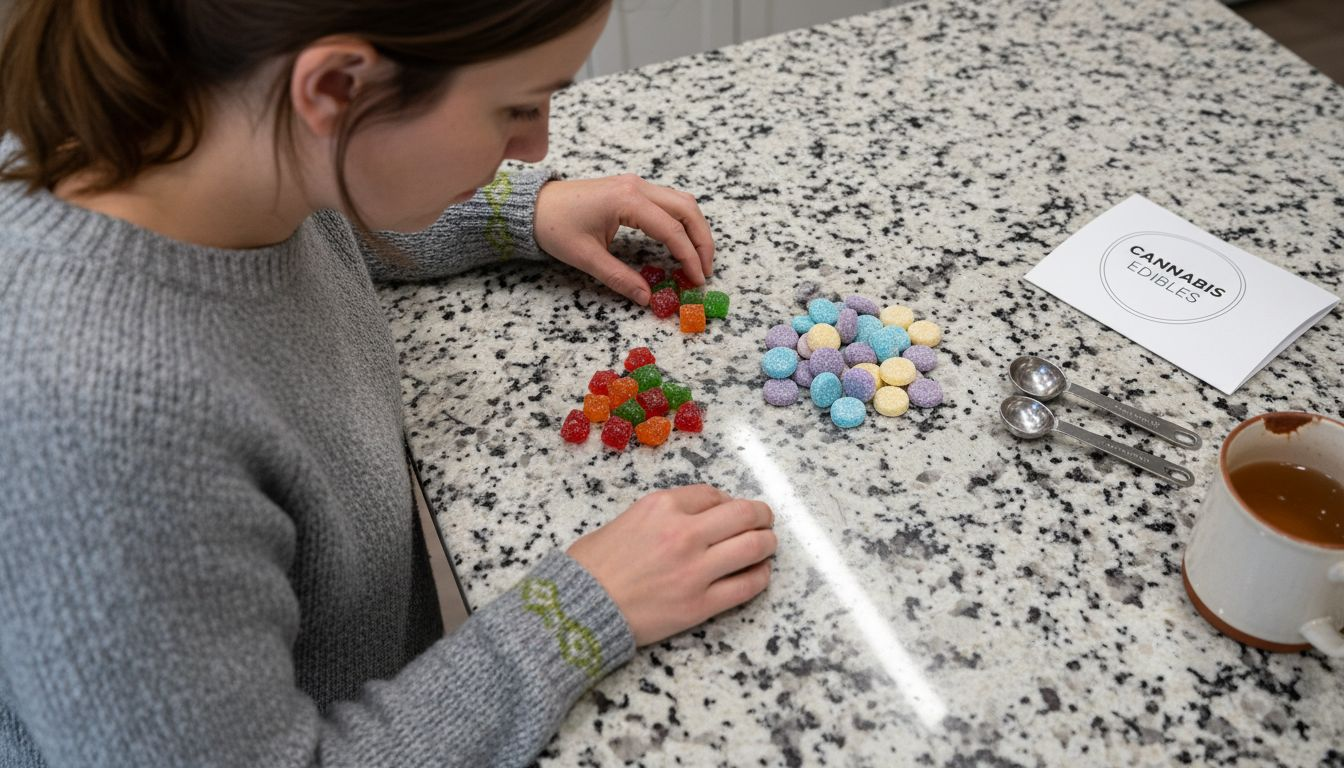
Choosing between THC and CBD edibles depends on your wellness goals and your comfort level with psychoactive effects. If you’re seeking relaxation with full mental clarity, CBD edibles are your answer. If you want deeper relaxation and don’t mind a mind-altering experience, THC edibles might be ideal. If you’re new to cannabis entirely, starting with pure CBD or a CBD-dominant product lets you explore edibles without the intensity of THC. Your personal tolerance matters too. Someone with extensive cannabis experience might enjoy 15mg to 20mg THC gummies, while a beginner would find 5mg plenty. Understanding how THC and CBD affect you differently helps you make informed choices about potency levels. The safest approach is starting low with whatever you choose, waiting to feel the full effects and only increasing your dose once you understand your personal response. Many health-conscious adults find they prefer mixing their approach: using CBD edibles during the day for steady wellness support and THC edibles occasionally in the evening when they can fully enjoy the experience without impacting their responsibilities.
Here’s how common edible cannabinoid types compare in effects and use cases:
| Cannabinoid Type | Psychoactive? | Typical Effects | Best Use Cases |
|---|---|---|---|
| THC-dominant | Yes | Euphoria, relaxation | Evening use, recreation |
| CBD-dominant | No | Stress relief, mental clarity | Daytime wellness, stress |
| Balanced THC:CBD | Mild | Gentle relaxation, focus | Beginners, mild relief |
Pro tip: If you’re new to THC, start with CBD-dominant or pure CBD edibles first to understand how your body responds to cannabinoids, then experiment with THC edibles in small doses of 2.5mg to 5mg in a safe, comfortable setting.
Taking too much of an edible is genuinely unpleasant. It’s not life-threatening in the way that overdosing on other substances can be, but it’s uncomfortable enough that you want to avoid it. The risks of incorrect dosage range from mild to genuinely distressing. You might experience severe anxiety that feels overwhelming, paranoia where your thoughts spiral into uncomfortable places, confusion that makes normal tasks feel impossible, or a racing heart that makes you hyperaware of your own body. Some people report feeling “stuck” in time, where minutes feel like hours. Others describe waves of dizziness or nausea. The worst part is that these adverse reactions from incorrect THC dosing can last for hours and you simply have to ride them out until the effects wear off. There’s no quick fix once you’ve consumed too much. This isn’t designed to scare you away from edibles entirely. It’s designed to make clear why getting your dose right actually matters for your wellness and safety.
The dosing trap with edibles is uniquely dangerous because of timing. When you smoke cannabis, effects arrive within minutes. You feel something almost immediately, so you know where you stand. With edibles, nothing happens for 30 minutes to two hours. This delay creates a psychological trap. You consume a gummy, wait 45 minutes, don’t feel much and think “maybe I need more.” So you take another gummy. Then maybe another. Then suddenly, an hour later, all three doses hit at once and you’re significantly more intoxicated than you intended. Overconsumption happens because delayed onset makes users consume multiple doses before feeling any effect. This is why the “start low and go slow” advice exists. It’s not overly cautious. It’s based on how human psychology actually works with the delayed effects of edibles. First-time users and experienced users both fall into this trap. The inexperienced user doesn’t know what to expect. The experienced user sometimes underestimates how much stronger edibles feel compared to smoking the same amount of THC. Both end up taking more than intended.
The safety stakes matter because some people end up seeking emergency medical care after severe overconsumption. While cannabis itself isn’t toxic in a lethal sense, the panic, anxiety and physical symptoms from taking too much can feel genuinely frightening. Your heart races, your thoughts scatter, you might feel like something is seriously wrong with your body. People have gone to hospitals convinced they were having a heart attack, only to learn it was anxiety from overconsumption. Beyond the immediate discomfort, there’s the inconvenience of a hospital visit, the expense and the embarrassment. More importantly, repeated overconsumption experiences condition you to feel anxious around cannabis in general, which defeats the wellness purpose entirely. Someone who took too much once might never feel comfortable using edibles again, even at appropriate doses. The good news is that overconsumption is completely preventable with three simple practices. First, always check the label and understand your dose before consuming. Second, wait at least two hours before assuming the dose isn’t working. Third, never consume additional doses while waiting for effects to arrive. If you follow these three rules, overconsumption becomes essentially impossible.
Pro tip: Set a phone timer for two hours after consuming an edible and commit to not taking additional doses until that timer goes off, completely removing the “did I take enough?” guessing game that leads to overconsumption.
If you’re completely new to edibles, your dosing strategy should follow one simple principle: start absurdly low. A 2.5mg dose might feel like nothing on paper, but for a true beginner, it’s the right amount. This isn’t conservative advice designed to bore you. It’s practical wisdom based on how many people have felt uncomfortable because they started too high. Your first edible should be a learning experience, not an overwhelming experience. You want to understand how your body responds to THC in edible form before you take a dose strong enough to noticeably alter your mood and perception. Choose a time when you’re home, relaxed and have nothing requiring your attention for at least four hours. Consume your 2.5mg dose, set a timer for two hours and commit to not taking anything else until that timer goes off. Starting low and waiting before consuming more prevents overconsumption and gives you real data about your personal response. After two hours, you’ll know whether you feel effects, how pronounced they are and whether this dose range works for your body. From there, you can make informed decisions about whether to stay at 2.5mg, move to 5mg next time, or adjust your approach. This single experience teaches you more than any article could.
For new users specifically, source matters tremendously. Purchasing legally sourced cannabis ensures accurate labeling and product safety, which is non-negotiable. When you buy from Edwin’s Edibles & Elixirs or another reputable manufacturer, you know exactly what you’re getting. The label says 5mg THC and it actually contains 5mg THC. Compare this to buying from unknown sources where the label might say 5mg but actually contains 15mg. That’s the difference between a comfortable experience and an uncomfortable one. Beyond sourcing, understand that different products hit differently. A gummy with 5mg THC from one brand might feel different than a 5mg THC gummy from another brand, even if the dose is identical. This is often due to the ratio of other cannabinoids, the specific strain used, or how the product was formulated. Edwin’s Edibles & Elixirs uses their proprietary TiME INFUSION® technology, which affects how quickly you feel effects compared to traditional edibles. If you’re trying a new brand or new product type, treat it like a new starting point. Lower your dose slightly and observe how it compares to what you’ve used before.
Advanced users often make the mistake of thinking safe dosing guidelines don’t apply to them anymore. That’s exactly backward. Someone with months or years of edible experience might comfortably enjoy 20mg or 30mg doses, but that doesn’t mean impulsively jumping from 15mg to 50mg is wise. Your tolerance doesn’t eliminate the risk of overconsumption. It just means your comfortable dose is higher. The cardinal rule remains: when trying a new product, strain, or format, go lower than you normally would. When you know a product, you can dial in your consistent dose. When you don’t know it, humility serves you better than confidence. A practical approach involves taking detailed notes. Write down the product, the dose, the time consumed, whether you ate beforehand and how you felt. Over time, patterns emerge. You’ll notice that 10mg feels right when you’ve eaten but uncomfortable when you haven’t. You’ll see that one strain energizes you while another deeply relaxes you. You’ll discover that Indica products last longer for your body than Sativa products. This personal data library becomes your dosing bible. It removes guesswork and replaces it with accumulated knowledge.
One often overlooked aspect of safe dosing is planning. Edibles last 4 to 12 hours depending on many factors. If you consume an edible at 3pm expecting a 4-hour effect window, you might still feel noticeable effects at 7pm. Plan your dosing around your schedule, not against it. Don’t take a 15mg THC edible two hours before an important Zoom call and expect to be fully sharp. Don’t dose before driving. Don’t consume edibles before situations requiring alertness or clear judgment. These aren’t restrictions. They’re just alignment between your dose timing and your actual plans. The final tip applies universally: keep all cannabis products safely stored away from children and pets. An accidental consumption by someone unaware of what they’re taking creates real danger and real emergencies. A locked box, high shelf, or secure storage area takes minutes to arrange and eliminates this risk entirely.
Pro tip: Create a simple spreadsheet tracking your product, dose, time consumed, food intake and effects felt, building a personal reference guide that removes guesswork from future dosing decisions.
The United States doesn’t have a single federal limit on edible dosages because cannabis remains federally illegal, even though it’s legal in many states. Instead, individual states set their own regulations. Most states that have legalized cannabis have converged on similar dosage limits, creating a de facto national standard. The standard serving size limit across most U.S. states is 10 mg THC per edible serving, with a maximum of 100 mg THC per package. These numbers aren’t arbitrary. They come from years of research into what constitutes a reasonable dose for an average consumer while minimizing the risk of overconsumption and adverse effects. A 10 mg serving represents a meaningful dose that produces noticeable effects for most people without being overwhelming for beginners. A 100 mg package limit ensures that even if someone accidentally consumes the entire product, they’re capped at a manageable total intake. States implementing these limits have done so deliberately to protect consumers and reduce the burden on emergency medical services from overconsumption incidents.
Understanding why these limits exist matters because it affects how you think about dosing. The 10 mg serving size is designed as a single serving unit. That means a responsible approach involves consuming one serving, waiting two hours and evaluating your response before taking more. A 100 mg package isn’t meant to be consumed at once. It’s designed to provide multiple days or weeks of products for regular users. When you see a product labeled as “100 mg per package” with “10 individual 10 mg servings,” that’s the regulatory framework working exactly as intended. It gives beginners a small manageable dose and provides convenient packaging for experienced users. Edwin’s Edibles & Elixirs and other responsible manufacturers comply with these limits in states where they operate, ensuring that what you buy has been tested and verified to contain exactly what the label states. This regulatory compliance is one reason why buying from legal, licensed manufacturers matters so much compared to unregulated sources. You know the dose is accurate because it’s been tested and verified.
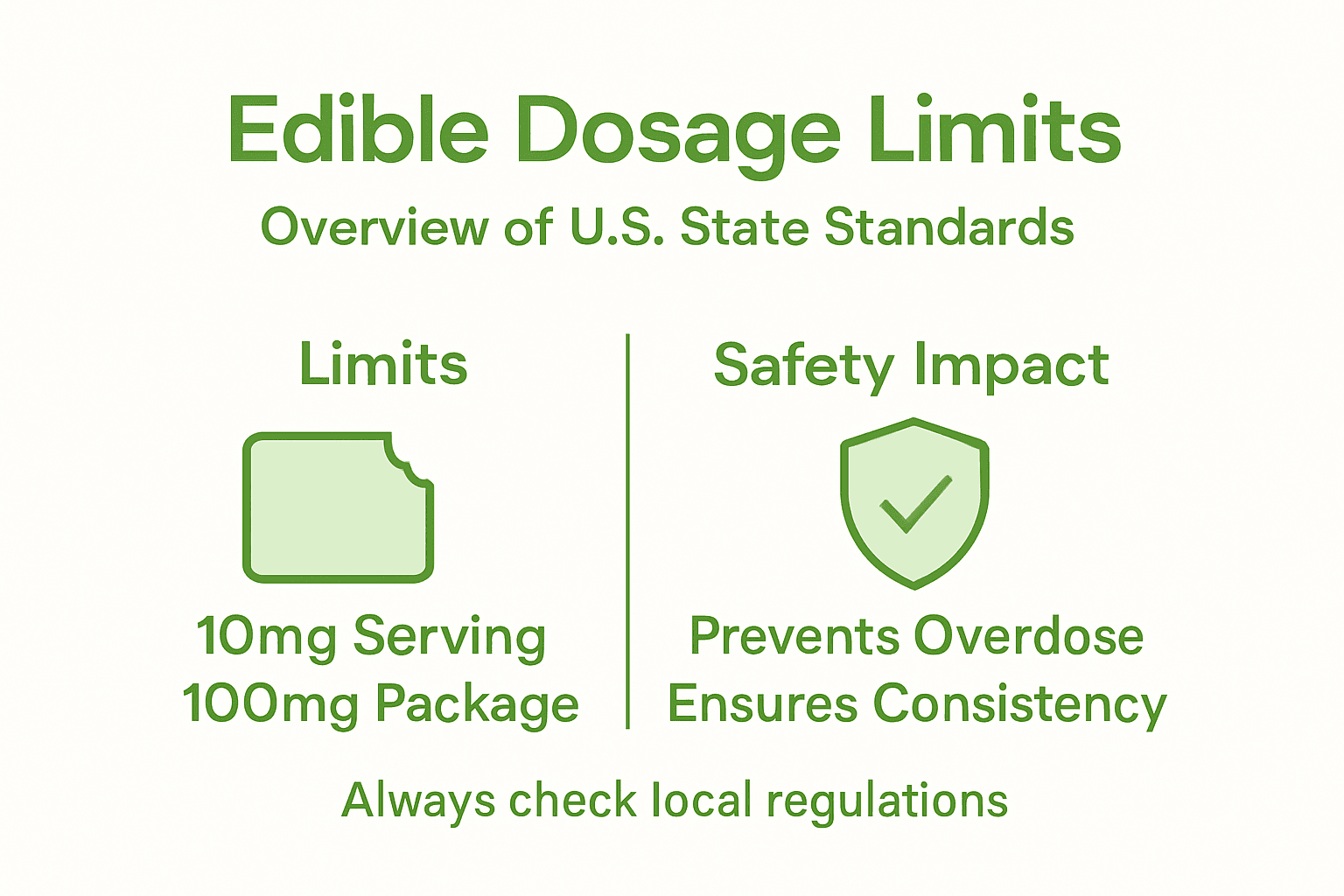
It’s important to note that not all states follow the exact same limits. Some states may have slightly different regulations and the cannabis landscape is evolving. However, the 10 mg serving and 100 mg package limits have become the industry standard across most legal markets. This standardization is actually helpful for consumers because it creates consistency. If you buy edibles in California, Colorado, or New York, you know roughly what a standard serving looks like. Some states may allow higher potency products for medical patients and a small number of jurisdictions have experimented with different limits. The takeaway is that if you’re purchasing from a legal, licensed source in a state where cannabis is legal, the product you’re buying has been designed to comply with that state’s regulations. That compliance exists to protect you.
For consumers, understanding these limits serves a practical purpose. Federal regulations acknowledge that states set their own THC limits for edibles to maintain safety and consistency. This means the 10 mg per serving guideline is backed not just by industry practice but by regulatory intent. When you’re evaluating whether a dose is reasonable, 10 mg represents the upper boundary of a single serving in most legal markets. Anything above that is technically multiple servings. This matters for your safety planning. If you consume a full 10 mg serving gummy and you’re a beginner, you should plan your day accordingly because that’s a meaningful dose. If you consume two 10 mg gummies, you’ve taken 20 mg, which is substantial. The regulatory limits create a framework that makes dosing more transparent and predictable. You’re not guessing at what a “standard” dose is. The government has already defined it for you.
This table summarizes U.S. state edible dosage limits and typical packaging standards:
| State Standard | Single Serving Limit | Package Max Limit | Consumer Safety Impact |
|---|---|---|---|
| Most States | 10 mg THC | 100 mg THC | Helps prevent overconsumption |
| Medical States | 10-20 mg THC | 100+ mg THC | Higher limits for patients |
| Unregulated | No fixed limit | Varies | Increased risk, less safety |
Pro tip: Check your product label to confirm it complies with your state’s limits (10 mg per serving, 100 mg per package in most states) and treat the listed serving size as a complete dose rather than a starting point when you’re new to edibles.
Understanding why dose matters in edible cannabis is crucial to avoid unwanted effects like anxiety or overconsumption. If you have struggled with delayed onset or uncertain potency, you are not alone. Many consumers seek predictable, clear dosing that fits their personal wellness goals and lifestyle. Terms like “start low and go slow” and “microdose” are more than advice—they are essential strategies for safe, enjoyable use. Getting your dose right gives you control and peace of mind.
At Edwin’s Edibles & Elixirs, we prioritize accurate labeling and consistent dosing with all our products. Whether you prefer fast-acting THC Gummies designed for easy portion control or refreshing THC Drinks & Edibles infused with our proprietary TiME INFUSION® technology, you can trust the potency and quality in every bite and sip. Explore our curated selection and discover edibles crafted to match your desired effects, strain preferences and consumption style.
Take control of your cannabis wellness journey today by visiting Edwin’s Edibles & Elixirs. Start low, dose smart and embrace a safe, enjoyable path to relaxation and balance.
The dose on an edible cannabis product label, such as “10mg THC,” represents the total amount of THC in that product. Understanding this helps prevent adverse effects, allowing for a safer and more controlled experience.
The potency of edibles can vary widely, as different manufacturers may use different formulations. For example, one gummy may contain 5mg of THC, while another may contain 20mg. Knowing the dose is essential to avoid accidentally consuming more than intended.
Edibles take longer to affect you because they are processed through your digestive system before entering the bloodstream. This delay can range from 30 minutes to two hours, making it crucial to wait before assuming additional doses are needed.
Determining the right edible dosage depends on factors like body weight, metabolism and previous cannabis experience. Beginners should start with a low dose of 2.5mg to 5mg, wait for effects and gradually adjust as needed to find their ideal amount.