
Choosing the right wellness edible can feel overwhelming when every option promises a unique path to relaxation and balance. For American adults focused on holistic health, understanding what truly sets a premium cannabis gummy apart is essential. Discover the core definition of a wellness edible and learn how these carefully crafted products offer targeted support for both body and mind without the unwanted side effects of traditional cannabis. Find clarity around how these edibles can naturally fit within your wellness routine.
| Point | Details |
|---|---|
| Wellness Edibles Defined | Wellness edibles are designed to enhance holistic health through targeted therapeutic benefits without intoxicating effects. |
| Types of Wellness Edibles | Common types include CBD Gummies, Hemp Tinctures and Micro-Dose Capsules, each tailored for specific wellness goals. |
| Legal Considerations | Wellness edibles are subject to complex federal and state regulations, emphasizing the importance of understanding THC limits. |
| Dosing Awareness | Individuals should be cautious with dosing to avoid risks associated with overconsumption and should always start with low doses. |
A wellness edible represents a specialized category of consumable products intentionally designed to support holistic health and personal well-being. Unlike traditional recreational cannabis products, wellness edibles focus on delivering targeted therapeutic benefits through carefully formulated botanical compounds. These products aim to enhance physical, mental and emotional balance without producing intoxicating effects.
Wellness edibles typically incorporate natural compounds that interact with the human body’s endocannabinoid system, such as:
The Global Wellness Institute defines wellness as an active pursuit of holistic health through intentional lifestyle choices. In this context, wellness edibles represent a proactive approach to personal health management, offering consumers a natural method to support their overall well-being through carefully crafted nutritional products.
These products differ significantly from traditional cannabis consumption by emphasizing therapeutic potential over psychoactive experiences. Manufacturers carefully develop wellness edibles to provide precise, controlled dosages of beneficial compounds that can potentially support stress management, sleep quality and general wellness.
Pro tip: Always consult healthcare professionals before incorporating new wellness edibles into your personal health regimen to ensure they align with your specific health needs and potential interactions.
Wellness edibles encompass a diverse range of products designed to support health and well-being, each offering unique therapeutic potential. Cannabis edibles vary widely in their composition, delivery mechanisms and intended outcomes, presenting consumers with multiple options for targeted wellness support.
The primary types of wellness edibles include:
Key differences among wellness edibles stem from their unique cannabinoid profiles and metabolic pathways. Different cannabis products demonstrate distinct characteristics in potency, onset time and physiological interaction. THC-based edibles typically produce psychoactive effects, while CBD-focused products prioritize therapeutic benefits without intoxication.
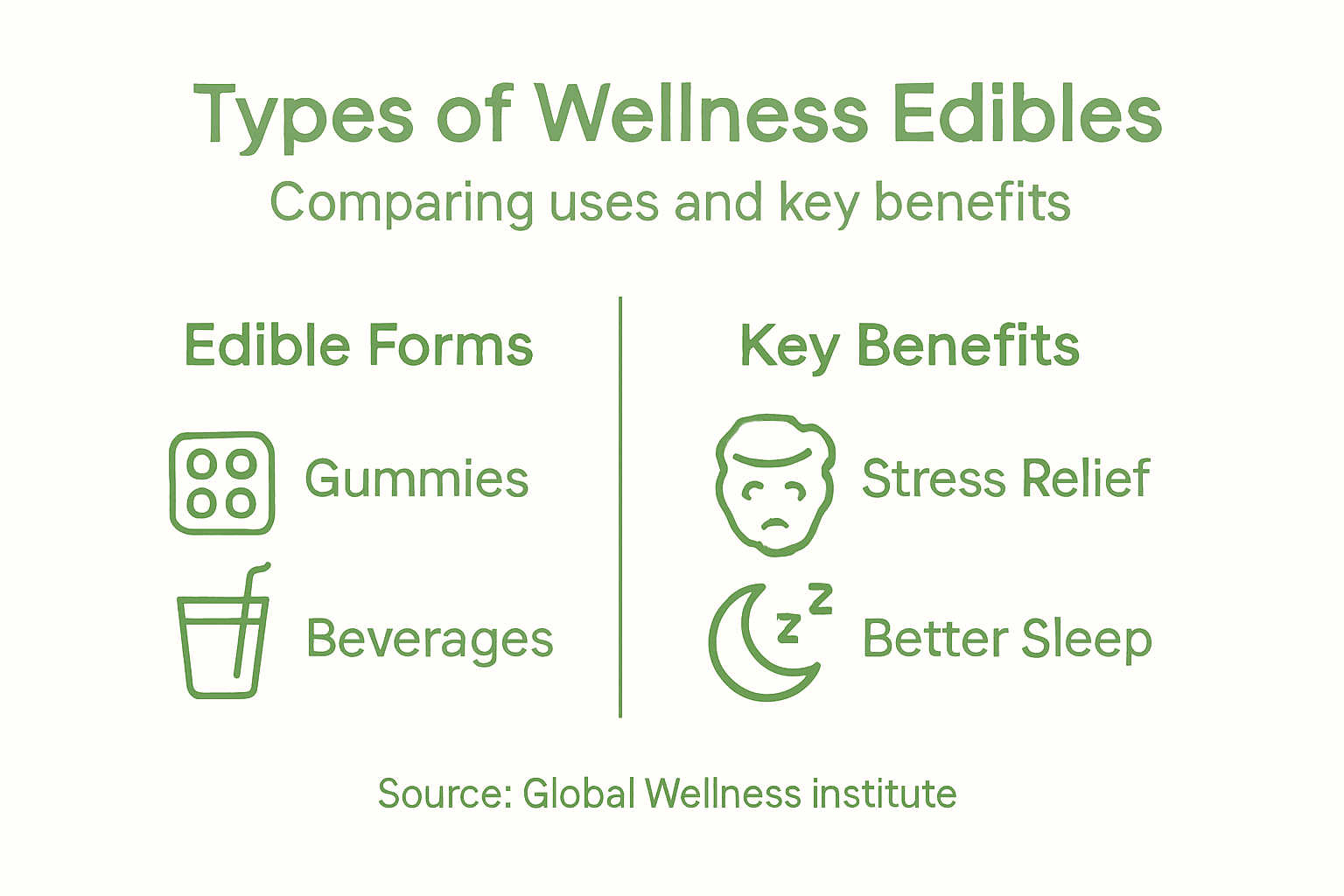
Here is a summary comparing major types of wellness edibles and their distinguishing features:
| Edible Type | Common Use | Onset Time | Notable Benefit |
|---|---|---|---|
| CBD Gummies | Stress relief, daily calm | 30-60 minutes | Non-intoxicating relaxation |
| Hemp Tincture | Precise dosing, flexibility | 15-30 minutes | Quick absorption, versatility |
| Infused Beverage | Convenient, hydration focus | 15-45 minutes | Easy intake, social use |
| Botanical Supplement | Adaptogenic support | 45-90 minutes | Combines multiple wellness aids |
| Micro-Dose Capsule | Ongoing wellness support | 60-120 minutes | Discreet, standardized dosing |
Manufacturers carefully calibrate these products to address specific wellness goals, whether targeting stress management, sleep improvement, or overall physiological balance. The food matrix, extraction method and cannabinoid concentration significantly influence an edible’s effectiveness and user experience.
Pro tip: Start with low doses and gradually adjust to understand your individual response to different wellness edible formulations.
Fast-acting edibles represent a revolutionary approach to cannabis consumption, designed to deliver targeted wellness effects with unprecedented speed and precision. Cannabis edibles metabolize differently than traditional consumption methods, creating a unique physiological interaction that distinguishes them from other cannabis products.
The metabolic journey of fast-acting edibles involves several critical stages:
Unlike inhaled cannabis, which provides near-instantaneous effects, edibles undergo a complex metabolic pathway. The liver transforms THC into 11-hydroxy-THC, a more potent compound that produces more intense and longer-lasting effects. This metabolic process explains why edibles can take 1-2 hours to manifest and potentially continue influencing the body for several hours afterward.

Advanced formulation techniques now enable manufacturers to create faster-acting edibles by utilizing innovative absorption technologies. These methods can potentially reduce onset time and provide more predictable, controlled wellness experiences, making edibles an increasingly attractive option for health-conscious consumers seeking precise cannabinoid delivery.
Pro tip: Always consume fast-acting edibles on a partially full stomach to optimize absorption and minimize potential digestive discomfort.
Cannabis wellness edibles occupy a complex legal landscape in the United States, characterized by nuanced federal and state regulations. Federal law differentiates hemp and marijuana primarily through THC concentration, creating a sophisticated regulatory framework that impacts consumer access and product availability.
Key legal considerations for wellness edibles include:
The U.S. Food and Drug Administration maintains strict guidelines regarding cannabis-derived products. Cannabis product regulations currently prohibit adding CBD or THC to food and dietary supplements, creating a challenging environment for manufacturers and consumers seeking wellness-oriented edibles.
Navigating this legal terrain requires understanding the intricate distinctions between hemp-derived and marijuana-based products. While the 2018 Farm Bill legalized hemp cultivation, products containing higher THC concentrations remain subject to the Controlled Substances Act, creating a complex regulatory environment that continues to evolve.
Pro tip: Always verify current state and federal regulations before purchasing or consuming wellness edibles, as legal landscapes can change rapidly.
Cannabis wellness edibles present unique safety challenges that require careful understanding and responsible consumption. Key safety concerns include variability in THC concentration and potential for unintended overconsumption due to delayed onset of effects.
Common dosing mistakes to avoid include:
The risks associated with improper edible consumption can be significant. Cannabis edibles pose potential health risks including cognitive impairment, potential anxiety episodes and risk of unintentional overconsumption. Delayed absorption can trick consumers into consuming multiple doses, leading to unexpectedly intense experiences.
The following table outlines common dosing mistakes with wellness edibles and strategies to avoid them:
| Dosing Mistake | Why It’s Risky | Prevention Strategy |
|---|---|---|
| Impatience | Increased risk of overconsumption | Wait at least two hours |
| Poor Measurement | Unpredictable THC intake | Check label and measure accurately |
| Ignoring Tolerance | Possible heightened side effects | Start with lowest possible dose |
| Empty Stomach Use | Faster or unpredictable absorption | Consume after a small meal |
| Mixing with Alcohol | Intensifies impairment risks | Avoid combining with other substances |
Safe consumption requires understanding personal limits, starting with minimal doses and creating a controlled environment. Proper storage, clear labeling and education are critical in mitigating potential risks, especially in households with children or vulnerable individuals.
Pro tip: Always start with the lowest recommended dose, wait at least two hours before considering additional consumption and store edibles securely away from children and pets.
If you are seeking natural relief from stress or aiming to improve your overall balance, understanding the benefits of wellness edibles can be the start of a transformative experience. This article highlights key challenges such as delayed onset, dosing mistakes and the importance of precise cannabinoid delivery for effective stress management and relaxation. At Edwin’s Edibles & Elixirs, we address these concerns with our small-batch, hemp-derived Delta 9 THC products and organic CBD gummies formulated using proprietary TiME INFUSION® technology for fast-acting effects.
Discover a wide variety of options including Hybrid Edibles – Edwin’s Edibles & Elixirs and explore refreshing THC Drinks & Edibles – Edwin’s Edibles & Elixirs. Every product is designed to support your wellness goals through legal, organic and carefully calibrated formulations that make dosing safer and more predictable. Take control of your relaxation routine today by visiting Edwin’s Edibles & Elixirs and experience the difference real quality and innovation can make.
Wellness edibles are consumable products specifically designed to support holistic health, focusing on therapeutic benefits without producing intoxicating effects. They often contain compounds like CBD and other botanical extracts to promote well-being.
Fast-acting edibles undergo oral absorption and liver processing, delivering cannabinoids quickly into the bloodstream. This allows for a rapid onset of effects compared to traditional edibles, enhancing the wellness experience.
Common mistakes include impatience leading to overconsumption, not measuring doses accurately, ignoring personal tolerance, consuming on an empty stomach and mixing with alcohol. These can lead to unexpected effects and risks.
Types of wellness edibles include CBD gummies for stress relief, hemp-derived tinctures for precise dosing, infused beverages for hydration, botanical edible supplements for adaptogenic support and micro-dose capsules for standardized wellness support.