
CBD dosage is defined as the amount of cannabidiol you consume in a single serving or across a full day and no universally agreed amount exists for wellness use. Your ideal dose depends on your body weight, metabolism, the product you choose and what you’re trying to achieve. Whether you’re reaching for oils, capsules, or organic CBD gummies, understanding cbd dosage explained as a personal calibration process, not a fixed number, is the foundation of safe and effective use. The standard industry approach is called titration: finding the lowest effective dose through gradual, monitored increases.
CBD dosing is a titration problem, not a prescription lookup. Clinicians and researchers treat it as a process of finding the lowest effective dose while watching how your body responds over time. Several variables determine where your starting point should be and how far you’ll need to adjust.
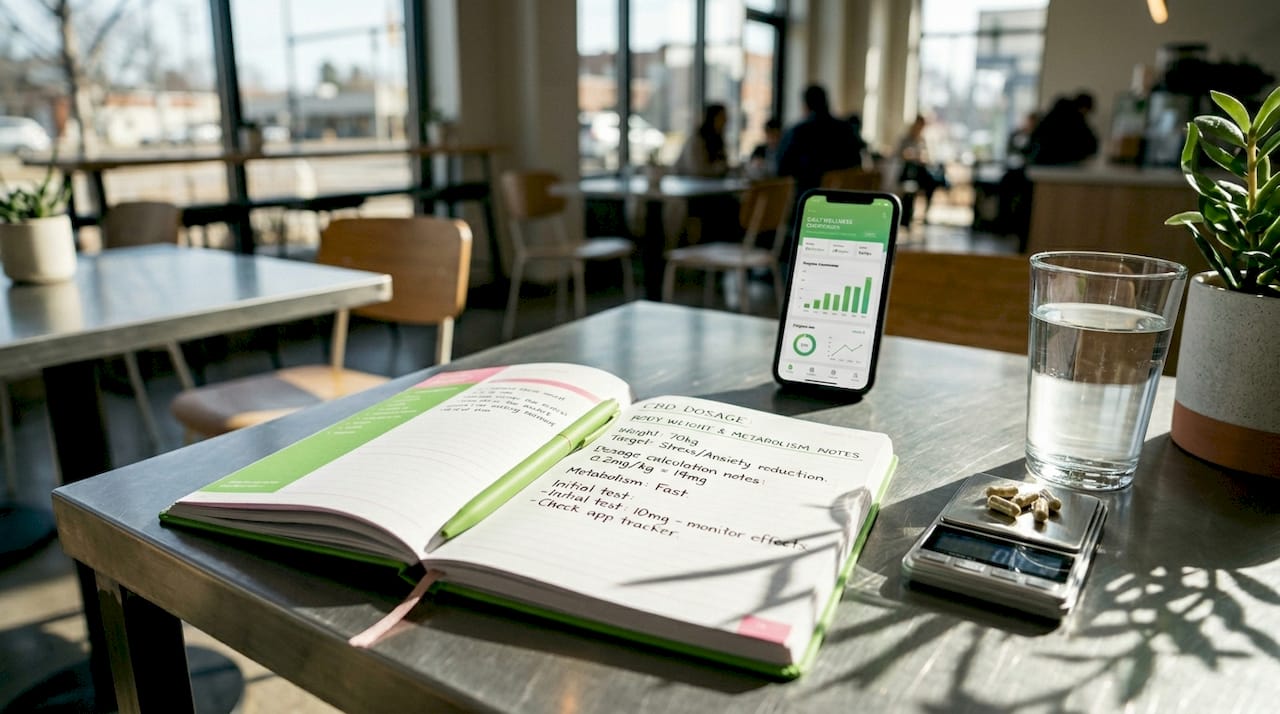
Body weight and metabolism are the two most direct physical factors. Heavier individuals generally need more CBD to feel the same effect as someone lighter, because the compound distributes through body tissue. Faster metabolisms process CBD more quickly, which can shorten the duration of effects and require more frequent dosing.
Product type and bioavailability change how much CBD actually reaches your bloodstream. Oils absorbed under the tongue bypass first-pass liver metabolism and deliver more CBD per milligram than edibles, which must pass through the digestive system first. This means 20 mg from a tincture and 20 mg from a gummy do not produce identical effects.
Your wellness goal shapes the dose range you’re targeting. General daily wellness support sits at the lower end of the spectrum. Sleep support, stress relief and physical recovery may require progressively higher amounts, though the relationship is not always linear. More is not automatically better.
Other contributing factors include:
Both Verywell Mind and Charlotte’s Web recommend starting at 10 to 20 mg per day as a practical entry point for most adults. That range gives your body enough CBD to potentially notice effects without overwhelming your system on day one.
Pro Tip: Before you calculate anything, write down your wellness goal in one sentence. “I want to sleep through the night” and “I want to reduce post-workout soreness” will lead you to different dose ranges and product formats from the start.
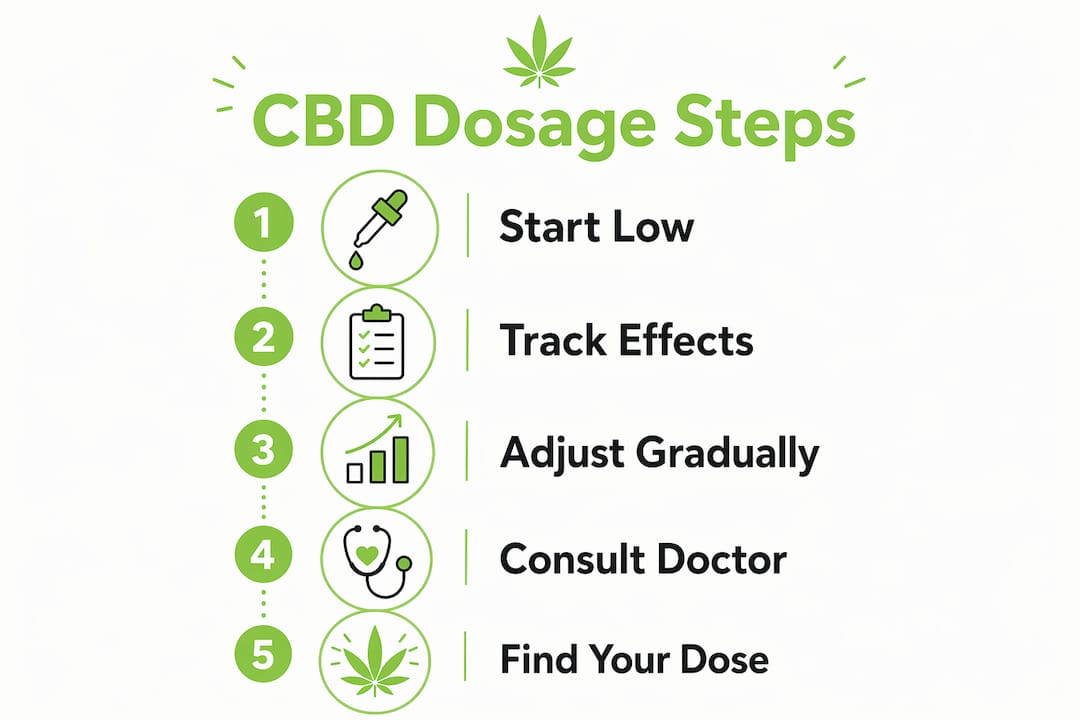
CBD dosage for beginners follows one rule above all others: start low and move slowly. Jumping to a high dose because you read about someone else’s experience is the most common mistake new users make and it leads to unnecessary side effects and wasted product.
Here is a practical titration sequence for your first four weeks:
This approach is very different from clinical prescription dosing. Mayo Clinic notes that prescription CBD for epilepsy starts at 2.5 mg per kilogram of body weight twice daily and is titrated upward under medical supervision. In severe epilepsy trials, doses can reach 25 to 50 mg per kilogram per day. Wellness users should never attempt to replicate clinical high-dose protocols. Those protocols exist for serious medical conditions and require physician oversight.
If you take prescription medications, consult your doctor before starting CBD. Mayo Clinic recommends disclosing all medications to your healthcare provider because CBD can interact with drugs processed by the liver’s cytochrome P450 enzyme system, including blood thinners and certain antidepressants.
Pro Tip: Use a notes app or a small notebook to track your dose, timing and how you feel at the one-hour and three-hour marks. After two weeks, patterns become obvious. You’ll know whether to hold, increase, or switch product formats.
For a deeper walkthrough of safe starting strategies, the edibles for beginners guide at Edwin’s Edibles & Elixirs covers titration in the context of gummies and other edible formats.
The format you choose changes everything about how CBD dosage works in practice. Onset time, duration and the precision of each dose all shift depending on whether you’re using an oil, a gummy, or a capsule.
| Format | Onset time | Duration | Dose precision | Best for |
|---|---|---|---|---|
| Oil / tincture | 15 to 45 minutes | 4 to 6 hours | High (adjustable by drops) | Fine-tuned daily dosing |
| Gummies / edibles | 45 to 90 minutes | 6 to 8 hours | Moderate (pre-measured per piece) | Consistent, convenient dosing |
| Capsules / softgels | 30 to 60 minutes | 6 to 8 hours | High (fixed mg per capsule) | Routine wellness use |
| Topicals | Localized, 15 to 30 min | 2 to 4 hours | Low (systemic absorption minimal) | Targeted physical relief |
Oils absorb faster than edibles because sublingual absorption bypasses the digestive system. Edibles have a delayed onset but longer duration, which means patience is required before deciding a dose isn’t working. Many beginners make the mistake of taking a second gummy after 45 minutes because they feel nothing, then experience a stronger effect than intended when both doses hit simultaneously.
Reading product labels correctly is non-negotiable. CBD oils range from 17 mg to 60 mg per mL depending on the product, which means a single dropper from two different bottles can deliver wildly different amounts. Always check milligrams per serving, not just total milligrams per bottle.
Key things to confirm on any CBD product label:
CBD is well-tolerated by most adults at wellness doses, but side effects do occur, particularly when doses are too high or when CBD interacts with other substances. Knowing what to watch for keeps you in control of your experience.
Common side effects include appetite changes, diarrhea, dizziness, nausea, stomach upset and weight changes. These effects are generally mild and often resolve when the dose is reduced. They signal that your current dose exceeds what your body needs, not that CBD is inherently harmful for you.
Drug interactions represent the more serious safety consideration. CBD is metabolized by the liver and it competes with certain prescription medications for the same enzymes. This can raise or lower the effective concentration of those drugs in your bloodstream. Anyone taking blood thinners, anti-seizure medications, or antidepressants should get medical clearance before adding CBD to their routine.
Regulatory safety benchmarks add useful context here. The EFSA’s 2026 provisional safe intake for CBD as a novel food is approximately 0.0275 mg per kilogram of body weight per day, roughly 2 mg per day for a 70 kg adult, under specific purity conditions. That figure is deliberately conservative and applies to a narrow product category. It does not mean 10 to 20 mg per day is unsafe. It means regulators are being cautious while more long-term data is gathered.
“The EFSA benchmark is a floor for regulatory caution, not a ceiling for wellness use. Context matters enormously when reading safety figures.”
If you have liver conditions, take multiple prescription medications, or are pregnant or nursing, involve a healthcare provider before starting CBD. Monitoring liver function periodically is a reasonable precaution for anyone using CBD consistently over months.
Understanding cbd dosage recommendations starts with reading the label correctly and doing simple math. This is where many people get confused, but the calculation is straightforward once you know what to look for.
Step 1: Find the CBD per serving. A bottle labeled “1500 mg CBD / 30 mL” contains 50 mg per mL. If the dropper holds 1 mL, one full dropper delivers 50 mg. If you want 25 mg, use half a dropper.
Step 2: Match the serving to your target dose. If your target is 15 mg and your gummy contains 25 mg per piece, cut it in half or look for a lower-potency product. Edwin’s Edibles & Elixirs’ organic CBD gummies list exact milligrams per piece, which makes this calculation simple from the start.
Step 3: Track your response consistently. Take the same dose at the same time for at least seven days before evaluating. CBD builds in the system over time and single-day assessments are unreliable.
| Body weight | Suggested starting dose | Moderate dose | Higher dose |
|---|---|---|---|
| Under 130 lbs | 10 mg/day | 15 mg/day | 20 mg/day |
| 130 to 230 lbs | 15 mg/day | 20 mg/day | 30 mg/day |
| Over 230 lbs | 20 mg/day | 30 mg/day | 45 mg/day |
Note: These ranges reflect general wellness use, not clinical treatment. Adjust based on personal response.
Pro Tip: Wait at least 90 minutes after taking an edible before deciding it isn’t working. Pharmacokinetic timing for edibles means peak effects often arrive well after you expect them. Patience here prevents accidental double-dosing.
For a practical walkthrough of how to consume CBD gummies specifically, the CBD gummies consumption guide at Edwin’s Edibles & Elixirs walks through timing, serving sizes and what to expect.
Effective CBD dosing requires starting low, tracking your response and adjusting gradually based on your body weight, product format and wellness goal.
| Point | Details |
|---|---|
| Start at 10 to 20 mg per day | Most adults find their working dose in this range; increase by 5 mg weekly if needed. |
| Product format changes onset and duration | Oils act faster; edibles last longer. Read labels for exact milligrams per serving before dosing. |
| Higher doses are not always better | Wellness dosing and clinical dosing are entirely different contexts; do not replicate medical protocols. |
| Drug interactions require medical input | CBD affects liver enzymes; disclose all medications to your doctor before starting. |
| Track everything for at least one week | Consistent timing and logging reveal patterns that single-day assessments never will. |
I’ve watched countless people abandon CBD after two weeks because they “didn’t feel anything,” only to learn they were using the wrong product format, reading the label incorrectly, or expecting effects that CBD simply doesn’t produce. The frustration is real, but it’s almost always a process problem, not a CBD problem.
The biggest misconception I see is that more milligrams equals more benefit. That logic works for some supplements, but CBD has what researchers call a biphasic response: too little produces no effect, the right amount produces the desired effect and too much can actually reverse or diminish those effects. Wellness users chasing a higher number on the label are often moving in the wrong direction.
Clinical dosing data makes this confusion worse. When people read that epilepsy patients use 25 to 50 mg per kilogram per day, they assume their 20 mg daily dose is laughably small. It isn’t. Those patients are under physician supervision, using pharmaceutical-grade Epidiolex and managing a serious neurological condition. The contexts are not comparable.
My honest advice: commit to six weeks of consistent, low-dose use before drawing any conclusions. Give your endocannabinoid system time to respond. Keep your log. And if you’re on prescription medications, have the conversation with your doctor first. Self-experimentation has its place, but not when drug interactions are on the table.
— Jamison
Once you understand your target dose, the next step is finding a product that makes hitting that number easy and consistent. At Edwin’s Edibles & Elixirs, every organic CBD gummy lists the exact milligrams of CBD per piece, so you’re never guessing. Whether you’re starting at 10 mg or working up to 30 mg, the product range covers multiple potency levels to match where you are in your wellness journey. The cannabis edibles guide at EE&E walks through product types, what to expect from each format and how to choose based on your goals. If you want to use CBD gummies for wellness, that resource covers timing, serving sizes and practical tips from people who take this seriously.
Most beginners start at 10 to 20 mg per day and adjust in 5 mg increments weekly based on their response. There is no single correct dose because body weight, metabolism and wellness goals all influence the effective amount.
Divide the total milligrams of CBD in the bottle by the total volume in mL to get milligrams per mL, then measure your target dose from there. For gummies, the milligrams per piece are listed directly on the label.
Yes, though serious toxicity at wellness doses is rare. Taking too much CBD commonly causes nausea, dizziness, diarrhea and appetite changes. Reducing the dose typically resolves these effects quickly.
CBD can interact with medications processed by the liver, including blood thinners and certain antidepressants. Mayo Clinic recommends disclosing all current medications to your healthcare provider before starting CBD.
Oils and tinctures typically produce effects within 15 to 45 minutes. Edibles like gummies take 45 to 90 minutes because they pass through the digestive system first, but their effects last longer, often six to eight hours.