
Millions of Americans reach for melatonin or CBD every night hoping for a deeper, more restful sleep. But here’s what most people don’t realize: the science behind both supplements is far weaker than the marketing suggests. Neither is a guaranteed fix and choosing the wrong one for your specific sleep issue can leave you more frustrated than rested. We put together this honest, evidence-based comparison so you can cut through the noise, understand what each supplement actually does and make a smarter choice for your nights.
| Point | Details |
|---|---|
| Both options have limits | CBD and melatonin show only modest sleep benefits in research, so expectations should be realistic. |
| Best supplement depends on cause | Melatonin works for short-term sleep onset issues; CBD may help if anxiety is keeping you up. |
| Safety and expert advice matter | Talk to your doctor before starting, especially if you take other medications or have ongoing sleep problems. |
| Therapy often outperforms supplements | Cognitive behavioral therapy for insomnia is recommended when natural aids are not enough. |
Before you pick a supplement, it helps to understand what’s actually happening in your body when you take it. Melatonin and CBD work through completely different pathways and that difference matters a lot depending on why you’re struggling to sleep.
Melatonin is a hormone your brain naturally produces in response to darkness. When you take it as a supplement, you’re essentially sending your brain a signal that says, “It’s time to wind down.” It works by regulating your circadian rhythm, the internal 24-hour clock that governs your sleep-wake cycle. This is why melatonin tends to shine in situations where that clock is disrupted, like crossing time zones or working a night shift.
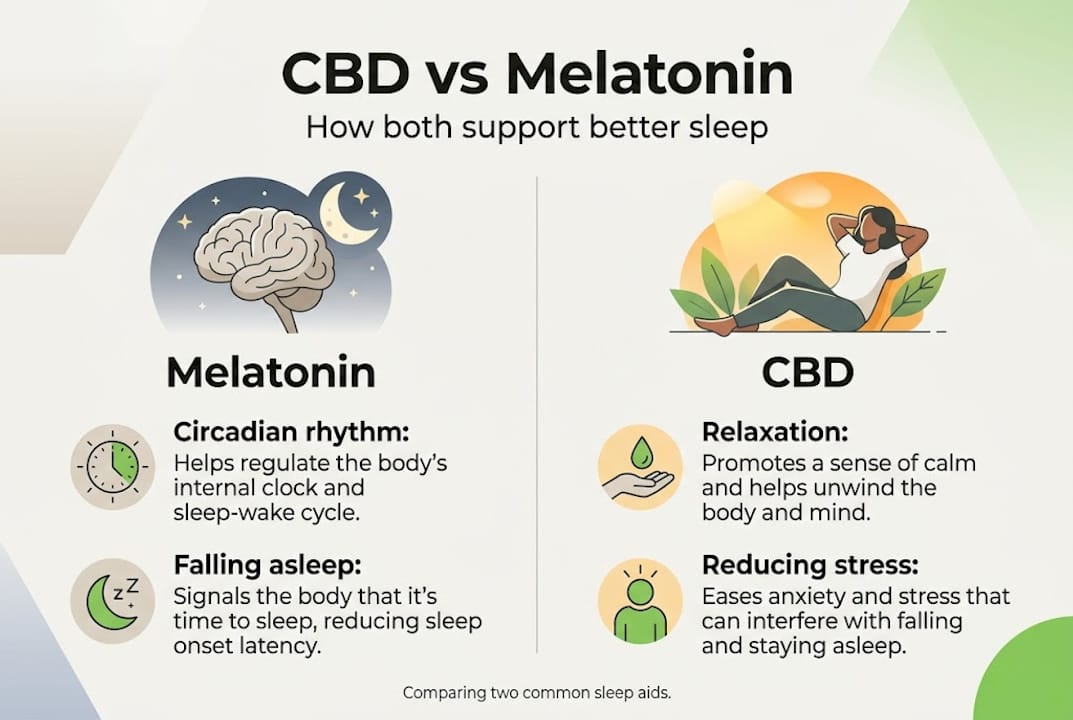
CBD, short for cannabidiol, works very differently. It interacts with your body’s endocannabinoid system, a network of receptors that helps regulate mood, pain and stress responses. CBD doesn’t directly trigger sleep the way melatonin does. Instead, it may help create better conditions for sleep by calming anxiety, easing physical discomfort and reducing the mental chatter that keeps you awake. Research shows that CBD impacts REM sleep differently than melatonin, potentially altering dream cycles in ways scientists are still studying.
Here’s a quick look at how the two compare at a glance:
One thing both supplements share is that neither has a mountain of ironclad clinical evidence behind them. That doesn’t mean they don’t work. It means they work for some people, in some situations and not universally. Understanding your specific sleep issue is the real starting point.
If you’re curious about how CBD gummies for sleep fit into this picture, we’ve put together a detailed guide that walks you through what to look for and how to use them effectively.
Pro Tip: Always start with the lowest effective dose of either supplement. Your body’s response is individual and more is rarely better when it comes to sleep aids.
Now that you understand the main biological actions, let’s see how the evidence stacks up for each supplement.
The honest answer is that neither supplement has a perfect track record in clinical trials. But they each show promise in specific, narrow contexts. A scoping review found that roughly 45% of participants reported a positive effect from CBD on sleep, but results varied widely based on dosage, product type and individual factors. CBD may improve anxiety and insomnia symptoms, but the evidence remains variable and inconsistent across studies.

Melatonin has a stronger evidence base for one specific use: helping people fall asleep when their body clock is off. It’s effective for jet lag and short-term circadian disruptions, but it does not reliably help people stay asleep or address chronic insomnia. And several small clinical trials found no general benefit for either CBD or melatonin in people with long-term sleep disorders.
| Factor | CBD | Melatonin |
|---|---|---|
| Best use case | Anxiety-driven sleeplessness | Jet lag, shift work |
| Evidence quality | Emerging, variable | Moderate for specific uses |
| Sleep onset help | Indirect | Direct |
| Sleep maintenance | Possible | Limited |
| Chronic insomnia | Not proven | Not proven |
| Side effect risk | Low to moderate | Low, but can disrupt rhythm |
“Both melatonin and CBD should be viewed as supplemental tools, not primary treatments for chronic insomnia. Experts caution against relying on either as a long-term solution without addressing the underlying causes of poor sleep.”
This is important context. The wellness world tends to hype both supplements as near-miraculous, but the clinical reality is more nuanced. CBD may be genuinely helpful if anxiety is at the root of your sleep struggles. Melatonin may be exactly right if you’ve just landed in a new time zone. But for deep, chronic insomnia? Neither is a reliable standalone answer.
For those exploring using edibles for sleep as part of a broader wellness routine, understanding these distinctions helps set realistic and productive expectations. You can also explore fast-acting sleep gummies if you want options that deliver effects more quickly than traditional edibles.
With the evidence compared, it’s time to match your unique sleep needs to the best-fit supplement.
Not all sleep problems are created equal. Someone who can’t fall asleep because their mind is racing with stress has a very different issue than someone who wakes up at 3 a.m. and can’t get back to sleep, or someone who’s jet-lagged after a transatlantic flight. The supplement that helps one person can do nothing for another.
Here’s how to think about it:
| Sleep issue | Best supplement match | Notes |
|---|---|---|
| Jet lag | Melatonin | Strong evidence for this use |
| Shift work disruption | Melatonin | Helps reset circadian rhythm |
| Anxiety at bedtime | CBD | Addresses root cause |
| Mild, stress-related insomnia | CBD | Variable but promising results |
| Chronic insomnia | Neither alone | CBT-I recommended |
| Pain-related sleep issues | CBD | May reduce discomfort |
For those interested in how specific cannabis strains support relaxation, learning about indica strains and sleep can add another layer of understanding. And if you want to explore how other cannabinoids play a role, CBN’s role in sleep is a fascinating area worth reading about.
Pro Tip: Combining CBD and melatonin is not automatically better than using one alone. Mixing supplements can amplify side effects or create unexpected interactions. Always check with your doctor before combining anything.
After choosing a supplement, it’s crucial to understand safety and next steps if they’re not effective.
Both CBD and melatonin are generally considered safe for short-term use in healthy adults, but that doesn’t mean they’re risk-free. Knowing the side effects helps you use them wisely.
Melatonin side effects can include morning grogginess, headaches, dizziness and nausea. More importantly, taking melatonin regularly at high doses can actually disrupt your body’s natural hormone production over time, making it harder to sleep without it. This is a real concern that many users overlook.
CBD side effects may include fatigue, dry mouth, changes in appetite and in some cases, interactions with prescription medications. If you take blood thinners or certain antidepressants, CBD can affect how those drugs are metabolized. Always disclose CBD use to your healthcare provider.
Certain groups should be especially cautious. Pregnant or breastfeeding individuals, children and people with liver conditions should avoid CBD without medical guidance. Melatonin is not recommended for people with autoimmune disorders or those taking immunosuppressants.
If you’ve tried both supplements and still can’t sleep well, here’s what experts recommend:
For a deeper look at how gummies fit into a broader wellness routine, our gummies wellness sleep guide offers practical, grounded information.
Pro Tip: Always buy from reputable sources and look for products with third-party lab testing. Purity and accurate dosing matter enormously when it comes to supplements affecting your sleep and health.
Here’s the perspective we don’t see discussed enough: most people searching for a sleep supplement are really searching for relief from something bigger. Stress. Anxiety. A racing mind. A life that doesn’t slow down at bedtime.
Supplements like CBD and melatonin can be genuinely useful tools. But they work best when they’re part of a larger approach, not a substitute for one. We’ve seen too many people cycle through product after product, each time hoping this one will finally fix things, when the real answer was addressing their caffeine habit, their phone use after 9 p.m., or the unresolved stress they carry into bed.
The hype around both CBD and melatonin can drown out the quieter, less exciting truth: sleep hygiene and behavioral changes often do more than any supplement. Learning about THC’s role in sleep is valuable, but it’s one piece of a much bigger puzzle. The most restful nights we’ve heard about from our community come when people treat sleep as a whole-life practice, not a problem to be solved with a single gummy.
Ready to put this knowledge to work? At Edwin’s Edibles & Elixirs, we believe informed choices lead to better nights. That’s why every product we craft is small-batch, lab-tested and built with your wellness in mind. Whether you’re exploring our organic CBD gummies for a calmer wind-down or want to understand the full landscape of options available, we’ve got you covered. Our cannabis edibles guide walks you through the basics and our consumption guide helps you find the right dose and timing for your unique needs. Better sleep starts with better information and we’re here to provide both.
CBD and melatonin can sometimes be taken together, but evidence for combination use is limited. Always consult your healthcare provider to avoid potential interactions and unwanted side effects.
Melatonin is generally more effective at helping you fall asleep quickly, especially for jet lag or circadian rhythm disruptions. CBD tends to work better when anxiety or stress is the main barrier to sleep.
Yes. Melatonin can cause grogginess and may disrupt your natural hormone production if overused. Both supplements carry potential side effects and CBD may interact with certain medications, so it’s worth discussing with your doctor.
Experts point to cognitive behavioral therapy for insomnia (CBT-I) as the most effective long-term solution for chronic sleep issues. Improving sleep hygiene and ruling out underlying health conditions are equally important next steps.