
Most people assume that more cannabis equals a better experience. That assumption can work against you. Low THC doses of 7.5mg have been shown to reduce stress and anxiety, while doses of 12.5mg or more can actually increase anxiety in some users. This is the biphasic effect at work and it changes everything about how you approach cannabis for wellness. Whether you’re chasing stress relief, better sleep, or just a calm afternoon, microdosing with the right edibles can make all the difference.
| Point | Details |
|---|---|
| Stress relief without impairment | Low-dose cannabis edibles help manage stress and anxiety while keeping you functional. |
| Microdosing requires precision | Doses between 1-7.5mg THC offer wellness benefit, but too much can reverse effects. |
| Premium products deliver faster results | Fast-acting, consistent edibles like mints or gummies can offer relief in minutes. |
| Know the limits | Memory, anxiety and hype risks exist—track your experience and avoid overuse. |
| Expert guidance matters | Following ‘start low/go slow’ advice maximizes benefit and safety in microdosing. |
Microdosing cannabis means intentionally consuming very small amounts of THC, just enough to feel a gentle, functional effect without the full-blown high that comes with recreational doses. It’s a deliberate, measured practice rooted in the idea that less can genuinely be more.
Microdosing typically involves doses as low as 1mg to 7.5mg THC, targeting subtle but meaningful improvements in mood, focus, or relaxation. For context, a typical recreational edible can contain 10mg to 25mg per serving. Microdosers are purposely staying well below those levels.
There are a few persistent misconceptions worth clearing up right away:
Understanding the biphasic nature of THC is fundamental. At low doses, THC tends to calm the nervous system. At higher doses, the same compound can trigger the opposite reaction. This is why some people swear cannabis helps their anxiety while others say it makes things worse. The dose is the deciding factor.
“The body’s endocannabinoid system responds differently depending on the amount of THC introduced. A small, controlled dose activates calming pathways, while an excessive dose can overwhelm those same receptors and flip the response entirely.”
Pro Tip: Start with the lowest dose available, even 1mg to 2.5mg and wait a full hour before evaluating how you feel. Edibles absorb more slowly than inhalation and rushing the process leads to overconsumption.
Now that you know what microdosing is, let’s look at its real-world wellness impact, because the benefits are genuinely exciting when approached correctly.
Research consistently highlights several meaningful advantages. Benefits of microdosing include stress and anxiety reduction, improved mood, sharper focus, better sleep and mild relief from everyday aches and discomfort. These aren’t vague claims. They reflect how the endocannabinoid system, when gently stimulated, supports some of the body’s most important regulatory functions.
Here’s a quick breakdown of what’s happening at the biological level:
The benefits of gummies for sleep are particularly well-supported. Edible formats deliver a slower, longer-lasting effect than vaping or smoking, which is ideal for sleep support since you want the effect to carry through the night rather than spike and fade.

| Wellness benefit | System involved | Suggested product type |
|---|---|---|
| Stress and anxiety relief | Endocannabinoid, HPA axis | Low-dose Hybrid gummies |
| Mood improvement | Serotonin, dopamine pathways | Sativa microdose drops |
| Sleep support | CB1 receptors, melatonin cycle | Indica gummies, 5mg or less |
| Mild pain relief | CB1/CB2 receptors | Full-spectrum CBD gummies |
| Focus and clarity | Dopamine, prefrontal cortex | Low-dose Sativa edibles |
Many people exploring low-dose THC for wellness are surprised to learn how much of this is dose-dependent. The difference between a 2.5mg gummy and a 10mg gummy isn’t just size. It’s an entirely different physiological experience.
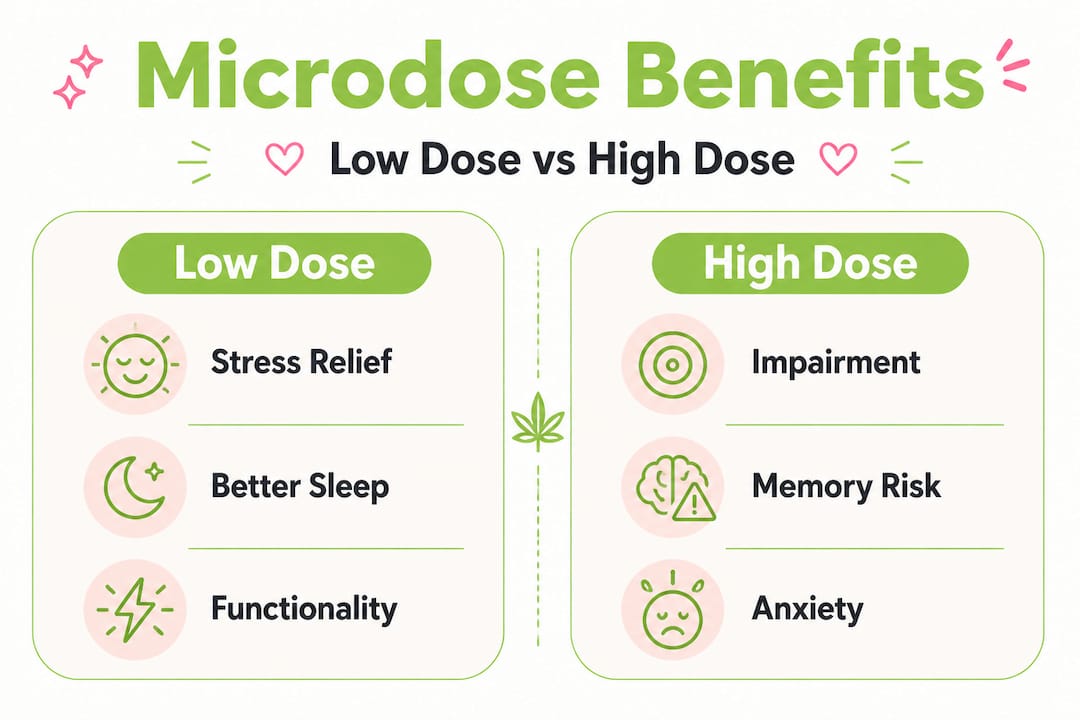
One particularly compelling data point: a significant portion of users who microdose cannabis edibles report meaningful improvement in their sleep quality within the first two weeks. For adults in the 25 to 45 age range who deal with chronic stress, irregular sleep is often the first domino to fall. Helping that one area can improve mood, productivity and physical health simultaneously.
For a guided approach to winding down with cannabis, our step-by-step relaxation guide walks you through how to pair the right dose with the right environment for maximum effect.
While the benefits are significant, it’s important to understand the risks and manage your expectations honestly. Microdosing is not without its pitfalls and knowing what to watch for keeps your experience safe and productive.
One of the most important findings comes from recent research: a 7.3mg edible caused cognitive decrements in memory tasks at the 150-minute mark, even in controlled study settings. That’s at the high end of the microdose range. It’s a reminder that “low dose” doesn’t mean “zero effect on cognition.” Heavy or frequent use compounds this risk over time.
| Use category | What science supports | Where hype exceeds evidence |
|---|---|---|
| Therapeutic use | Stress relief, sleep aid, mild pain management | Replacing prescription treatments without guidance |
| Productivity enhancement | Mild focus boost at very low doses in some users | Consistent cognitive performance gains |
| Recreational microdosing | Mood lift, social ease, reduced anxiety | Guaranteed non-intoxicating experience |
Science supports therapeutic use convincingly, but the hype around productivity gains is overstated. Some people do report sharper focus at very low doses. Others find even 2mg affects their concentration. Individual variability is real and significant.
Here are four practical steps to avoid negative effects:
The benefits of plant-based gummies for wellness go beyond just being vegan-friendly. Plant-based formulas typically use cleaner ingredient profiles, which means fewer additives that could interact with the cannabinoids and muddy your experience.
Pro Tip: Never stack doses within a two-hour window. Edibles have a delayed onset and adding a second dose before the first has fully activated is one of the most common mistakes new microdosers make. It’s not impatience worth indulging.
Learning about small-batch edible production also matters here. Small-batch cannabis edibles maintain tighter quality control than mass-produced products, which directly translates to more consistent dosing. When you’re working in the 1mg to 5mg range, consistency isn’t a preference. It’s a necessity.
Understanding risks and benefits makes product choice crucial. Here’s how to select the right edible for your microdosing goals, because not all low-dose products are created equal.
Speed matters. One of the biggest frustrations with traditional edibles is not knowing when they’ll kick in. That uncertainty leads to re-dosing too soon and overshooting the mark. Fast-acting products solve this by using advanced delivery technology that brings effects on in a fraction of the usual time. Premium microdose products like Batch mints offer just 1mg each of THC and CBD with a 15-minute onset, giving users precise control that was simply unavailable a few years ago.
When you’re shopping for a microdose-friendly edible, look for these key features:
The benefits of CBD gummies should also factor into your decision. CBD can soften the edge of THC’s effects, reduce anxiety risk and provide its own wellness support. A balanced THC/CBD product is often the smartest starting point for first-time microdosers.
If you prefer a clean, plant-forward option, vegan CBD gummies offer all the same benefits without animal-derived gelatin, artificial colors, or synthetic preservatives. These formulas tend to be gentler on the digestive system too, which supports a more predictable onset.
The trend toward low-dose edibles is growing for good reason. Consumers are more informed, more intentional and frankly more health-conscious than ever. The market has responded with better products. Knowing what to look for puts you ahead of the curve.
Here’s a take you won’t find in most wellness blogs: microdosing cannabis is genuinely useful for many people, but it has been over-romanticized into something close to a cure-all. That framing sets people up for disappointment.
We’ve seen a wave of content positioning microdosing as the secret to creativity, laser focus and stress-free living. The science, to its credit, does support therapeutic applications. But experts emphasize starting low and going slow precisely because individual responses vary so much. What produces calm clarity in one person triggers anxiety in another at the exact same dose.
The part most guides skip over is how much product format and personal biology shape the outcome. An organic, small-batch 2.5mg gummy with fast-acting delivery is a fundamentally different experience than a 2.5mg serving cut from a homemade brownie. The former gives you control. The latter gives you a guessing game.
We also want to be honest about the timeline. Most microdosers don’t feel a profound shift in their first week. Results are cumulative and require consistency, honest tracking and a willingness to adjust. Checking in after just two or three sessions and concluding “it doesn’t work” is like taking a single run and deciding fitness isn’t for you.
Our real advice? Treat microdosing like a personal experiment. Use a journal. Track your mood, sleep and stress levels over three to four weeks. Give the process time to show you what it can actually do for your specific body chemistry. Explore our wellness microdosing guide to build a plan that’s grounded in your actual goals, not wellness marketing copy.
The promise of microdosing is real. The key is approaching it with curiosity, patience and quality products that give you the precision to make it work.
For those ready to move from learning to doing, we’ve built a full set of resources to help you start with confidence. Our cannabis edibles guide covers everything from the basics of Delta 9 THC to the differences between fast-acting and traditional formulas. If you’re ready to build a routine, our edible consumption guide walks you through optimal timing, dosing strategies and how to adjust based on your experience. And when you’re ready to browse, our choosing the right edibles guide helps you match the right product to your specific wellness goals. At Edwin’s Edibles & Elixirs, we craft every product with the precision, quality and care that microdosing truly demands.
A typical microdose ranges from 1mg to 7.5mg THC, with 7.5mg shown to reduce stress and anxiety without triggering the adverse effects seen at higher doses.
Yes. Microdosed cannabis edibles have been shown to improve sleep quality for many users, particularly Indica-leaning products taken 30 to 60 minutes before bedtime.
Yes. Even low doses can cause memory impairment and anxiety if you exceed your personal threshold, with research showing cognitive decrements at 7.3mg in controlled settings. Always start low and monitor your effects carefully.
Premium formulas can show effects within 15 minutes with mints and similar fast-acting products, compared to the 60 to 90 minutes typical for traditional edibles.
Initial studies and user reports support real benefits, but long-term studies are still needed to confirm lasting effects, particularly around cognitive health and chronic wellness applications.