
Choosing between edibles and smoking cannabis is more than just a personal preference—it shapes everything about your wellness experience. For health-conscious American adults who value both speed and sustained relief, understanding these methods helps you align cannabis use with your goals. This guide highlights the key differences in cannabinoid absorption, onset time and lasting effects, empowering you to confidently select the approach that best fits your routine and relaxation needs.
| Point | Details |
|---|---|
| Consumption Method Differences | Edibles have a delayed onset time of 30 minutes to 2 hours, while smoking provides effects within 2 to 15 minutes. |
| Duration of Effects | Edibles typically last 4 to 8 hours or more, compared to smoking’s effects lasting 2 to 4 hours. |
| Dosing Challenges | Dosing edibles can be tricky due to delayed feedback; starting with 2.5-5 milligrams is advisable for new users. |
| Safety Considerations | Legal status varies by state and it’s crucial to store edibles securely to avoid accidental ingestion. |
When comparing cannabis consumption methods, understanding the fundamental differences between edibles and smoking is essential for making informed choices about which approach aligns with your wellness goals. These two methods differ significantly in how they deliver cannabinoids into your system, how quickly effects take hold and how long they last. The distinction shapes your entire experience, from the initial onset to the duration of effects.
Smoking cannabis involves inhaling cannabinoids directly through your lungs, where they’re rapidly absorbed into the bloodstream. Cannabis can be consumed through smoking, delivering effects within minutes—typically 5 to 15 minutes after your first inhalation. This immediate onset makes smoking popular for those seeking quick relief or faster-acting results. When you smoke, the cannabinoids bypass your digestive system entirely, taking a direct route to your brain and body. The effects peak quickly but also fade relatively fast, often lasting 2 to 4 hours depending on the strain and your individual metabolism.
Edibles, by contrast, are food or drink items infused with cannabis that follow a completely different metabolic pathway. When you consume an edible, the cannabinoids must first be processed through your digestive system before entering the bloodstream—a journey that takes considerably longer than smoking. Edibles take longer to digest and metabolize, with effects typically starting after 30 minutes to 2 hours, though this varies based on factors like whether you’ve eaten other food, your metabolism and the specific edible formulation. The slower absorption means edibles build more gradually, but they also tend to last significantly longer—around 6 hours or more—creating a more sustained experience.
Understanding these core differences helps you choose the right method for your situation. If you’re interested in learning more about how edibles work specifically and what sets them apart from other consumption methods, exploring our guide on cannabis edibles can provide deeper insights. For health-conscious adults balancing wellness and convenience, knowing whether you need quick onset or longer-lasting effects becomes your first decision point.
Here’s a clear comparison of how edibles and smoking differ across key factors:
| Factor | Edibles | Smoking Cannabis |
|---|---|---|
| Onset Time | 30 minutes to 2 hours | 2 to 15 minutes |
| Duration of Effects | 4 to 8 hours, often longer | 2 to 4 hours |
| Dose Control | Difficult, delayed feedback | Easier, immediate feedback |
| Discretion | Highly discreet, no odor | Noticeable odor, less discreet |
| Health Impact | No lung involvement | May affect lung health |
| Common Risks | Overconsumption, variable onset | Lung irritation, odor linger |
Pro tip: If you’re new to cannabis, start with edibles in a controlled setting where you can relax for several hours, since the delayed onset can catch first-time users off guard if they misjudge timing.
The experience of consuming cannabis through edibles versus smoking creates remarkably different effects within your body. The core reason comes down to how your body processes each method. When you smoke, cannabinoids enter your bloodstream almost immediately through your lungs, producing noticeable effects within 5 to 15 minutes. When you consume an edible, those same cannabinoids must travel through your digestive system and liver before reaching your bloodstream, creating a much slower but ultimately more intense and prolonged experience.
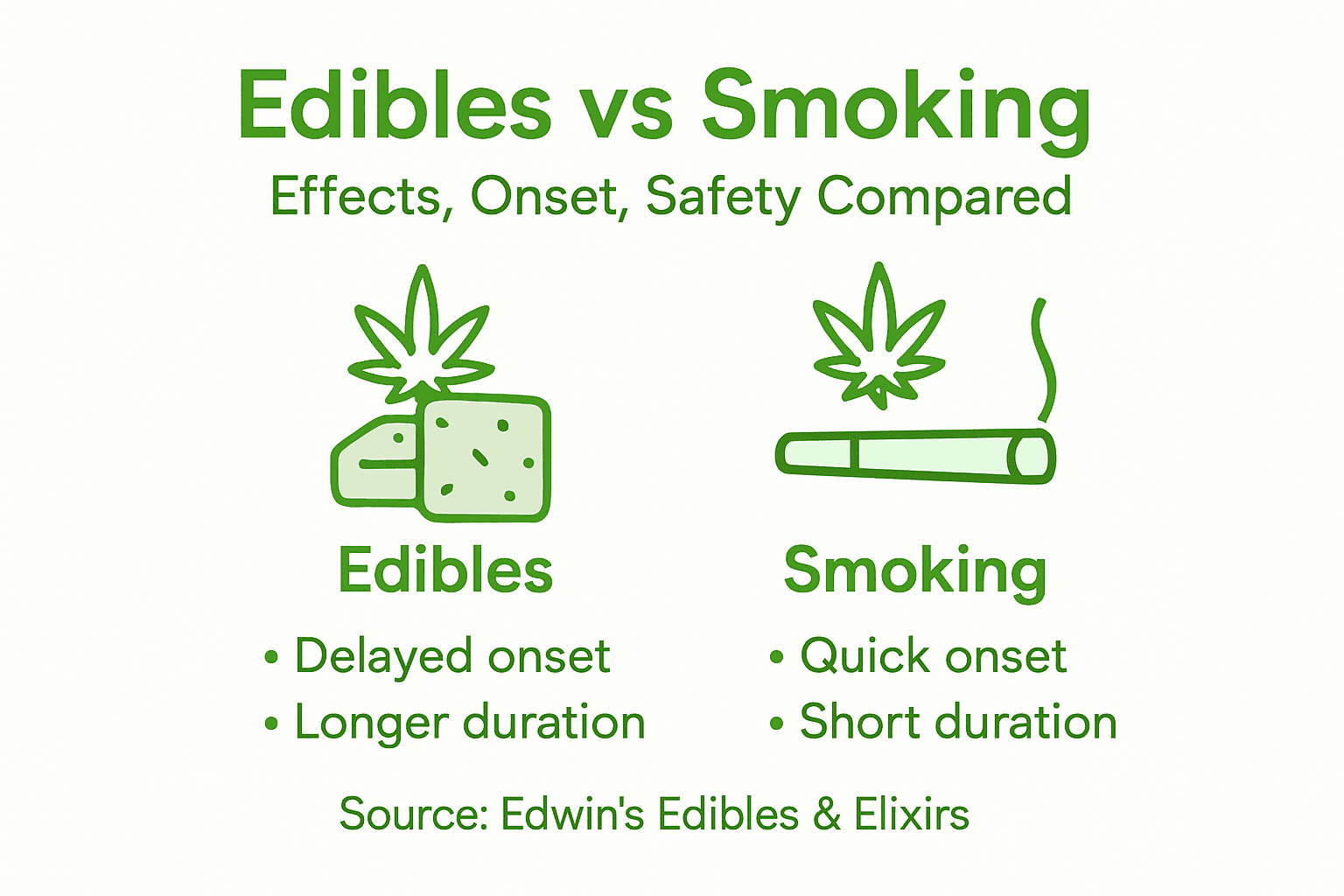
Smoked cannabis produces effects that come on quickly and peak fast, usually within 30 to 60 minutes, then gradually fade over 2 to 4 hours total. You feel the effects rise, plateau and decline relatively predictably. Edibles, however, operate on a completely different timeline. The delayed onset means effects may not become apparent for 30 minutes to 2 hours and when they do arrive, they tend to build more slowly and last significantly longer—often 6 hours or more. This extended duration is why many health-conscious adults prefer edibles for sustained relief or relaxation throughout their day.
Here’s where things get particularly important: the delayed onset of edibles can lead to unintended overconsumption. Because you don’t feel immediate effects, it’s tempting to consume more before the initial dose kicks in, potentially resulting in stronger effects than intended. Edibles also tend to produce more intense or unpredictable effects compared to smoking because the liver metabolizes THC differently than direct lung absorption. This metabolic difference means edibles can create more powerful sensations, with some users experiencing anxiety, paranoia, or overwhelming intensity if dosing isn’t carefully controlled. The potency variation is especially important when products are homemade or from unreliable sources, where cannabinoid concentration may be inconsistent. Understanding how THC absorption works with edibles helps you anticipate what your body will experience and when.
For your health and safety, the distinction matters tremendously. Smoking offers more predictable, shorter effects that you can gauge quickly. Edibles demand patience, careful dosing and an understanding that what you consume now won’t fully register for hours. Both methods work effectively, but they require different mindsets and preparation.
Pro tip: Always wait at least 2 hours after consuming an edible before deciding you need more and start with a low dose (5 to 10 milligrams of THC) if you’re new to edibles, since their effects can surprise even experienced users.
The path cannabinoids take through your body determines everything about your experience. Understanding the absorption differences between smoking and edibles helps you predict timing, intensity and how long effects will stick around. This knowledge becomes invaluable when you’re planning your day or deciding which consumption method suits your schedule.
When you smoke cannabis, your lungs absorb THC directly into the bloodstream within seconds. Effects become noticeable within 2 to 15 minutes, peak around 30 to 60 minutes and typically fade within 2 to 4 hours. The journey is fast and straightforward: smoke enters lungs, cannabinoids cross into blood, brain and body respond almost immediately. This rapid absorption means you feel effects quickly enough to gauge whether you’ve consumed enough, making it easier to self-regulate dosing in real time.
Edibles follow a completely different absorption timeline. When you consume an edible, your digestive system must break down the food product, extract the cannabinoids and pass them through your liver before they enter your general circulation. Edibles are metabolized through the digestive system and liver, causing slower onset of effects that can take up to 2 hours to become noticeable. However, this slower route produces a significant advantage: the effects build more gradually and last considerably longer, often 4 to 6 hours or more. Some users report feeling residual effects for even longer. This extended window makes edibles ideal for sustained wellness goals or all-day relaxation, but it requires patience and planning.
The intensity difference matters too. Because edibles are processed through your liver, the cannabinoids undergo what’s called “first-pass metabolism,” which can actually increase potency compared to smoking. A 10-milligram edible doesn’t simply deliver the same experience as smoking 10 milligrams of flower. Delayed peaks in THC concentration last several hours with edibles, meaning the effects not only last longer but also feel more intense at their peak. For health-conscious adults, this means edibles demand more careful dosing and planning. You can’t rush the timeline or dial back intensity mid-experience like you might with smoking.
Here’s a practical comparison: if smoking is like taking an express elevator that gets you to your destination quickly, edibles are like taking scenic stairs that arrive later but stay with you longer. Both reach the top; they just follow different routes and timelines.
Pro tip: Track your personal absorption timeline by noting when you consumed an edible and when effects first became noticeable, then record the intensity peak and duration; this personal data becomes your most reliable guide for future dosing and timing decisions.
Dosing edibles correctly separates a positive experience from an uncomfortable one. The standard serving size for THC edibles is 10 milligrams, though products often contain multiple servings per package. This matters because a single chocolate bar might contain 50 milligrams across five pieces, meaning each piece equals one standard dose. Reading labels carefully before consuming prevents the common mistake of accidentally taking far more than intended. For health-conscious adults new to edibles, starting with 5 milligrams allows you to assess your personal sensitivity before graduating to higher amounts.
The delayed onset of edibles creates a unique safety challenge. Because effects take 30 minutes to 2 hours to appear, many people consume more while waiting, thinking the initial dose didn’t work. This pattern leads directly to overconsumption and unexpectedly intense effects. Edibles with delayed effects and variable potency increase overdose risk, particularly because potency varies between products and batches. Unlike smoking where you immediately know if you’ve taken enough, edibles require patience and trust in your dosing decision. Storage and labeling matter tremendously for safety. Keep edibles in their original packaging with clear THC labels and store them away from children and pets who might mistake them for regular food. Edible products designed to look like candy or brownies pose significant accidental ingestion risks, especially in households with young children.
Legal considerations vary significantly across the United States. Cannabis remains federally illegal, but individual states set their own rules. Currently, 18 states permit recreational cannabis use for adults aged 21 and older, while 37 states allow medical use with a prescription. Your state’s specific laws determine whether you can legally purchase, possess and consume edibles. Beyond purchase and possession, driving under the influence of cannabis is illegal nationwide and dangerous, regardless of whether you consumed smoking products or edibles. The impairment from edibles can last 6 hours or longer, so plan accordingly and never operate vehicles while under the influence.
When selecting edibles, prioritize products from licensed dispensaries that provide third-party testing results. Understanding dosing guidelines helps you avoid adverse effects and consume responsibly. Products from unknown sources or homemade edibles often have inconsistent potency, making safe dosing nearly impossible. For adults seeking fast-acting effects with reliable dosing, premium edibles designed with consistent formulation offer superior safety compared to untested alternatives.
Below is a quick reference for safe edible consumption and legal tips:
| Guideline | Edibles | Smoking Cannabis |
|---|---|---|
| Recommended Starting Dose | 5-10 milligrams THC | Start with small inhalation |
| Safety Tip | Wait two hours to redose | Monitor after a few puffs |
| Label Importance | Read THC per serving and total | Check strain and potency |
| Legal Restriction | Varies by state, strict packaging | Age limits, public use restricted |
| Storage Advice | Locked, childproof container | Store out of reach, no open flames |
Pro tip: Write down the date, time, dosage and your experience after consuming an edible, creating a personal dosing log that helps you identify your ideal dose and timing while avoiding overconsumption mistakes.
Your ideal consumption method depends on your specific situation, goals and daily routine. There’s no universal “best” choice between smoking and edibles—only the best choice for you. Understanding how each method aligns with your lifestyle helps you make a decision that genuinely enhances your wellness without creating complications.
Choose smoking if you need quick symptom relief or rapid onset effects. Smoking cannabis provides rapid effects and easier dose control, making it ideal for managing acute discomfort or anxiety that demands immediate attention. If you’re managing work stress mid-afternoon and need effects within minutes, smoking delivers results you can feel almost instantly. The shorter duration also suits people with busy schedules or those who prefer effects that wear off quickly. Smoking works well for experienced users comfortable with controlling dosage in real time and for situations where discretion isn’t critical. However, consider that smoking can impact lung health with regular use, so this method works best for occasional or moderate consumption rather than daily use.
Choose edibles if you prefer sustained effects, discretion, or longer-lasting relief. Edibles deliver a more extended experience, lasting 6 hours or more compared to smoking’s 2 to 4 hours. This makes them ideal for all-day wellness support, evening relaxation, or situations where you need consistent effects throughout a planned timeframe. Edibles offer complete discretion—consuming a gummy looks identical to eating any other snack, which matters for professionals or public settings where smoking isn’t feasible. For health-conscious adults prioritizing convenience and sustained benefit, edibles represent the optimal choice. They also eliminate any lung-related concerns associated with smoking. The tradeoff is patience: you must plan ahead, accept the delayed onset and resist the urge to consume more while waiting.
Factors beyond consumption method also influence your choice. The choice between edibles and smoking depends on personal preference and medical needs, plus your metabolism, tolerance level and lifestyle demands. Some people metabolize cannabis faster than others, meaning onset times and duration vary individually. Your tolerance level affects how much you need to feel effects. Your daily schedule determines whether you have 2 hours to wait for effects to develop. Your living situation influences whether storing edibles safely away from children and pets is realistic. Consider consulting with a healthcare provider if you’re using cannabis for medical purposes, ensuring your chosen method aligns with treatment goals and any existing health conditions.
Pro tip: Try both methods in controlled settings before deciding which suits you best, keeping detailed notes on onset time, intensity, duration and how you felt at each stage to identify your personal response pattern.
Trying to decide between edibles and smoking cannabis can feel overwhelming with so many factors like onset time, dosing safety and lasting effects to consider. This article highlighted key challenges such as managing the delayed onset of edibles, avoiding overconsumption and finding a discreet, reliable way to enjoy cannabis tailored to your wellness goals. Whether you value fast-acting relief or longer-lasting calm, understanding these differences sets the foundation for a satisfying experience.
At Edwin’s Edibles & Elixirs, we specialize in premium hemp-derived Delta 9 THC edibles that combine quality, safety and innovation. Our small-batch, fast-acting THC gummies and carefully crafted Sativa Edibles offer precision dosing with proprietary TiME INFUSION® technology for consistent, enjoyable effects without worry. Start your journey with our THC Gummies collection designed to meet every preference while supporting your health and lifestyle.
Take control of your cannabis experience now by exploring our wide selection and detailed product guides. Visit Edwin’s Edibles & Elixirs to find your ideal edible, gain confidence in dosing and enjoy the benefits of trusted, organic ingredients delivered right to your door.
Edibles are consumed via food or drink and take longer to take effect (30 minutes to 2 hours), while smoking delivers immediate effects (within 5 to 15 minutes). Edibles also provide longer-lasting effects, typically 4 to 8 hours, compared to 2 to 4 hours for smoking.
It’s important to read labels and understand serving sizes. A standard dose of THC in edibles is typically 10 milligrams. Beginners should start with a lower dose, like 5 milligrams and wait at least 2 hours to assess effects before consuming more.
Edibles must pass through your digestive system and be metabolized by your liver before the cannabinoids enter your bloodstream, which takes longer compared to the direct absorption of cannabinoids through the lungs when smoking.
Always store edibles in their original packaging, away from children and pets. Be sure to read the label for THC content and wait at least 2 hours before redosing to avoid overconsumption. Monitor how you feel, as the effects can be more intense and last longer than smoking.