
You’ve probably picked a product based on its strain name, expecting a predictable experience, only to feel something completely different. That gap between expectation and reality is exactly where understanding how strain affects effects becomes valuable. Strain names like “Blue Dream” or “OG Kush” are useful marketing shorthand, but the real drivers of your Delta 9 THC experience are the specific chemical compounds in that product, how much THC you actually consume and what’s happening inside your own body that day. Here’s what the science actually says.
| Point | Details |
|---|---|
| Strain names ≠ effects | Strain names alone do not reliably predict how cannabis affects you because chemical profiles vary. |
| THC potency matters | Your experience mainly depends on the actual THC dose and potency, which influence effects and impairment. |
| Terpenes shape effects | Terpenes modulate and diversify cannabis effects beyond THC alone through the entourage effect. |
| Biology & context influence | Your body’s state and environment play a critical role in how you perceive cannabis effects. |
| Choose chemically tested products | Focus on tested chemical profiles and dose management for safer, consistent cannabis experiences. |
When someone asks how strain affects effects, the honest answer starts in the lab, not on the label. Every cannabis strain carries a unique chemical fingerprint made up of cannabinoids and terpenes (aromatic compounds produced by the plant). These work together in ways that plain strain names can never fully capture.
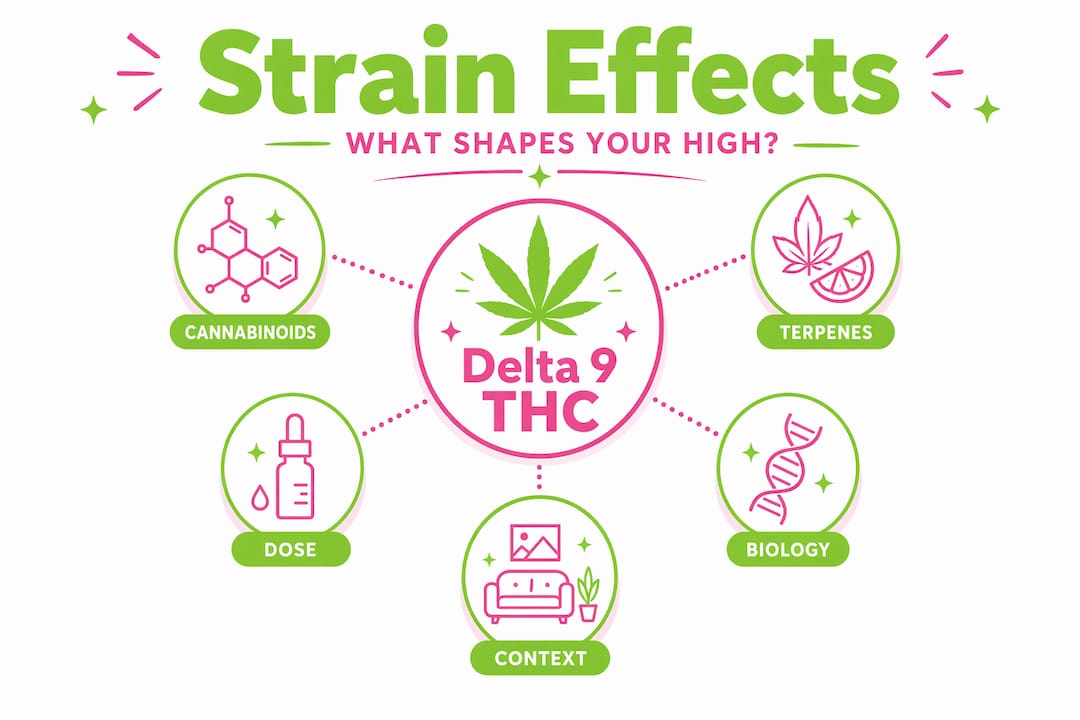
Delta 9 THC is the primary psychoactive cannabinoid, meaning it’s the compound most responsible for the “high” you experience. But it rarely works alone. Dozens of other minor cannabinoids, including CBD, CBG and CBN, interact with THC to shape how intense, euphoric, or sedating the effects feel.
Terpenes are where things get genuinely interesting. These are the same fragrant molecules found in lavender, citrus peel and pine needles and cannabis produces hundreds of them. As the role of terpenes in effects shows, they don’t just create flavor. They directly modulate how THC behaves in your brain and body.
Here are the terpenes you’ll encounter most often in Delta 9 products and what each one brings:
This interplay is what scientists call the entourage effect, meaning the full chemical orchestra of a strain produces an experience more nuanced than any single compound could alone. As detailed in the terpene profile and effects guide, two products can share the same THC percentage and feel completely different because their terpene compositions diverge. In fact, terpenes can modulate cannabis’ psychoactive effects such that two strains with the same THC percentage can feel noticeably different.
Now that you know the chemistry shaping strains, let’s see how THC potency impacts your experience.
Strain name aside, the single most predictable variable in your cannabis experience is how much THC you actually consume. Potency, measured as a percentage of total cannabinoids, combined with the total milligrams you ingest, drives the intensity of effects more reliably than any marketing descriptor.

A 2026 simulated-driving impairment study confirmed what many experienced users already suspected: higher THC potency levels cause measurable functional impairments, with longer reaction times and worse lateral control observed at medium and high potency levels compared to low doses or placebo. The THC wellness benefits page breaks this down further, but the key takeaway is direct: dose is destiny.
| THC Potency Level | Approx. THC % | Typical Subjective Effects | Functional Impact |
|---|---|---|---|
| Low | ~5% or below | Mild relaxation, gentle mood lift | Minimal measurable impairment |
| Medium | ~12.5% | Clear euphoria, heightened senses | Measurable reaction time increase |
| High | ~22% or above | Intense euphoria, possible anxiety | Notable lateral control worsening |
The table above reflects consistent patterns, not guarantees. Your personal tolerance, body weight, metabolism and whether you’ve eaten recently all affect where you land on that spectrum.
What this means practically: if you buy an edible labeled “Indica” at 10mg and a different one at 25mg, the dose difference will matter far more to your experience than any strain distinction. Understanding THC potency importance in edibles is the clearest path to managing how you feel.
Pro Tip: When trying a new Delta 9 product, start with half the recommended dose and wait at least 90 minutes before considering more. Edibles metabolize through your digestive system, so the peak effect often arrives later than expected.
While potency is key, other factors add nuance to how you feel. Let’s explore those complexities.
Here’s something most casual cannabis users never consider: even if you buy the exact same strain from the same brand twice, your experience may differ significantly. This isn’t in your head. It’s chemistry meeting biology and both are moving targets.
On the chemistry side, terpenes are inherently volatile. They degrade with exposure to heat, light and oxygen, which means a product stored in a warm car for a week will likely deliver a muted terpene experience compared to one kept cool and sealed. According to 2026 research on cannabis chemical stability, post-harvest storage and environmental conditions can change terpene and cannabinoid profiles, altering effects before products even reach consumers. Growing conditions, soil and even the time of harvest introduce additional variability.
On the biology side, your endocannabinoid system (ECS) is a network of receptors throughout your brain and body that processes cannabinoids. The key insight is that your ECS is not static:
Context matters too. Your setting, mood and social environment color your subjective experience in ways that are well-documented in cannabis wellness benefits and risks research. Taking a 10mg gummy alone while winding down before bed feels nothing like taking that same gummy at a loud social event with unfamiliar people.
Pro Tip: Keep a simple consumption journal. Note the product, dose, time of day, what you ate, your stress level and sleep quality. After a few sessions, patterns emerge that help you predict and tailor your experience far more accurately.
Grasping this variability, let’s consider practical strategies for choosing strains and managing your Delta 9 experience.
Strain effects on performance, mood and relaxation become far more predictable once you build a system around a few consistent habits. Rather than chasing a strain name, here’s a practical framework for selecting and using Delta 9 products with confidence.
Per insights from dose and potency research, dose and potency should guide your selection more than strain name and terpene awareness refines your choices for specific effect targeting.
| Goal | Preferred Terpene | Suggested THC Dose (Beginner) | Storage Priority |
|---|---|---|---|
| Deep relaxation | Myrcene | 5 to 10mg | Cool, dark, sealed |
| Mood lift and creativity | Limonene | 5 to 7.5mg | Away from heat |
| Balanced everyday use | Terpinolene | 5mg | Airtight container |
| Sleep support | Linalool | 7.5 to 10mg | Avoid light exposure |
Learning how to choose cannabis edibles based on terpene profiles and tested potency is one of the fastest ways to improve your consistency. And if you are newer to Delta 9, understanding why low dose THC often outperforms higher doses for sustained wellness use is genuinely useful reading.
Pro Tip: When comparing two products to decide which fits your needs, focus on three numbers: total mg of Delta 9 THC per serving, dominant terpenes listed and onset time. Those three data points tell the full story.
With these strategies in hand, let’s take a fresh look at this topic from a perspective most people miss entirely.
Here’s an opinion we hold firmly at Edwin’s Edibles & Elixirs: the Indica/Sativa/Hybrid framework, while useful as a starting point for new users, has become a crutch that actively misleads experienced consumers. It creates false confidence. You believe you know what’s coming and then you’re surprised when it doesn’t match the label.
The uncomfortable truth is that strain names are unreliable predictors due to genetic and chemical variability. The same strain name can describe genetically divergent plants with completely different terpene and minor cannabinoid compositions. There is no regulatory body standardizing what “Sour Diesel” actually means chemically.
What does work? Lab-tested chemical profiles. Specifically, knowing your dominant terpenes, total THC in milligrams and any significant minor cannabinoids gives you a far more accurate map of what your experience will look like. This isn’t just academic. It’s the difference between a session that delivers what you wanted and one that leaves you anxious and confused about why.
Your biology is the other half of the equation. We’ve seen customers switch from high-potency products to precisely dosed low-dose options and report dramatically better, more consistent experiences. That’s the THC potency assessment at work: understanding your personal threshold is just as important as understanding the product.
Understanding strain effects through this chemistry-first lens also builds something more valuable long-term: a personal profile of what works for your body. That profile is yours alone and no strain name can hand it to you.
We built Edwin’s Edibles & Elixirs around exactly the kind of transparency this article has been advocating. Every product we craft comes with clear potency information, terpene profiles and honest guidance on what to expect. Whether you’re exploring your first Delta 9 gummy or looking for a reliable product you can count on session after session, our cannabis edibles guide walks you through everything you need to know before you buy. Our choosing cannabis edibles resource helps match products to your specific goals, mood and tolerance level. And when you’re ready to understand potency more deeply, our THC potency guide gives you the tools to dose confidently.
No, strain names alone don’t guarantee effects because chemical and genetic variability between products of the same name is wide and your individual biology plays an equally significant role.
Impairment correlates with dose and while low amounts cause less functional impact, research shows that even medium and high doses produce measurable impairments in reaction time and coordination, so any Delta 9 THC use warrants caution.
Effects shift because both your biology and the product itself change over time. Biological changes and chemical degradation in stored products mean each session carries its own variables, from your sleep quality to terpene loss during improper storage.
Yes. Hemp products with low THC can still trigger a positive urine test depending on how much you consume, even if you don’t feel intoxicated afterward.