
Most people are surprised to learn that federal law allows certain cannabis products—if they contain no more than 0.3 percent THC by dry weight. This single threshold shapes how Delta 9 THC is defined and sold, yet confusion persists about which products are truly legal. For anyone curious about the difference between hemp and marijuana or worried about crossing a legal line, a clear understanding of Delta 9 THC’s classification, uses and risks makes all the difference.
| Point | Details |
|---|---|
| Legal Definition of Delta 9 THC | Delta 9 THC is legal if derived from hemp containing no more than 0.3% THC, varying by federal and state regulations. |
| Hemp vs. Marijuana | Hemp is federally legal and non-intoxicating (<0.3% THC), while marijuana is controlled and highly psychoactive (>0.3% THC). |
| Consumption Methods Matter | Various methods of consumption, such as smoking or edibles, result in different effects and onset times, necessitating informed choices. |
| Safety and Compliance | Consumers should prioritize purchasing from verified sources and understanding local regulations to mitigate health and legal risks. |
Understanding Delta 9 THC requires navigating a complex legal landscape that has evolved significantly in recent years. According to the Congressional Research Service, federal law defines hemp as a cannabis plant containing no more than 0.3% THC concentration, which critically distinguishes it from marijuana and determines its legal status.
The primary misconception many people have is assuming all cannabis products are illegal. In reality, hemp-derived Delta 9 THC products have a nuanced legal framework. As the FDA explains, cannabis contains over eighty biologically active compounds, with Delta 9 THC being just one. The 2018 Farm Bill created a pivotal legal distinction that opened new possibilities for hemp-derived products.
Key characteristics that define legal Delta 9 THC include:
Consumers should understand that legal Delta 9 THC is not a blanket permission for all cannabis products. The legal landscape remains complex, with state-by-state variations that can significantly impact product availability and usage. For those interested in exploring more about these nuanced definitions, our Cannabis and Hemp-Derived Terminology Guide offers comprehensive insights into this evolving field.
Navigating the legal world of Delta 9 THC requires careful understanding of federal and state regulations. While the 2018 Farm Bill created opportunities for hemp-derived products, individual states maintain the right to implement their own restrictions. This means what’s legal in one state might be restricted in another, making it crucial for consumers to stay informed about local laws and regulations.
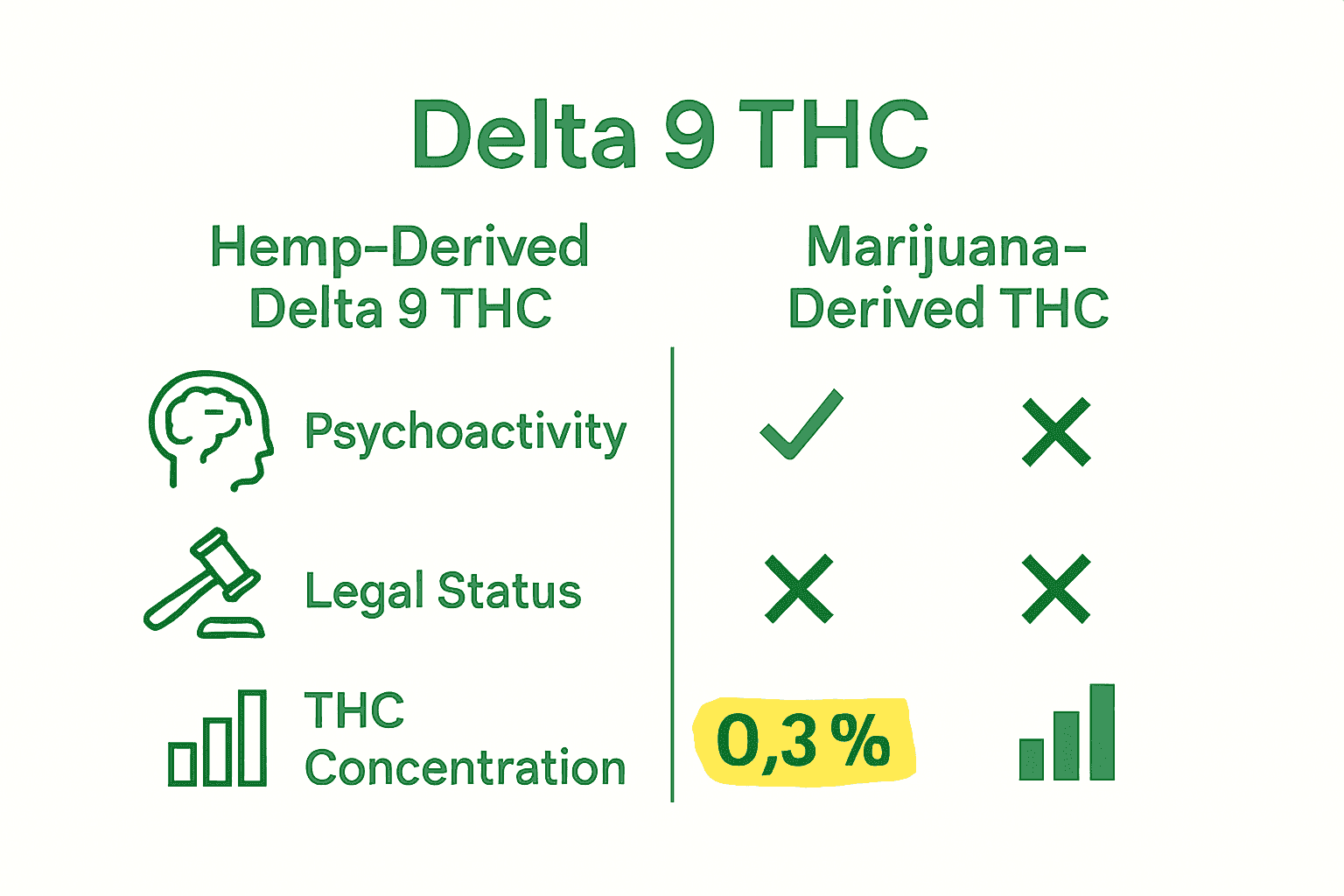
At first glance, hemp and marijuana might seem similar, but they differ significantly in their THC composition and legal status. According to the USDA, both come from the same cannabis plant species, yet they are distinguished by their THC concentration, which fundamentally impacts their legal and practical applications.
The critical distinction lies in THC levels. As the Montana Department of Revenue explains, hemp contains less than 0.3% delta-9 THC and is classified as a non-intoxicating product. Marijuana, conversely, has substantially higher THC levels and is primarily used for its psychoactive effects. This nuanced difference determines not just scientific classification, but also complex legal frameworks surrounding their production and use.
Key differences between hemp-derived and marijuana-derived THC include:
For consumers navigating this complex landscape, understanding these distinctions is crucial.
 While both derive from cannabis, their applications and legal implications vary dramatically. Our Delta 8 vs Delta 9 Guide provides additional insights into the intricate world of cannabinoid variations, helping you make informed decisions about these fascinating compounds.
Ultimately, the hemp versus marijuana debate extends beyond simple chemical composition. It represents a broader conversation about plant science, legal interpretation and evolving societal understanding of cannabis derivatives. As research continues and regulations adapt, our comprehension of these remarkable plants will undoubtedly continue to grow and transform.
Navigating the legal landscape of Delta 9 THC is like traversing a complex maze of federal and state regulations. According to the Congressional Research Service, federal law classifies cannabis with more than 0.3% THC as marijuana, a Schedule I controlled substance, creating a fundamental legal boundary that significantly impacts product availability and usage.
The legal complexity deepens at the state level. As the Association of State and Territorial Health Officials explains, states are actively enacting their own legislation to regulate hemp-derived products. This results in a dynamic, ever-changing legal landscape where regulations can vary dramatically from one state to another, making compliance a nuanced challenge for manufacturers and consumers alike.
Key aspects of Delta 9 THC legal considerations include:
For consumers in specific regions looking to understand local regulations, resources like our CBD and Delta 9 THC Guide for Georgia can provide localized insights into the complex world of cannabinoid regulations.
Ultimately, the legal framework surrounding Delta 9 THC represents a fascinating intersection of federal policy, state autonomy, public health considerations and evolving scientific understanding. As research continues and societal perspectives shift, we can expect further refinement and potentially significant changes in how these compounds are regulated and perceived.
Understanding the effects of Delta 9 THC requires a nuanced approach. According to the FDA, delta-9 THC is the primary psychoactive component responsible for the ‘high’ associated with cannabis use. While the FDA has not approved cannabis for treating specific medical conditions, ongoing research continues to explore its potential therapeutic applications.
Consumption methods play a critical role in how Delta 9 THC impacts the body. As the Substance Abuse and Mental Health Services Administration highlights, users can consume THC through various methods including smoking, vaping, edibles and tinctures. Each method produces unique onset times and duration of effects, making it crucial for consumers to understand the differences and potential risks associated with each approach.
Potential effects and consumption methods include:
For those interested in exploring the nuanced world of cannabinoid consumption, our Delta 9 Potency Guide offers deeper insights into understanding optimal dosage and consumption techniques.
While research continues to evolve, it’s essential to approach Delta 9 THC consumption responsibly. Individual experiences can vary dramatically based on factors like tolerance, metabolism and specific consumption method. Always start with low doses, understand your personal limits and prioritize your overall health and safety when exploring these compounds.
Navigating the delta 9 THC landscape requires careful consideration of potential health risks and legal implications. According to the FDA, consumers should be acutely aware that delta-9 THC use can lead to significant adverse health effects, including cognitive impairment, potential mental health complications and risks of addiction.
Product labeling and compliance represent critical safety concerns. The National Institute of Justice highlights the alarming reality that some products may contain THC levels exceeding legal limits, creating both health and legal risks for unsuspecting consumers. This underscores the importance of purchasing from reputable sources that prioritize transparent and accurate product information.
Key safety and compliance recommendations include:
For those seeking additional guidance on responsible consumption, our Cannabis and Hemp-Derived Terminology Guide offers comprehensive insights into understanding product details and regulatory nuances.
Ultimately, responsible consumption requires a proactive approach. Individual experiences with delta-9 THC can vary dramatically, making personal research, medical consultation and a cautious mindset essential. Always prioritize your health, stay informed about the latest research and make decisions that align with your personal wellness goals.
Understanding the unique characteristics of cannabinoids requires careful examination of their individual properties. According to the Congressional Research Service, delta-9 THC stands out as the primary psychoactive compound in cannabis, distinguishing itself from other cannabinoids through its distinct molecular structure and physiological effects.
The landscape of cannabinoids is remarkably diverse. As the USDA explains, while delta-9 THC is psychoactive and heavily regulated, other cannabinoids like CBD offer different interactions with the human body. These compounds share a botanical origin but diverge significantly in their legal status, potential therapeutic applications and physiological impacts.
Key differences between cannabinoids include:
For those eager to explore the nuanced world of cannabinoid variations, our Delta 9 THC Gummies Overview provides an in-depth look at how these compounds manifest in practical applications.
Ultimately, the world of cannabinoids represents a complex ecosystem of molecular interactions. Each compound offers unique characteristics, challenging traditional understanding and opening new frontiers in wellness, medical research and personal health exploration. As scientific understanding continues to evolve, so too will our appreciation of these remarkable botanical compounds.
Navigating the complex world of legal Delta 9 THC can feel overwhelming when you want safe, effective options that meet federal and state standards. You might worry about product quality, accurate dosing and compliance with the 0.3% THC limit outlined in recent regulations. Understanding terms like hemp-derived THC and the importance of lab-tested edibles is essential to avoid surprises and enjoy the benefits responsibly.
That is why Edwin’s Edibles & Elixirs is dedicated to providing premium, hemp-derived Delta 9 products crafted with care. Explore our wide selection of carefully formulated Delta 9 Edibles including fast-acting gummies, TiME INFUSION® technology ensures quick onset and consistent effects. Take control of your experience and shop confidently knowing you are getting top-quality options backed by transparent lab testing. Ready to embrace the legal Delta 9 market with products designed for wellness, relaxation and enjoyment? Browse our collection today and find the perfect fit for your lifestyle.
Delta 9 THC is a psychoactive compound found in cannabis. It is legally defined as derived from hemp when it contains no more than 0.3% THC concentration on a dry weight basis, distinguishing it from marijuana.
Hemp-derived THC contains less than 0.3% Delta 9 THC and is classified as non-intoxicating, while marijuana-derived THC has higher concentrations and is primarily used for its psychoactive properties.
Common consumption methods for Delta 9 THC include smoking, vaping, edibles and tinctures. Effects can vary by method; for example, smoking leads to rapid onset, while edibles take longer to produce effects but last longer.
Consumers should purchase products from licensed manufacturers, review lab testing results, start with low doses and be aware of local regulations. It’s also essential to store products securely away from children and pets.