
Edible potency is defined by milligrams of THC per serving, not by percentages and knowing how to read edible potency on a label is the single most important skill for safe, predictable cannabis consumption. Unlike flower, where percent THC guides purchasing decisions, edibles require you to work with concrete mg numbers that tell you exactly how much Delta 9 THC enters your body per piece or per sip. Edible potency is measured in mg, not percentages, because the dose is fixed by the manufacturing process. For new consumers, starting doses of 2.5 to 5 mg THC are the recognized safety benchmark. Get this number right and you set yourself up for an experience that delights rather than overwhelms.
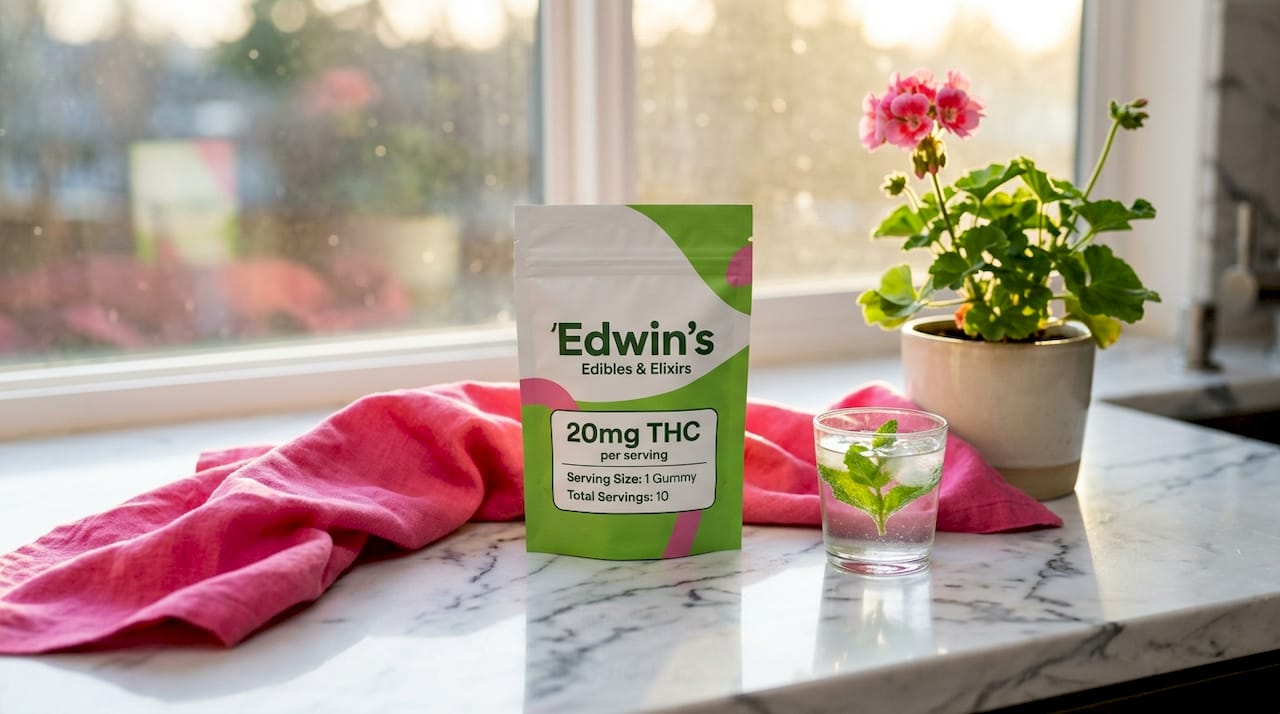
Every licensed cannabis edible label carries a handful of numbers that do the heavy lifting for your edible dosage guide. The challenge is knowing which number actually controls your experience and which ones are background noise.
Here are the key figures to locate on any edible package:
The percent THC figure you sometimes see on edible packaging is largely irrelevant for dosing. It applies to the extract used in production, not to the finished serving you consume. Treat it as background information and focus entirely on the mg numbers.
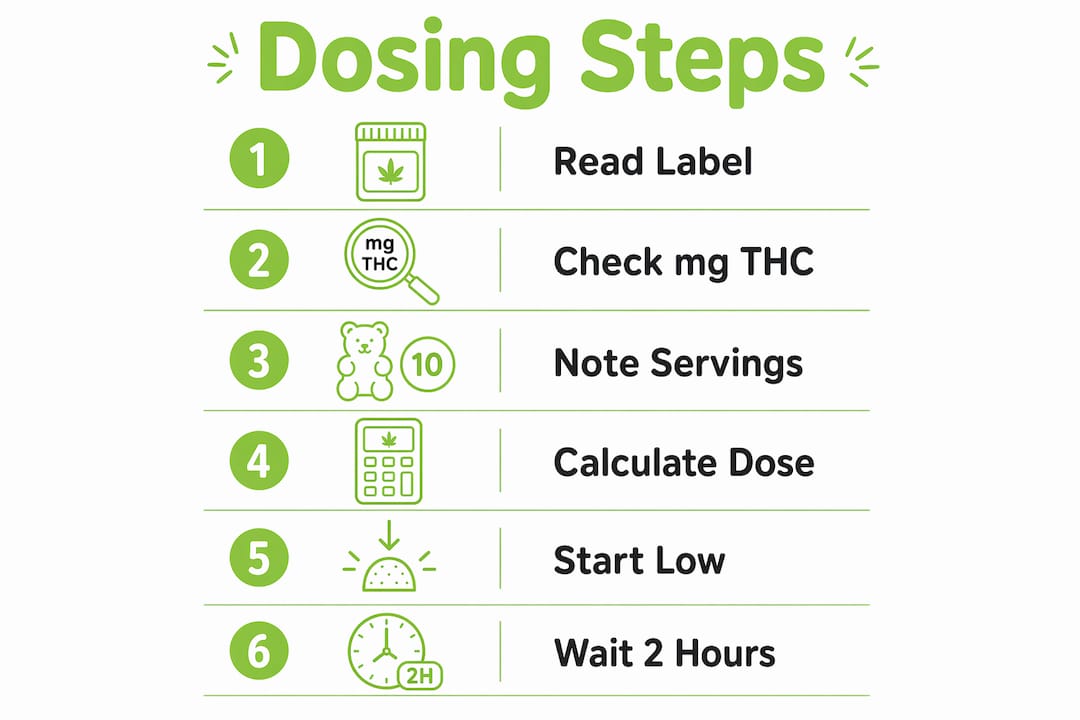
Calculating your THC intake from an edible label follows a three-step process that removes guesswork and protects you from accidental overconsumption.
Here is how this plays out across common product types. A fast-acting THC gummy from a brand like Edwin’s Edibles & Elixirs might contain 5 mg per piece with 10 pieces per bag, totaling 50 mg per package. One piece equals one serving equals 5 mg. A THC-infused chocolate bar might contain 100 mg total across 20 squares, making each square 5 mg. A THC drink might list 10 mg per bottle but define the serving as the full bottle, so the math is already done for you.
The most common mistake is ignoring the serving size definition and assuming one physical unit equals one serving. A second common error is dosing by total package THC instead of per-serving THC. Both mistakes can result in consuming two to four times the intended dose.
Pro Tip: When you are new to a product or brand, start at the lower end of the labeled serving and wait the full onset window before considering more. Edibles take 30 minutes to 2 hours to produce effects and re-dosing too early is the leading cause of uncomfortable overconsumption experiences.
Cannabis edible labels carry terminology that sounds technical but follows consistent logic once you know the definitions. Understanding these terms sharpens your ability to assess potency across any brand or product format.
Freshness indicators matter more than most consumers realize. THC concentration in edibles degrades when exposed to heat, light and air. A product stored improperly or consumed well past its best-by date may deliver noticeably less potency than the label promises, which can lead to frustration or to re-dosing unnecessarily.
Homemade edibles present a fundamentally different challenge because they carry no standardized label and no verified potency number. The infusion process introduces significant variability. Butter or oil infused with cannabis flower does not extract THC at a consistent rate, meaning two batches made with identical ingredients can produce very different potency levels.
Homemade edible potency is uncertain due to infusion variability and this uncertainty is the biggest cause of bad edible experiences. Home potency testers, such as the tCheck device, can measure THC concentration in infused oils and butters, giving you a working estimate before you bake. This single step dramatically improves dosing confidence for home cooks.
Pro Tip: With homemade edibles, treat your first experience as a calibration session. Start with a very small portion, such as one-quarter of what you think a standard serving might be and wait the full two hours before assessing the effect. Keep a simple log noting the portion size, estimated potency and how you felt. Three or four sessions of careful observation will give you a reliable personal baseline.
Licensed products with batch Certificates of Analysis, commonly called COAs, offer the most trustworthy potency data available. A COA is a third-party lab report confirming the exact cannabinoid content of a specific production batch. Reputable brands publish COAs on their websites or include a QR code on the packaging that links directly to the report. If a brand cannot provide a COA, that is a meaningful signal about their commitment to transparency. You can learn more about lab testing’s role in cannabis safety to understand what to look for in a credible report.
Reading edible potency accurately requires three numbers: mg THC per serving, servings per package and active THC. Every other label element is secondary to these three figures.
| Point | Details |
|---|---|
| Use mg, not percent | Edible potency is measured in milligrams per serving; percent THC applies to flower, not edibles. |
| Active THC is your dose | Base all dose calculations on active THC per serving, not total THC, to avoid overconsumption. |
| Serving size defines everything | Always confirm what one serving means physically before consuming any portion of the product. |
| Wait before re-dosing | Edibles take up to two hours to produce effects; premature re-dosing is the most common mistake. |
| COAs verify label claims | Licensed products with third-party lab reports provide the most reliable potency information available. |
I have spent years watching people approach edibles with the same overconfidence they bring to other cannabis formats and the pattern is consistent. They see a number on the label, assume it means what they think it means and skip the step of confirming the serving size definition. That single omission accounts for the majority of uncomfortable edible experiences I hear about.
The term “active THC” is the most underused piece of information on any edible label. Most consumers look at the big number, the total THC per package and mentally divide it by the number of pieces. That math is close but not precise and with cannabis, precision matters. Treating mg per serving as the real dose rather than doing rough package math is a habit that separates confident consumers from frustrated ones.
I also think the industry does consumers a disservice with marketing language that obscures dosing clarity. Words like “micro-dose,” “enhanced,” or “extra strength” carry no standardized meaning. They are brand positioning terms, not potency descriptors. Ignore them entirely and go straight to the cannabinoid panel. The mg numbers there are the only language that matters for safe edible use.
My honest recommendation is to treat every new product as its own calibration exercise, regardless of your experience level. A 10 mg gummy from one brand may hit very differently than a 10 mg gummy from another, depending on the extract type, the carrier fat and the delivery technology used. Patience and observation are the most reliable tools you have.
— Jamison
At Edwin’s Edibles & Elixirs, we believe that knowing exactly what you are consuming should never be a guessing game. Every product in our lineup, from our fast-acting THC gummies powered by TiME INFUSION® technology to our organic CBD gummies, carries clear mg-per-serving labeling and batch-verified potency. We built our cannabis edible consumption guide specifically to help you match the right product to your desired experience and comfort level. If you are still exploring your options, our complete cannabis edibles guide walks you through every format, effect profile and dosing consideration in one place. We are here to make your experience as clear, safe and enjoyable as possible.
Milligrams of THC per serving is the exact amount of active Delta 9 THC in one standard portion of the product. This number is your primary dosing reference and tells you how much THC your body will process from a single serving.
Divide the total package THC by the number of servings listed to get mg per serving, then multiply by the number of servings you consume. For example, a 50 mg package with 5 servings equals 10 mg per serving.
Total THC includes all THC compounds in the product, including precursor forms. Active THC is the amount expected to produce effects after digestion. Dose by active THC for the most accurate and safe consumption experience.
Edibles take 30 minutes to 2 hours to produce noticeable effects. Wait the full two hours before considering an additional dose to avoid unintentional overconsumption.
No. Homemade edibles lack verified potency labels due to infusion variability, so the same mg-based calculation does not apply reliably. Start with a very small portion and use a home potency tester like tCheck to estimate concentration before consuming a full serving.