
Cannabinoids are defined as chemical compounds that interact with the body’s endocannabinoid system (ECS) to regulate mood, stress response and emotional balance. The role of cannabinoids in mood is not a fringe wellness claim. It is grounded in a growing body of clinical and pharmacological research showing that compounds like CBD and Delta 9 THC directly influence how the brain processes anxiety, depression and emotional stress. Understanding how these compounds work and which products deliver the most consistent results, is the first step toward making genuinely informed choices about your mental well-being.
CBD demonstrates significant, measurable effects on anxiety. A 2026 literature review covering 316 participants found that CBD reduced anxiety symptoms with a large effect size of -0.92 across multiple anxiety disorders. That number signals a clinically meaningful improvement, not just a mild placebo response.
The picture for depression is more complicated. The same review found insufficient evidence to support CBD as a standalone treatment for major depressive disorder. That does not mean cannabinoids are useless for low mood. It means the research is still catching up to widespread consumer use.
A meta-analysis of 54 randomized trials with 2,477 participants found that cannabinoids aid sleep and specific conditions like Tourette’s syndrome, but lack strong evidence for routine depression and anxiety treatment. The same analysis found users face a 1.75 odds ratio for adverse events. That means real risks exist alongside real benefits.
Key findings from the current evidence base include:
“The biphasic nature of cannabinoids means that the dose you choose matters as much as the compound itself. Low doses promote calm. Higher THC doses can trigger the exact anxiety you were trying to avoid.”
Pro Tip: If you are new to CBD for anxiety, start with a low dose and track your response over two to four weeks before adjusting. No universal dosing protocol exists yet and individual responses vary widely.
Not all cannabinoids produce the same emotional effects. The impact of cannabinoids on emotions depends heavily on the specific compound, its concentration and how it is consumed.
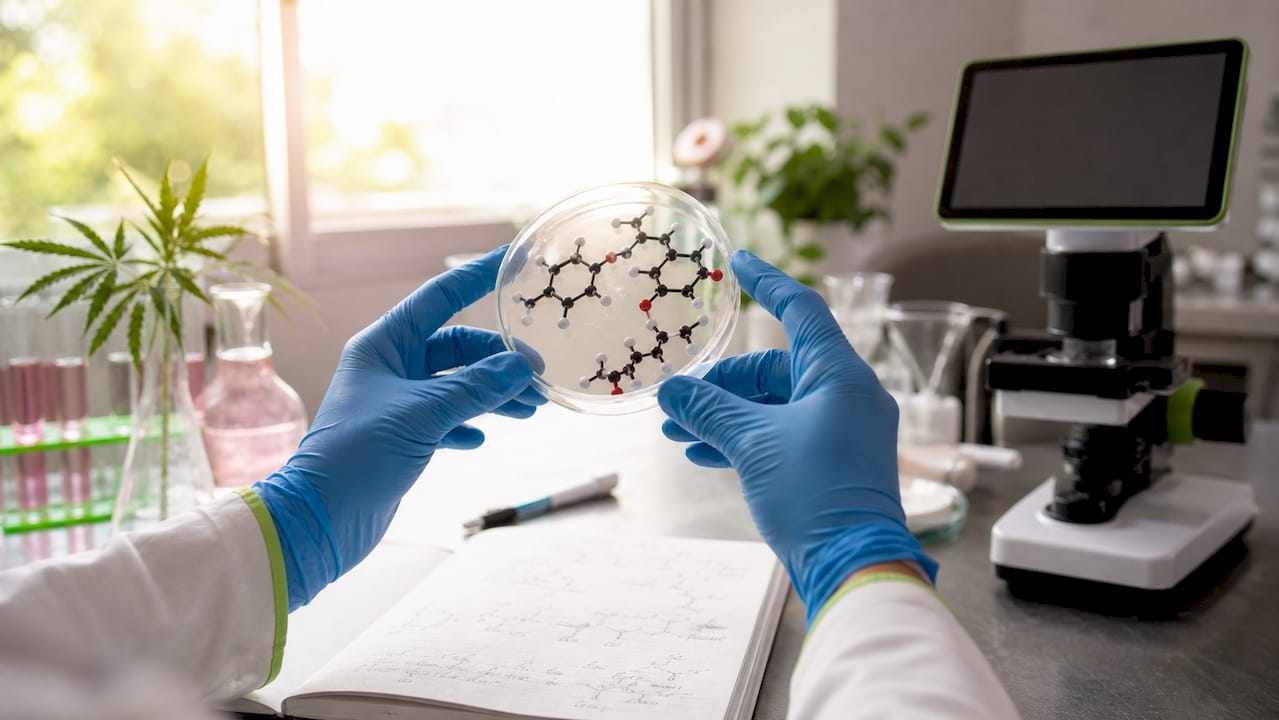
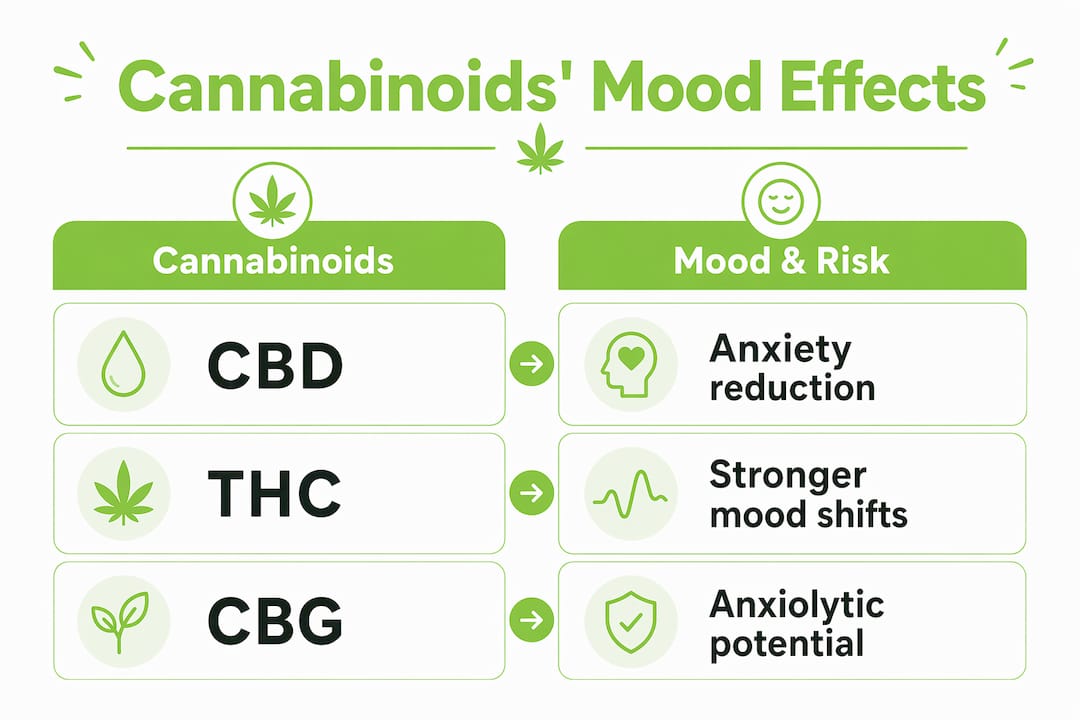
CBD works indirectly. It does not bind strongly to CB1 receptors in the brain. Instead, it supports the body’s own endocannabinoid signaling by inhibiting the FAAH enzyme, which breaks down anandamide, the body’s natural “bliss molecule.” More anandamide in circulation generally means a calmer, more balanced mood.
THC binds directly to CB1 receptors and produces stronger, faster mood shifts. That directness is both its strength and its risk. A 2026 study found that CBD-dominant edibles reduced anxiety by 24.9% over 30 days, while THC-only products showed just a 7.8% reduction. THC combined with CBD produced the highest reduction at 39.5%, suggesting that cannabinoid synergy, often called the entourage effect, matters more than any single compound alone.
CBG (cannabigerol) is a lesser-known cannabinoid gaining attention for its potential anxiolytic properties. Early research suggests it may modulate serotonin receptors and reduce stress without the psychoactive intensity of THC. CBG is not yet as well-studied as CBD or THC, but it represents a promising direction for mood-focused formulations.
| Cannabinoid | Primary Mood Effect | Risk Level | Best Format |
|---|---|---|---|
| CBD | Anxiety reduction, emotional calm | Low | Edibles, oils |
| Delta 9 THC | Euphoria, relaxation (dose-dependent) | Moderate to high | Edibles, low-dose gummies |
| CBD + THC (balanced) | Broadest anxiety relief | Moderate | Edibles, flower |
| CBG | Stress reduction, mood stabilization | Low (preliminary) | Edibles, capsules |
Edibles and flower also differ in how they deliver effects. Flower acts faster but produces shorter, less predictable results. Edibles take longer to kick in but deliver more consistent, sustained mood support. For adults managing ongoing anxiety or stress, edibles tend to offer more reliable outcomes.
Pro Tip: Choose a CBD-dominant edible with a defined milligram dose rather than a product with vague “hemp extract” labeling. Knowing exactly what you are consuming is the foundation of consistent results.
The ECS is the brain’s primary system for maintaining emotional homeostasis. It regulates how you respond to stress, how quickly you recover from fear and how your body returns to baseline after an emotional event. Cannabinoids work by interacting with this system at multiple points.
Here is how the process unfolds at the neurochemical level:
The ECS role in emotional homeostasis is now well-established in neuropsychiatric research. What remains less clear is how to reliably target it without triggering unwanted effects. That uncertainty is exactly why product selection and dosing discipline matter so much.
Cannabinoids for anxiety relief carry genuine promise, but they also carry real risks that deserve honest attention. Adults who self-manage mental health symptoms with cannabis often do so without recognizing potential adverse outcomes. Clinical guidance is strongly advised, particularly for anyone with a history of psychosis, bipolar disorder, or substance use.
Practical considerations every adult should know:
Pro Tip: For anxiety relief specifically, choose CBD-dominant edibles with less than 5mg of THC per serving. This profile delivers the entourage effect while keeping psychoactive risk low.
Cannabinoids influence mood through the endocannabinoid system and product composition, dose and individual biology all determine whether the outcome is calm or anxiety.
| Point | Details |
|---|---|
| CBD outperforms THC alone for anxiety | CBD-dominant edibles reduced anxiety by 24.9% vs. 7.8% for THC-only products over 30 days. |
| Entourage effect matters | Combined CBD and THC products produced the strongest anxiety reduction at 39.5% in clinical observation. |
| Dose determines direction | Low THC doses reduce anxiety; higher doses activate stress pathways and can worsen mood. |
| Individual ECS tone varies | Baseline anandamide levels influence how strongly any cannabinoid affects your mood and emotional state. |
| Clinical guidance reduces risk | Self-managing mental health with cannabis without professional input increases the odds of adverse psychiatric outcomes. |
I have spent years reading the research on cannabinoids and mental health and the pattern I keep seeing is this: people arrive at cannabinoid products with high hopes and low information. They hear “natural” and assume “safe at any dose.” That assumption is the most common mistake I see.
The science on how cannabinoids affect mood is genuinely exciting. CBD’s ability to modulate the HPA axis and support anandamide signaling without direct CB1 stimulation is a real pharmacological advantage. The entourage effect is real. The anxiety reductions documented in clinical literature are meaningful. But THC’s biphasic dose-response is also real and it catches people off guard more than almost any other factor.
What I find most underappreciated is the role of individual ECS tone. Two people can take the same 10mg CBD gummy and have completely different experiences, not because one is imagining things, but because their baseline endocannabinoid function differs. That variability is not a flaw in the research. It is a feature of human biology that demands personalized, thoughtful use.
My honest recommendation: treat cannabinoids the way you would treat any active compound. Start with the lowest effective dose, track your response and do not escalate without a clear reason. The role of hemp in emotional well-being is real and worth exploring. Just explore it with your eyes open.
— Jamison
At Edwin’s Edibles & Elixirs, we believe that informed choices lead to better experiences. Our small-batch, hemp-derived Delta 9 THC products and organic CBD gummies are crafted with clearly defined cannabinoid profiles, so you always know exactly what you are consuming. Whether you are exploring CBD-dominant options for anxiety relief or looking for a balanced CBD and THC edible to support emotional well-being, our cannabis edibles guide gives you the foundation to choose with confidence. For those ready to fine-tune their approach, our consumption guide for optimal results walks you through dosing strategies built around your goals. We are here to help you find what works, not just what sells.
Cannabinoids regulate mood by interacting with the endocannabinoid system, which controls emotional homeostasis, stress response and anandamide signaling. CBD supports this system indirectly, while THC activates CB1 receptors directly for faster but less predictable effects.
Yes. A 2026 literature review found CBD reduced anxiety disorder symptoms with a large effect size of -0.92 across 316 participants. CBD-dominant edibles showed a 24.9% reduction in self-reported anxiety over 30 days in separate product-specific research.
THC can worsen anxiety at higher doses due to its biphasic dose-response. Low doses may promote relaxation, but escalating THC activates the HPA axis and can trigger stress, paranoia, or worsening mood in susceptible individuals.
Edibles deliver slower onset but more consistent, sustained mood effects compared to flower. For adults managing ongoing anxiety or emotional stress, edibles tend to produce more predictable outcomes than inhaled products.
Adolescents, individuals with a history of psychosis and those prone to bipolar disorder face elevated risk from cannabinoid use, particularly THC-heavy products. Clinical guidance is strongly recommended before using cannabinoids to manage any mental health condition.