
Finding a clean and reliable cannabis option feels like a top priority for many American adults looking for both quick relief and a mindful high. With over 40 states now permitting some form of cannabis consumption, demand for discreet and precisely dosed products like THC syrup is at an all-time high. Understanding exactly how THC syrup works, its unique advantages and common misconceptions can help you choose a product that fits your wellness goals while maintaining safety and quality.
| Point | Details |
|---|---|
| Precise Dosing | THC syrup allows for controlled and measurable consumption, making it easier to manage intake compared to traditional methods. |
| Metabolism Differences | THC syrup is metabolized differently than smoked cannabis, leading to potentially delayed but intense effects. |
| Legal Considerations | The legality of THC syrup varies significantly across states, making it crucial to understand local regulations before consumption. |
| Start Low and Go Slow | It is recommended to begin with a low dose and wait to assess individual responses to avoid overconsumption. |
THC syrup represents a potent cannabis-based liquid product designed for controlled consumption, offering users a precise and fast-acting method of experiencing cannabinoid effects. Unlike traditional smoking methods, this liquid form provides a measurable and potentially more predictable experience. THC infused beverages have gained significant popularity as an alternative consumption method for cannabis enthusiasts seeking controlled dosage and discreet intake.
Chemically speaking, THC syrup contains tetrahydrocannabinol (THC) suspended in a liquid solution, typically featuring a thick, viscous consistency similar to traditional medicinal syrups. According to Harvard Health research, THC mimics neurotransmitters in the brain, producing effects like euphoria and relaxation. The syrup’s composition allows for precise dosing, making it attractive for both recreational and potential therapeutic uses.
Key misconceptions about THC syrup often revolve around its potency and effects. Unlike smoking or vaping, syrup undergoes metabolization through the digestive system, which can result in a delayed but potentially more intense experience. Users should understand that onset times vary based on individual metabolism, recent food intake and the specific product’s formulation. The complexity of cannabis chemistry means that effects can differ significantly between individuals, emphasizing the importance of responsible and informed consumption.
Pro tip: Start with a low dose and wait at least 90 minutes before considering additional consumption to understand your personal tolerance and reaction to THC syrup.
THC syrups represent a sophisticated category of cannabis concentrates with multiple variations designed to meet diverse consumer preferences. High-potency cannabis extracts typically contain THC concentrations ranging from 40% to 90%, offering users a powerful and precise consumption method. These liquid formulations come in several distinct types, including pure cannabis extract syrups, flavored varieties and medicinal-grade preparations.
The primary ingredients in THC syrups generally consist of concentrated THC oil, carrier liquids and additional flavor compounds. According to research on high-THC products, extraction methods typically involve sophisticated techniques like ethanol or CO2 processing to isolate the most potent cannabinoid compounds. Common base ingredients include:
Manufacturers often differentiate their THC syrups through unique flavor profiles and targeted effects. Some products focus on recreational experiences, while others target specific therapeutic outcomes. The variability in formulation allows consumers to select syrups that align with their desired taste preferences and intended usage, whether for relaxation, creativity, or potential medical benefits.
For reference, here are common THC syrup ingredient functions:
| Ingredient | Role in Syrup | Impact on Experience |
|---|---|---|
| THC Oil | Primary active compound | Dictates potency and psychoactive effects |
| Vegetable Glycerin | Carrier and thickener | Ensures smooth texture, helps absorption |
| Flavor Additives | Taste enhancement | Improves palatability, masks bitterness |
| Food-Grade Solvents | Aid in extraction | Increases purity and clarity of product |
Pro tip: Always verify the THC concentration and start with the smallest recommended dose to understand your individual response and tolerance level.
THC syrup interacts with the human body through a complex neurochemical process that fundamentally alters brain function and perception. Neurological interactions of tetrahydrocannabinol involve the compound binding to cannabinoid receptors, primarily CB1 receptors in the central nervous system, which triggers a cascade of physiological responses. This interaction mimics the neurotransmitter anandamide, producing distinctive psychoactive effects that can vary significantly between individuals.

The metabolic journey of THC syrup is particularly interesting, as oral consumption creates a different experience compared to other intake methods. When ingested, THC undergoes hepatic metabolism, transforming into 11-hydroxy-THC, a compound with potentially more intense neurological impacts. According to comprehensive nutritional research, this process results in a slower onset but more prolonged and potentially more powerful experience than inhalation methods.
Typical effects of THC syrup can be categorized into several key domains:
Individual experiences with THC syrup remain highly personalized, influenced by factors like metabolism, tolerance and overall physiological composition. Why THC beverage consumption matters can depend on understanding these nuanced personal variations and approaching consumption with informed, measured expectations.
Pro tip: Create a personal consumption journal to track your specific reactions and optimal dosage, as individual responses to THC can vary dramatically.
The legal landscape for THC syrup in the United States represents a complex and evolving regulatory environment with significant variations across different jurisdictions. Comprehensive federal cannabis regulations classify cannabis containing more than 0.3% THC as a controlled substance, creating a challenging legal framework for manufacturers and consumers alike. This federal stance conflicts with increasingly progressive state-level legislation that permits medical and recreational cannabis use.
State-specific regulations create a nuanced legal checkerboard where THC syrup availability and legality differ dramatically. State medical cannabis laws reveal that approximately 40 states currently have some form of legal cannabis framework, with varying restrictions on product types, potency and distribution. Key legal considerations include:
Navigating these legal complexities requires careful attention to local and state regulations. Legal Delta 9 THC guidelines emphasize the importance of understanding jurisdiction-specific requirements before purchasing or consuming THC syrup, as legal interpretations can change rapidly and carry significant consequences.
Pro tip: Always verify current local regulations and carry proper documentation, as THC syrup legal status can change quickly and varies extensively between jurisdictions.
Responsible THC syrup consumption requires a comprehensive understanding of potential risks and strategic dosing approaches. Cannabis safety guidelines from Harvard Health emphasize the critical importance of starting with minimal doses and carefully monitoring individual reactions. This approach helps mitigate potential adverse effects and prevents accidental overconsumption, which can lead to significant cognitive and physiological challenges.
The potential risks associated with THC syrup extend beyond immediate consumption effects. Substance use research highlights several key concerns that consumers must carefully consider:
Dosing strategy remains paramount for safe consumption. Beginner’s guide to Delta 9 recommends a methodical approach that prioritizes personal safety and incremental exploration. Understanding individual tolerance, avoiding simultaneous substance use and maintaining a controlled environment are essential steps in responsible THC syrup consumption.
Pro tip: Create a personalized dosage log to track your specific reactions, noting factors like time of day, food intake and precise dosage to develop a nuanced understanding of your individual THC response.
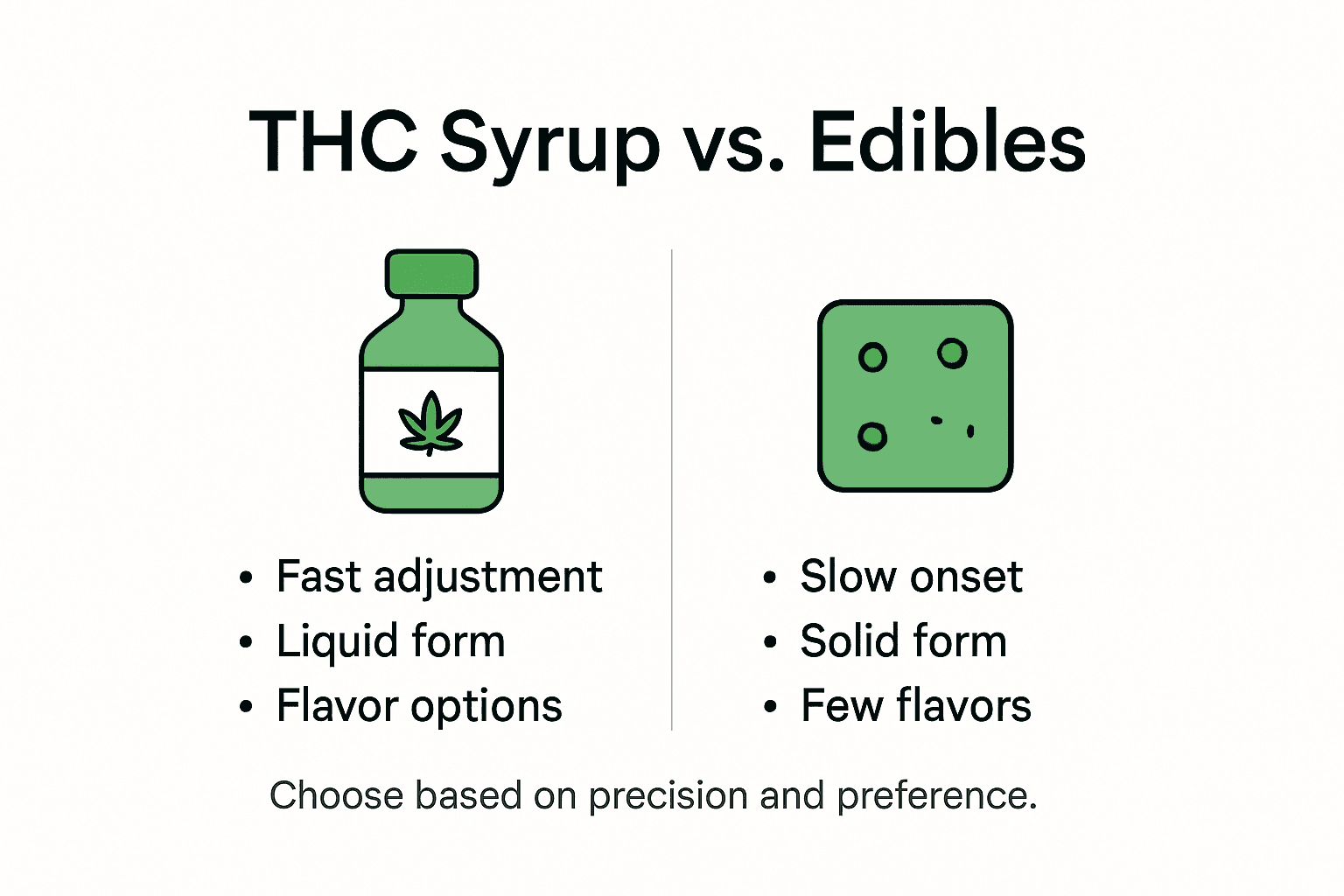
Cannabis edibles represent a diverse landscape with THC syrup offering a unique consumption experience distinct from traditional solid formats. Unlike gummies, brownies, or capsules, THC syrups provide unparalleled flexibility in dosing and consumption methods, allowing users to mix directly into beverages or consume independently. The liquid form enables more precise control over intake compared to fixed-dosage solid edibles.
The metabolic journey of THC syrup closely parallels other edible formats, with critical differences in absorption and onset. According to cannabis drink research, both liquid and solid edibles undergo hepatic metabolism, transforming THC into 11-hydroxy-THC, a compound with potentially more intense psychoactive properties. Key comparative characteristics include:
Types of THC edibles demonstrate the evolving landscape of cannabis consumption, with syrups representing an innovative approach that bridges traditional edible formats and modern dietary preferences. The primary distinction lies in the liquid’s adaptability and user-controlled dosing mechanism.
Here’s a summary of how THC syrup compares with other cannabis edible formats:
| Aspect | THC Syrup | Edible Gummies | Brownies |
|---|---|---|---|
| Dosage Adjustability | Highly customizable | Fixed doses | Fixed doses |
| Consumption Method | Drink or direct | Chew and swallow | Eat as dessert |
| Onset Speed | Moderate delay | Moderate delay | Slowest onset |
| Discretion Level | High—mix into drinks | Medium—small size | Low—distinct smell and look |
Pro tip: Start by experimenting with small syrup quantities in familiar beverages to understand your personal response and preferred consumption method.
Understanding the unique nature of THC syrup means recognizing the importance of controlled dosing, flavor options and fast-acting effects that fit your personal tolerance and lifestyle. If you want to avoid guesswork and enjoy legal, premium hemp-derived Delta 9 THC products crafted with proprietary TiME INFUSION® technology, Edwin’s Edibles & Elixirs offers carefully designed THC Drinks and Gummies that provide consistent experiences without the confusion or risks associated with homemade or unregulated products.
Experience the benefits of small-batch, organic formulations that allow you to tailor your intake with confidence. Whether you prefer the convenience of a drink or the familiar ease of a gummy, our collection supports your wellness, relaxation, or recreational goals safely and responsibly. Take control of your THC journey today by exploring our selection at https://www.edwinsedibles.com/ and learn more about the flavor and effect profiles that fit your needs on our THC Drinks and Cannabis Terpenes pages.
Start your personalized THC experience now with trusted products designed for clarity, quality and control.
THC syrup is a cannabis-based liquid product that allows for controlled consumption of tetrahydrocannabinol (THC). It provides a precise and potentially more predictable experience compared to traditional smoking methods.
When ingested, THC syrup undergoes metabolic processing in the liver, converting THC into 11-hydroxy-THC, which can produce more intense effects than other consumption methods. The onset may be delayed but can lead to prolonged effects.
The effects of THC syrup can vary but typically include euphoria, relaxation, enhanced sensory perception and appetite stimulation. Individual experiences may differ based on factors like metabolism and tolerance.
It is advisable to start with a low dose and wait at least 90 minutes before considering additional consumption. Keeping a consumption journal can help track personal reactions and develop a better understanding of individual tolerance.