
Gluten-free edibles are specially formulated food products containing less than 20 parts per million of gluten, the threshold the FDA sets to protect individuals with celiac disease and gluten sensitivity from intestinal damage and persistent symptoms. For millions of Americans living with these conditions, choosing the wrong edible is not a minor inconvenience. It is a medical event. This article explains the real health risks of gluten exposure in edibles, where contamination actually comes from, who genuinely benefits from going gluten-free and how to choose products you can trust.
The medical case for gluten-free edibles starts with celiac disease, an autoimmune condition where gluten triggers the immune system to attack the small intestine’s lining. The only proven treatment is lifelong, strict gluten exclusion. No medication, no workaround. That reality makes the quality and safety of every edible you consume a genuine health decision, not a lifestyle preference.
The stakes are higher than most people realize. Studies show that 30 to 40% of celiac patients report persistent symptoms or ongoing mucosal inflammation despite following a strict gluten-free diet. That number points directly at trace gluten exposure through contaminated products and cross-contact, not intentional cheating. The intestinal damage from repeated low-level exposure accumulates silently, often without obvious symptoms, making it especially dangerous.
Non-celiac gluten sensitivity (NCGS) presents a different but equally real challenge. People with NCGS experience bloating, fatigue, brain fog and joint pain after consuming gluten, yet show no intestinal damage on biopsy. The condition is real, the mechanism is still debated in gastroenterology research and the management strategy is the same: strict avoidance.
Dermatitis herpetiformis, a skin manifestation of celiac disease, adds another population to this picture. Individuals with this condition develop intensely itchy blisters triggered by gluten ingestion and they require the same level of dietary vigilance as those with classic celiac disease.
“Persistent symptoms in celiac disease patients often result from unintentional gluten exposure, underscoring why gluten-free edibles must meet strict contamination controls.” — Rethinking Celiac Disease Management
Here is what makes this particularly tricky with edibles specifically. Cannabis gummies, CBD products, baked infused treats and other edible formats often contain wheat-derived ingredients, modified food starch, or malt flavorings. Without explicit certified gluten-free labeling and manufacturer testing, these products carry real risk for sensitive consumers.
Pro Tip: If you have celiac disease and experience recurring symptoms despite following a gluten-free diet, ask your gastroenterologist to review your edible and supplement intake. Trace gluten in these products is a frequently overlooked source.
Understanding where contamination originates helps you make smarter purchasing decisions. The FDA’s gluten-free standard of less than 20 ppm is the regulatory floor, but real-world production environments routinely create conditions where that threshold gets crossed without any intentional wrongdoing.
A market-based study found that 16.67% of commercially produced gluten-free flours tested above 20 ppm for gluten contamination. Naturally gluten-free flours, such as rice flour or almond flour processed in shared facilities, showed even higher contamination rates. This is not a fringe finding. It reflects the structural challenge of producing genuinely gluten-free products in facilities that also handle wheat, barley, or rye.
| Contamination source | Risk level | Common scenario |
|---|---|---|
| Shared production equipment | High | Wheat-based products run before gluten-free batch |
| Airborne flour particles | Moderate to high | Open mixing areas in bakeries |
| Shared storage containers | Moderate | Bulk ingredient bins used for multiple products |
| Inadequate equipment cleaning | High | Residue left in mixers, conveyors, or molds |
| Naturally gluten-free raw ingredients | Moderate | Oats, rice flour from non-dedicated facilities |
The contamination pathways in edibles are worth examining closely:
The labeling picture adds another layer of complexity. A product bearing a “gluten-free” claim meets the FDA’s 20 ppm standard at the time of testing, but independent gluten testing shows real-world contamination can exceed labeling thresholds. A “may contain gluten” advisory, on the other hand, signals a cross-contact risk that cannot be removed by cooking or processing. Most celiac patients treat these products as unsafe and that is the medically sound approach.
One more factor that surprises many consumers: cumulative exposure. Each individual product in your day might technically comply with the 20 ppm limit, but multiple trace gluten sources consumed across a full day can collectively push your total intake above a safe threshold. This is why managing your entire daily diet matters, not just individual products.
The gluten-free market has expanded far beyond its medical origins and that expansion has created real confusion about who needs these products and who is simply paying a premium for no clinical benefit.
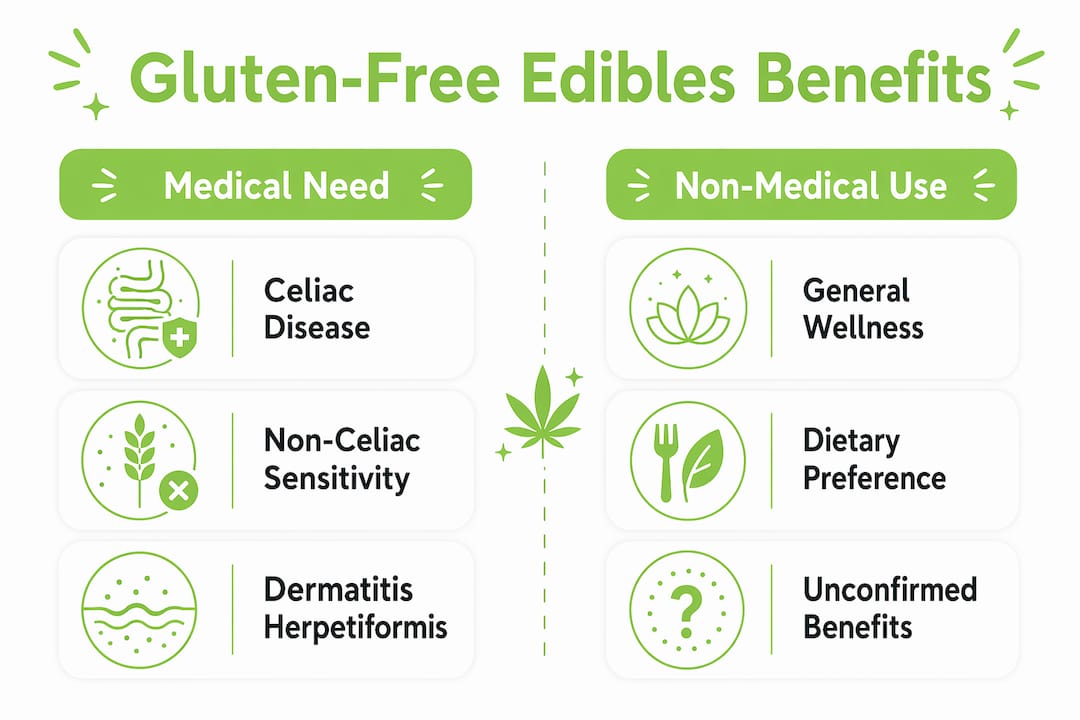
The populations with a genuine medical need for gluten-free edibles are well defined. Celiac disease affects approximately 1% of the global population, though many cases remain undiagnosed. NCGS is estimated to affect a larger but less precisely measured group. Dermatitis herpetiformis affects a smaller subset of celiac patients. For all three groups, gluten-free diets are medically necessary and the benefits of gluten-free edibles are direct and measurable: reduced symptoms, intestinal healing and improved quality of life.
| Population | Gluten-free edibles needed? | Key reason |
|---|---|---|
| Celiac disease | Yes, strictly | Autoimmune intestinal damage from gluten |
| Non-celiac gluten sensitivity | Yes, strongly recommended | Symptom management and inflammation reduction |
| Dermatitis herpetiformis | Yes, strictly | Skin and intestinal manifestation of celiac |
| General population without diagnosis | No proven benefit | Risk of nutritional deficiency and higher cost |
| Wheat allergy | Depends on severity | Wheat avoidance needed, not full gluten-free |
For people without a gluten-related medical condition, the picture is different. Cedars-Sinai notes that gluten-free diets for healthy individuals may actually pose nutritional downsides, including lower fiber intake, reduced B vitamin consumption and higher food costs. Gluten-free processed products frequently compensate for texture and flavor by adding more sugar and fat. Choosing gluten-free edibles without a medical reason is not inherently harmful, but it is not inherently beneficial either.
The most important step before committing to a gluten-free diet is getting a proper medical diagnosis. Testing for celiac disease requires active gluten consumption to produce accurate results, so eliminating gluten before testing can mask the condition and delay diagnosis.
Pro Tip: If you suspect celiac disease or gluten sensitivity, get tested before eliminating gluten from your diet. Removing gluten first can produce a false-negative result on celiac blood panels and biopsy.
Choosing gluten-free edibles safely requires more than reading a label. It requires understanding what that label actually guarantees and what it does not.

Certified gluten-free labels from organizations like the Gluten-Free Certification Organization (GFCO) require products to test below 10 ppm, which is stricter than the FDA’s 20 ppm standard. This distinction matters for highly sensitive individuals. When you are choosing gluten-free edibles safely, look for third-party certification rather than relying solely on a manufacturer’s self-declared claim.
Here are the practices that reduce your risk most effectively:
When eating out or ordering infused edibles from a new brand, ask directly about shared equipment and testing frequency. Brands that cannot answer these questions clearly are not brands you should trust with your health.
Pro Tip: When evaluating a new cannabis or CBD edible brand, look for a Certificate of Analysis (COA) that includes gluten testing, not just cannabinoid potency. Brands that test for both are demonstrating a higher standard of consumer care.
Gluten-free edibles are medically necessary for people with celiac disease, NCGS and dermatitis herpetiformis and choosing certified products with verified testing is the only reliable way to avoid the contamination risks that persist even in labeled gluten-free products.
| Point | Details |
|---|---|
| FDA threshold is 20 ppm | Products must test below this level to carry a gluten-free label, but stricter certifications go lower. |
| Contamination is common | Studies show 16.67% of gluten-free labeled flours tested above safe limits in real-world conditions. |
| Cumulative exposure adds up | Multiple compliant products consumed in one day can collectively exceed a safe daily gluten intake. |
| Medical need drives benefit | Gluten-free edibles provide proven health advantages only for those with celiac disease, NCGS, or dermatitis herpetiformis. |
| Certification beats self-declaration | Third-party certified products offer stronger safety guarantees than manufacturer-only gluten-free claims. |
I have spent years watching health-conscious consumers make the same two mistakes with gluten-free edibles. The first is assuming that any product labeled gluten-free is automatically safe. The second is dismissing gluten concerns entirely as a trend with no real medical weight.
Both positions get people hurt. The label-trusters end up consuming products from facilities with no real contamination controls, experiencing symptoms they cannot explain. The skeptics dismiss the concerns of people with celiac disease as overcaution, not understanding that a single cross-contaminated edible can set off weeks of intestinal inflammation.
What I have found actually works is a combination of certification scrutiny and brand transparency. The brands worth trusting are the ones that publish their testing data, answer questions about their production environment directly and do not hide behind vague “manufactured in a facility” disclaimers. In the cannabis and CBD edible space specifically, this level of transparency is still rare enough that it functions as a genuine differentiator.
The other thing I would tell anyone managing a gluten-related condition: do not let the perfect be the enemy of the good. You cannot control every variable in every environment. What you can control is the brands you choose, the labels you read carefully and the daily habits you build around cross-contact prevention. That combination, applied consistently, makes a real difference in how you feel.
— Jamison
At Edwin’s Edibles & Elixirs, we believe that enjoying premium cannabis edibles should never come at the cost of your health or peace of mind. Our small-batch, hemp-derived Delta 9 THC products and organic CBD gummies are crafted with health-conscious consumers in mind, with transparent sourcing and quality controls that go beyond the basics. Whether you are managing a gluten-related condition or simply prioritizing cleaner ingredients in everything you consume, our cannabis edibles guide is a great place to start. You can also explore our full resource on choosing cannabis edibles to find options that fit your dietary needs and wellness goals.
A gluten-free label on an edible means the product contains less than 20 parts per million of gluten, per the FDA’s final rule. Third-party certified products from organizations like GFCO meet an even stricter threshold of under 10 ppm.
Most labeled gluten-free edibles are safe for celiac patients, but not all. Studies show that 16.67% of gluten-free labeled products tested above 20 ppm in real-world conditions, so choosing third-party certified brands with published testing data is the safest approach.
“May contain gluten” signals a real cross-contact risk during production or packaging. This warning cannot be resolved by cooking or processing and most people with celiac disease treat these products as unsafe.
No. Gluten-free edibles provide proven health advantages only for individuals with celiac disease, non-celiac gluten sensitivity, or dermatitis herpetiformis. For people without these conditions, gluten-free diets may reduce fiber and B vitamin intake without delivering any clinical benefit.
Use separate utensils and storage for gluten-free products, clean surfaces thoroughly before preparation and avoid shared containers like bulk bins or toasters that have previously held gluten-containing foods.