
Finding cannabis edibles you can actually trust when you have a gluten sensitivity or celiac disease is genuinely harder than it should be. Labels use vague language, “natural” ingredients can still hide gluten sources and cross-contamination during manufacturing is a real and often invisible risk. Knowing how to choose gluten free edibles means more than just scanning for a wheat icon on the packaging. It means understanding certification standards, recognizing which edible formats carry the most risk and knowing when to dig deeper before you buy. This guide gives you every tool you need to select safely and enjoy confidently.
| Point | Details |
|---|---|
| FDA threshold is 20 ppm | Any product labeled gluten-free must contain less than 20 ppm gluten under federal law. |
| Third-party seals go further | Certifications like GFCO and GFFP set stricter thresholds than the FDA minimum. |
| Format matters for safety | Gummies, beverages and syrups carry far lower cross-contamination risk than baked edibles. |
| Advisory statements are unregulated | “May contain wheat” warnings are voluntary and inconsistent across manufacturers. |
| Verification extends past purchase | Tracking reactions and contacting manufacturers protects you long-term. |
Before you pick up any product, you need to know what the words on the label actually mean legally. The FDA defines gluten-free as less than 20 parts per million (ppm) of gluten, a threshold established under 21 CFR 101.91. That standard was set because 20 ppm is the level below which most people with celiac disease can tolerate without measurable harm.
Here is what makes this complicated: the FDA label claim is voluntary. A manufacturer does not have to call their product gluten-free. But if they do make that claim, they are legally required to meet the 20 ppm standard. Failure to comply is considered misbranding subject to legal action, which gives the claim some real weight.
Third-party certifications go further than federal law. Here is a quick comparison:
| Certification | Gluten Threshold | Who Endorses It |
|---|---|---|
| FDA Gluten-Free Label | Less than 20 ppm | Federal regulation |
| GFCO Certification | Less than 10 ppm | Gluten Intolerance Group |
| GFFP Certification | Less than 5 ppm | National Celiac Association |
The GFFP standard is four times stricter than the FDA baseline. For anyone with celiac disease or high sensitivity, that difference is not trivial.
Pro Tip: If you are highly sensitive, stick to products bearing the GFFP seal rather than just an FDA-compliant gluten-free claim. The cumulative effect of eating multiple products near the 20 ppm limit can add up for sensitive individuals.
Not all cannabis edibles carry the same risk level. The format of the product tells you a lot about where gluten could enter the picture.
Gummies are among the safest gluten free edible options available. They are typically made from gelatin or pectin, fruit juice or natural flavorings, sugar and a cannabis extract. None of those base ingredients contain gluten. The risk comes from additives, coatings, or shared manufacturing equipment rather than the formula itself.
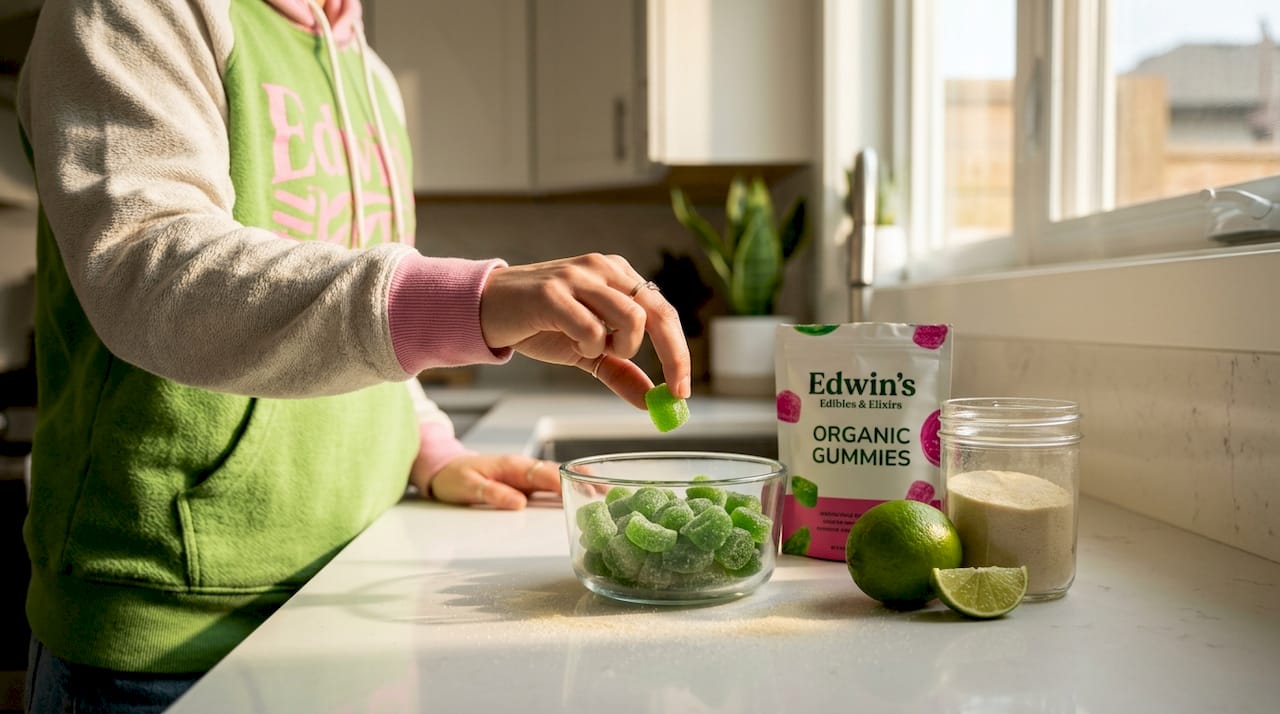
THC and CBD beverages, including still drinks and carbonated options, are similarly low-risk by nature. Beverages rarely require binding agents or grain-based additives. Syrups follow the same pattern. These formats are genuinely good choices when you are selecting gluten free snacks or drinks in the cannabis space.
Where things get more complicated:
Hidden gluten in processed foods is a documented concern even when obvious grain ingredients are absent. Cross-contact during processing, shared conveyor belts and shared coating drums can introduce gluten into products that were formulated to be completely free of it. This is especially relevant for small-batch producers who manufacture multiple product lines in the same facility.
Pro Tip: When in doubt, contact the manufacturer directly and ask two questions: “Is this product made on dedicated gluten-free equipment?” and “Has it been independently tested for gluten content?” Their response will tell you a great deal about how seriously they take the issue.
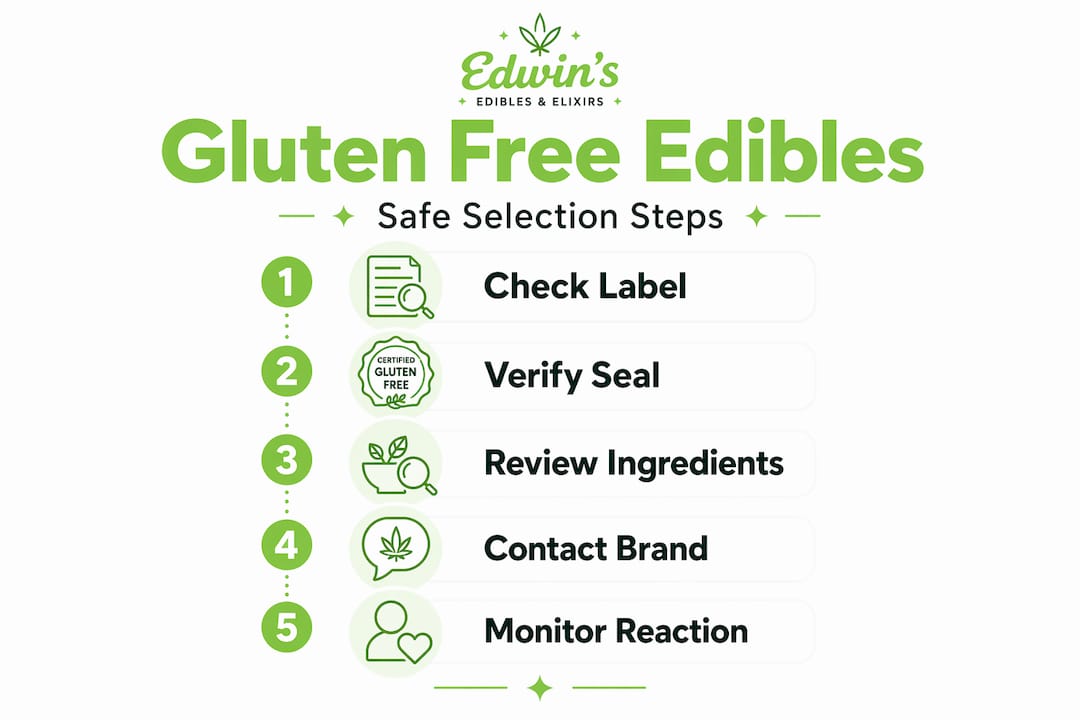
A reliable selection process takes less than five minutes once you know what to look for. Follow these steps every time you evaluate a new product.
Pro Tip: Keep a short list of two or three certified brands you have already vetted. Rotating within a trusted pool is far safer than evaluating a new product from scratch every time you want to try something new.
Even careful shoppers make these mistakes. Knowing them in advance keeps you from learning the hard way.
“Clear, transparent labeling and direct manufacturer communication are the most reliable tools a consumer has.” This insight from research on hidden gluten risks reflects what we hear from our most informed customers as well. Advocacy starts with demanding better information.
Selecting a product carefully is the first step. Confirming its safety in practice is the second.
Long-term safety comes from consistent habits, not just careful one-time choices.
I have had countless conversations with people managing celiac disease and gluten sensitivity who feel frustrated by how much mental energy safe shopping requires. And they are right to feel that way. The system puts too much burden on consumers.
What I have learned is that the best gluten free edibles are made by brands that treat transparency as a selling point, not an afterthought. When a company publishes its COAs, lists its manufacturing protocols and responds to customer questions with specifics, that tells you everything. Vagueness is a red flag.
I also think the industry needs more pressure to standardize allergen disclosures. Third-party certifications offer stronger assurance precisely because they fill a gap that federal regulation leaves open. Until labeling becomes more uniform, the most effective thing you can do is vote with your purchases. Support brands that get it right. Ask hard questions. And check out expert-reviewed THC gummies when you want curated options that have already been evaluated for quality and safety.
The enjoyment is absolutely worth pursuing. You just need the right tools to get there confidently.
— Jamison
At Edwins Edibles & Elixirs, we believe that a dietary restriction should never stand between you and a genuinely enjoyable cannabis experience. Our small-batch Delta 9 THC gummies and organic CBD gummies are crafted with ingredient transparency at the forefront and we are always here to answer your questions directly. If you are ready to explore your options with confidence, our cannabis edibles guide gives you a full picture of what is available and how each format works. For personalized guidance on matching the right product to your needs, visit our edible selection guide and discover products crafted to delight your taste buds without the worry.
Under FDA rules, a gluten-free label means the product contains less than 20 ppm of gluten. If a third-party seal like GFCO or GFFP is present, the threshold is even stricter, going as low as 5 ppm.
Gummies, beverages and syrups are generally the safest gluten free edible options because their base ingredients do not typically include grain-derived components. Baked edibles and chocolate products carry higher cross-contamination risk.
Yes. Even FDA-compliant products sit at a threshold that may affect the most sensitive individuals and cumulative exposure from multiple products near 20 ppm can be a concern. Always prioritize certified products and track your personal reactions.
No. These statements are entirely voluntary and not standardized by the FDA. Their presence or absence does not reliably indicate the level of cross-contamination risk in the product.
Look for third-party certification seals, review the Certificate of Analysis for allergen testing, read the full ingredient list and contact the manufacturer with specific questions about their facility and equipment practices.