
Finding hemp-derived Delta 9 THC edibles that are both safe and truly legal can feel overwhelming. The evolving laws after the 2018 Farm Bill reshaped what American consumers can confidently buy for wellness or relaxation. Whether you are searching for premium ingredients or rapid effects, understanding the legal threshold separating hemp from marijuana helps you choose quality products that support your health—and keep you on the right side of the law.
| Point | Details |
|---|---|
| Hemp-Derived THC Is Legal | Hemp must contain no more than 0.3% Delta-9 THC to be federally legal, complying with the 2018 Farm Bill. |
| Misconceptions About THC Validity | Hemp-derived Delta-9 THC is chemically identical to marijuana-derived THC and can produce similar psychoactive effects. |
| Quality Control is Essential | Ensure products are backed by third-party lab testing to verify THC content and ingredient quality before purchasing. |
| State Regulations Vary | While hemp is federally legal, state laws may differ significantly; verify local regulations before buying hemp-derived products. |
Hemp-derived THC sounds confusing, but it’s straightforward once you understand the legal basics. The 2018 Farm Bill transformed everything by making hemp federally legal, which opened the door for products like those we create at Edwin’s Edibles & Elixirs.
Hemp is a cannabis plant that contains no more than 0.3% Delta-9 THC by dry weight. That’s the legal threshold that separates hemp from marijuana under federal law. The tiny amount of THC naturally present in hemp can’t get you high, but it can be chemically converted into other forms like Delta-8 or Delta-10 through a process called isomerization.
The Key Difference:
This distinction matters because the Farm Bill legalized hemp farming under USDA oversight while keeping marijuana on the federal Controlled Substances Act. It’s a fine line, but it’s the line that makes our products legal to sell nationwide.
Wrong. Hemp-derived Delta-9 THC has the exact same molecular structure as THC from marijuana. Your body processes it identically. The difference is the source, not the chemical itself. If you’re looking for true psychoactive effects, hemp-derived Delta-9 delivers them—fast-acting options are especially popular for reliable experiences.
Partially true and this is where confusion spreads. The FDA currently approves only certain hemp products for ingestion, like hulled hemp seeds and hemp seed oil. Hemp-derived cannabinoids fall into a gray area where the federal government hasn’t FDA-authorized them, though many states allow their sale. This regulatory gap means quality varies dramatically between brands.
Look for third-party lab testing and transparent sourcing when choosing hemp-derived products—this tells you what you’re actually getting.
Legality and safety are different. A product can be federally legal but poorly made or lacking proper dosing information. The lack of FDA oversight means you need to do homework. Check whether brands test products for contaminants, verify ingredient lists and read customer reviews.
What to verify before buying:
To help you shop safely, here’s a summary of what experts recommend verifying before buying any hemp-derived THC product:
| Checkpoint | Why It Matters | How to Verify |
|---|---|---|
| Third-Party Lab Results | Ensures product safety | Request a Certificate of Analysis |
| Actual THC Content Per Serving | Avoids unintentional overdose | Look for milligrams labeled |
| Ingredient Quality and Sourcing | Minimizes contamination risk | Review ingredient sources |
| Brand Reputation and Transparency | Indicates trustworthiness | Check third-party reviews |
Not entirely. While the Farm Bill legalized hemp federally, states have their own rules. Some states restrict or ban hemp-derived cannabinoids entirely, while others embrace them. Your location determines what you can legally purchase and possess.
Pro tip: Check your state’s specific cannabis laws before ordering any hemp-derived THC products—legality varies significantly by location and knowing your local regulations prevents costly mistakes.
Before 2018, hemp was illegal. Period. It sat on the Controlled Substances Act alongside marijuana, making cultivation and sale a federal crime. Then Congress passed the Agriculture Improvement Act of 2018—commonly called the 2018 Farm Bill—and everything changed.
The Farm Bill redefined hemp as Cannabis sativa L. containing less than 0.3% Delta-9 THC by dry weight. This single definition removed hemp from the Controlled Substances Act, making it federally legal to grow, process and sell. Suddenly, farmers could cultivate hemp without fear of federal prosecution.
The shift was massive. Hemp moved from DEA jurisdiction to USDA regulation, meaning federal oversight focused on agriculture standards rather than drug enforcement. States gained authority to regulate their own hemp programs, creating a patchwork of rules across the country.
What the Farm Bill legalized:
Here’s where things get interesting. Congress focused the law specifically on Delta-9 THC limits, defining hemp by that single cannabinoid. They didn’t mention Delta-8, Delta-10, or any other THC forms. Manufacturers noticed this gap and exploited it.
Companies began extracting CBD from legal hemp, then chemically converting it into psychoactive cannabinoids like Delta-8. These products technically met the legal definition—they came from hemp with 0.3% Delta-9 THC or less. But they produced intoxicating effects that Congress probably didn’t intend.
The 2018 Farm Bill legalized hemp, but the way products are made exploits a gap in that law—a gap that federal officials are now working to close.
Marijuana remains a Schedule I controlled substance. Federally illegal. But hemp and its derivatives? Federally legal, as long as they meet the 0.3% Delta-9 threshold. This creates a strange situation where you can legally buy intoxicating hemp products in many states, while marijuana remains prohibited.
Regulators are watching this closely. FDA oversight remains limited and Congress hasn’t yet clarified the intent around derived cannabinoids. State regulations vary dramatically, which is why location matters so much for what you can purchase.
Pro tip: Understand that federal legality doesn’t guarantee state legality—always verify your state’s specific hemp-derived THC rules before making purchases, since regulations change frequently.
Here’s the simple truth: hemp and marijuana are the same plant species. The only difference that matters legally is THC content. That single distinction determines whether a product is federally legal or federally illegal.
Hemp contains 0.3% Delta-9 THC or less by dry weight. Marijuana contains more than 0.3%. That’s it. That’s the legal line drawn by the federal government.
Farmers grow these plants completely differently based on what they want to produce. Hemp growers deliberately cultivate plants to keep THC levels low, focusing instead on CBD and fiber production. Marijuana growers do the opposite—they breed and cultivate plants specifically to maximize THC levels, often reaching 20-30% or higher.
The genetics matter. The growing conditions matter. The harvesting time matters. Every decision is made to achieve a specific THC outcome.
Here’s what blows people’s minds: THC from hemp has the exact same molecular structure as THC from marijuana. Your body can’t tell the difference. The high feels the same. The effects are the same.
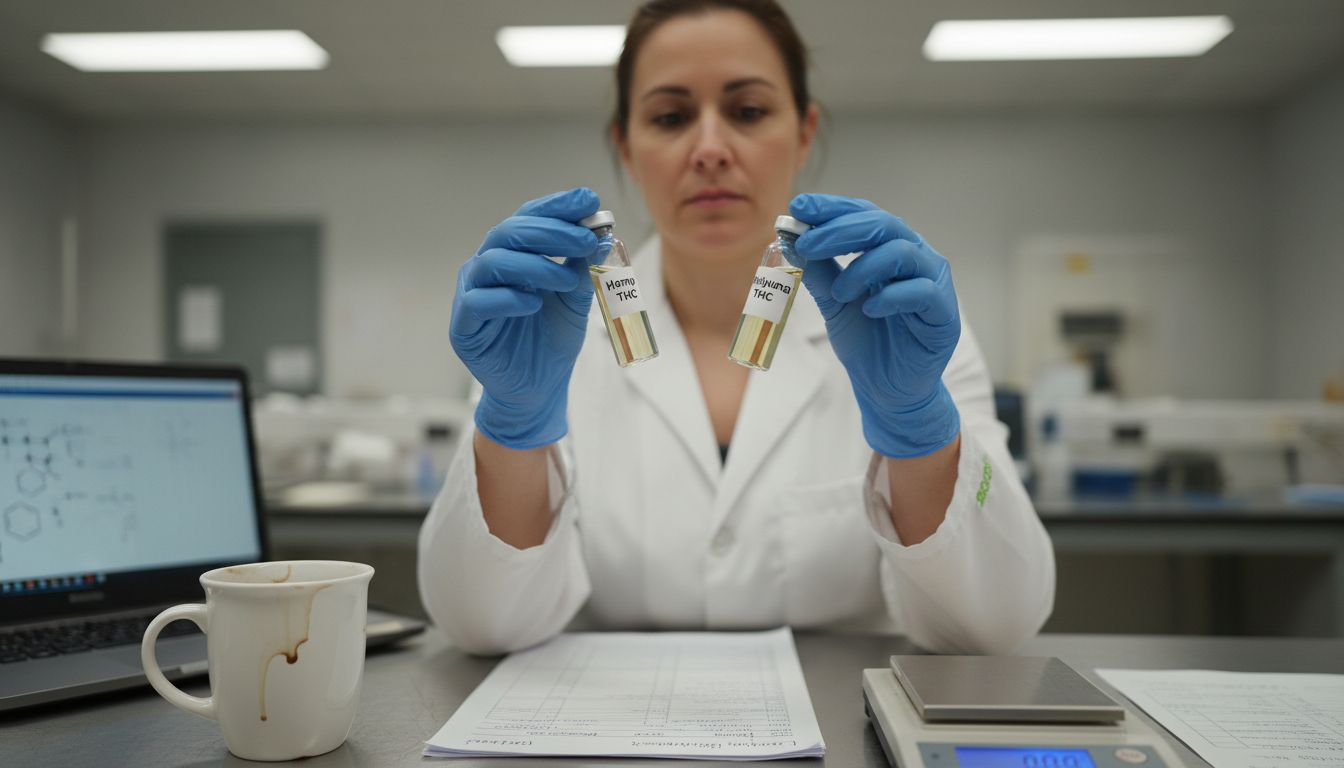
The only thing different is where the molecule came from. That’s why the law cares only about the source and concentration, not the chemical itself.
Here’s a quick comparison of hemp-derived and marijuana-derived THC:
| Aspect | Hemp-Derived THC | Marijuana-Derived THC |
|---|---|---|
| Legal Status | Federally legal under 0.3% THC | Federally illegal (most cases) |
| Typical THC Content | 0.3% or lower by dry weight | Usually 15–30% by dry weight |
| Source Plant Rules | Grown for fiber, CBD, seed | Cultivated for high THC |
| Psychoactive Effects | Possible with concentrated forms | Usually produces strong effects |
| Federal Oversight | USDA, limited FDA guidance | DEA, extensive federal restrictions |
| State-by-State Access | Varies, patchwork of regulations | Varies, but generally more limited |
What separates them:
People assume hemp products can’t get you high. That’s partially wrong. Hemp itself contains low THC and won’t intoxicate you. But hemp-derived cannabinoids can be chemically concentrated or converted into intoxicating forms.
Delta-8 THC made from hemp can produce effects similar to marijuana-derived THC. Delta-10 does too. These products come from legal hemp but deliver noticeable psychoactive effects—a reality that confuses regulators and consumers alike.
The legal definition focuses on the source plant, not the final product’s potency—meaning hemp-derived products can be intoxicating while remaining federally legal.
If you’re buying from Edwin’s Edibles & Elixirs, you’re getting hemp-derived Delta-9 THC that’s federally legal and compliant with the 0.3% threshold in the raw plant material. The legal status protects you. But that same status doesn’t exist for marijuana-derived products in most states, which is why availability differs drastically by location.
Understanding this distinction helps you navigate what’s legal where you live and why products vary so much across state lines.
Pro tip: When comparing hemp-derived and marijuana products, focus on third-party lab results showing actual THC content per serving rather than relying on product names—labeling standards differ widely across state regulations.
Compliance sounds technical, but it’s straightforward: your hemp product must test at or below 0.3% Delta-9 THC by dry weight. That’s the federal standard set by the 2018 Farm Bill. Everything else flows from that single number.
But here’s the catch. Testing and labeling are where most producers fall short. You can have compliant raw hemp, but if you don’t measure and document it properly, you’re breaking the law—even if the product itself is legal.
Producers must follow several critical steps to stay legal. Accurate THC quantification through lab testing is non-negotiable. You can’t guess. You can’t estimate. The product needs independent verification.
Labeling must reflect those test results accurately. Customers need to know exactly what they’re buying. Misleading labels violate federal standards and create liability for everyone involved.
Core compliance requirements:
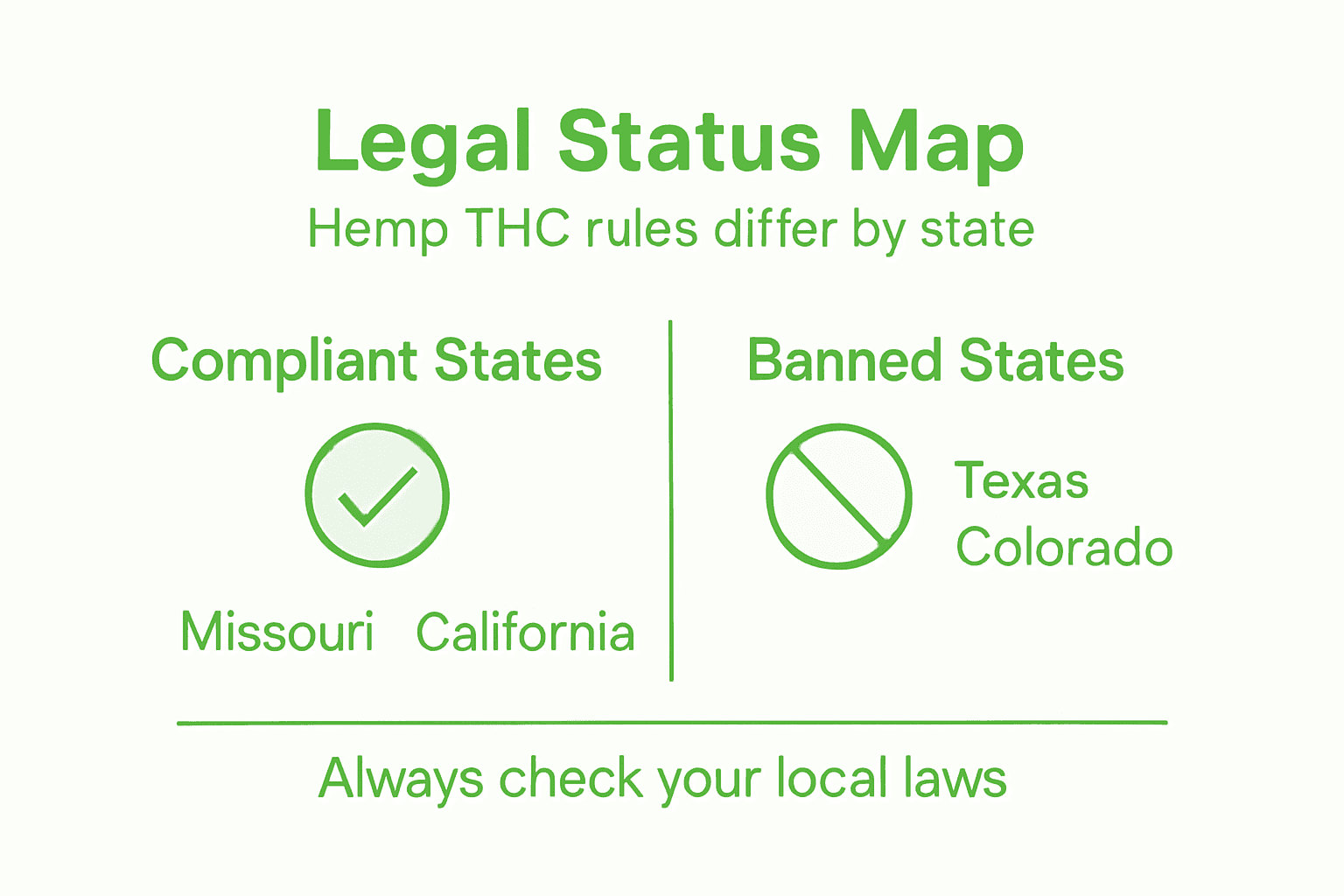
Federal compliance isn’t enough. States add their own rules on top. Some require additional licensing for producers. Others set stricter THC limits. A few ban hemp-derived products entirely.
Missouri might allow what Colorado doesn’t. California might require different testing protocols than Texas. You can’t sell nationwide with the same product without knowing these variations.
Manufacturers who sell across state lines navigate a patchwork of regulations. It’s expensive and complicated, which is why many brands stay regional.
Here’s the challenge that regulators struggle with: federal law limits only Delta-9 THC. Other intoxicating cannabinoids like Delta-8, Delta-10 and THC-O fall into regulatory gray areas. They can be federally legal while being state-illegal or unregulated.
A product can comply with the 0.3% Delta-9 standard yet deliver strong intoxicating effects through other cannabinoids. This creates compliance confusion and consumer safety questions.
Compliance means meeting the 0.3% Delta-9 threshold, but it doesn’t guarantee that other cannabinoids won’t create intoxicating effects—know your state’s full cannabinoid rules.
When you buy hemp-derived products, compliance matters for your legal protection. Look for Certificate of Analysis (COA) from independent labs showing actual THC content. Check that the product comes from a compliant producer.
Ask about state compliance. Reputable brands like Edwin’s Edibles & Elixirs make testing transparent because they’re proud of their standards. If a company won’t show you lab results, walk away.
Pro tip: Always request and review third-party lab test results before purchasing—they prove the product meets legal standards and protect you from non-compliant products that could create legal issues.
The hemp-derived THC market exists in a legal gray zone. That creates real risks for both consumers and producers. What’s legal in one state can be illegal in another. What’s federally compliant might violate state law. The confusion isn’t accidental—it’s the result of competing regulations and a legal framework that hasn’t caught up with the market.
Understanding these risks protects you. Ignorance isn’t a legal defense.
Producers face serious consequences for selling non-compliant products. Fines, product seizures and criminal charges are all possible. States can shut down businesses that exceed THC limits or violate labeling requirements. Federal agencies can take action too, though enforcement remains inconsistent.
Consumers face different but real risks. Purchasing hemp-derived products in states where they’re illegal exposes you to legal liability. You could face possession charges, fines, or other legal consequences depending on your location and the product.
Potential consequences include:
Here’s the core problem: states regulate cannabis independently. Some ban all intoxicating hemp products. Others allow them freely. A few permit specific cannabinoids but not others. This creates a patchwork where federal legality means nothing.
Federal lawmakers have moved to tighten hemp regulations after realizing the 2018 Farm Bill created an unintended loophole. Congress is considering new restrictions on Delta-8, Delta-10 and other derived cannabinoids. The rules could change dramatically in the next few years.
Meanwhile, states act independently. Some have already banned products. Others monitor but don’t restrict them. Your state’s position matters more than federal status.
Beyond legal penalties, there are health concerns. Intoxicating hemp products carry risks including unexpected intoxication and contamination issues. Products may contain pesticides, heavy metals, or other harmful substances if producers skip proper testing.
Marketing practices create additional problems. Some brands target young consumers with flavors and packaging that appeal to minors. This draws regulatory scrutiny and creates public health backlash.
Quality varies dramatically across brands. A product from one manufacturer might be safe and accurately labeled. Another brand’s product could be dangerous and mislabeled.
Federal enforcement is scattered and unpredictable. Some regions crack down hard on hemp-derived THC. Others ignore it. Local law enforcement often doesn’t understand the regulations, leading to confusing interactions.
The legal status of hemp-derived THC changes by state and shifts over time—your safest approach is confirming legality in your specific location before purchasing.
Before buying, research your state’s exact regulations. Contact your state’s cannabis board or health department if you’re unsure. Don’t assume that because a product is sold online that it’s legal where you live.
Choose brands that provide transparent testing and comply with regulations. Edwin’s Edibles & Elixirs operates with compliance as a priority, documenting everything and adapting to changing rules.
Stay informed about regulatory changes. The rules are evolving rapidly and what’s legal today might not be legal next year.
Pro tip: Before purchasing any hemp-derived THC product, verify your specific state’s regulations directly with your state health or cannabis authority—online sellers’ compliance doesn’t guarantee your local legality.
Navigating hemp-derived THC legality can be confusing with so many states and regulations involved. If you want premium, federally compliant products that deliver consistent effects without surprises, Edwin’s Edibles & Elixirs is your solution. We specialize in small-batch, hemp-derived Delta 9 THC infused treats made using our proprietary TiME INFUSION® technology for fast, reliable results. Whether you prefer classic options or vegan-friendly choices, we have you covered.
Explore our selection of THC Gummies and Vegan THC Gummies crafted to meet strict compliance standards and provide an enjoyable experience. Don’t let uncertainty about legality or product quality hold you back. Visit Edwin’s Edibles & Elixirs now and make your next hemp-derived THC purchase with confidence.
Hemp-derived THC comes from the hemp plant, which contains no more than 0.3% Delta-9 THC by dry weight. This legal threshold differentiates it from marijuana, making hemp products federally legal under the 2018 Farm Bill.
Yes, hemp-derived THC has the same molecular structure as marijuana-derived THC. The key difference lies in the source, as well as the legal THC content—hemp must be below 0.3% Delta-9 THC.
Not all hemp-derived THC products are regulated by the FDA and quality can vary widely. It’s important to verify third-party lab testing, ingredient sourcing and brand reputation before consuming these products.
Yes, certain hemp-derived products, particularly those containing Delta-8 and Delta-10 THC, can produce psychoactive effects similar to marijuana, even though they come from legal hemp within the federal guidelines.