
Finding trusted CBD products can feel overwhelming, especially with so many choices promising wellness and stress relief. For health-conscious adults in the United States, understanding CBD testing is key to avoiding mislabeled items and protecting yourself from hidden contaminants. With the Food and Drug Administration requiring rigorous safety standards, verified lab results reveal exactly what you’re buying, from cannabinoid levels to the absence of dangerous substances. This guide helps you navigate CBD testing benefits for safer, higher-quality products.
| Point | Details |
|---|---|
| Importance of CBD Testing | CBD testing ensures product safety and quality, protecting consumers from harmful contaminants and inaccurate potency. |
| Understanding Test Results | Consumers should look for comprehensive lab reports indicating cannabinoid concentrations, the absence of contaminants and clear batch traceability. |
| Legal Compliance | Compliance with federal and state regulations is essential for CBD products, including THC limits and mandatory testing for contaminants. |
| Risks of Untested Products | Untested CBD products can carry significant health risks, including unsafe contamination, inaccurate dosing and unknown interactions with medications. |
CBD testing represents a critical safeguard for health-conscious consumers navigating the complex world of cannabis products. When purchasing CBD, understanding what testing entails can help you make informed decisions about product safety, potency and overall quality.
The primary goal of CBD testing is to verify product integrity through comprehensive laboratory analysis. FDA regulations require rigorous safety standards that protect consumers from potentially harmful products. These tests typically examine several key aspects:
Consumers benefit from testing because it provides transparency about product composition. Many CBD products contain inconsistent ingredient levels that could impact expected effects or potential health risks. By demanding third-party lab results, consumers can confidently assess product safety before purchase.
Understanding test results requires some basic knowledge about what indicators matter most. Look for comprehensive reports that show:
Pro tip: Always request and review a product’s Certificate of Analysis before making a purchase to ensure you’re getting a safe, high-quality CBD product.
CBD product testing encompasses a comprehensive range of analytical procedures designed to ensure consumer safety and product quality. Thorough testing protocols examine multiple critical aspects of hemp-derived products, providing transparency and protection for consumers.
The primary types of CBD testing can be categorized into several key areas:
Potency Testing involves quantifying the exact levels of cannabinoids, particularly focusing on CBD and THC percentages. FDA regulations mandate strict limits on THC concentration, ensuring that hemp-derived products remain within legal thresholds. This testing helps consumers understand the exact cannabinoid content and potential therapeutic effects of their chosen product.
Contaminant screening is perhaps the most critical aspect of CBD testing. Comprehensive analysis checks for:
Pro tip: Always request and review a complete Certificate of Analysis that covers multiple testing categories to ensure you’re purchasing a truly high-quality CBD product.
Here is a summary of key CBD product test types and why each is important:
| Test Type | Main Purpose | What It Reveals |
|---|---|---|
| Potency Testing | Measures cannabinoid concentration | CBD/THC levels and compliance |
| Contaminant Screening | Detects pesticides, metals, solvents, microbes | Potential health risks present |
| Terpene Profiling | Identifies aromatic and therapeutic compounds | Product’s potential effects/flavors |
| Microbial Analysis | Checks for bacteria or fungi | Microbiological product safety |
| Heavy Metal Testing | Analyzes for toxic mineral contamination | Potential neurotoxic or organ effects |
Product testing plays a crucial role in protecting consumers from potential health risks associated with CBD products. FDA regulations emphasize comprehensive safety protocols that safeguard consumers against potentially dangerous contaminants and inconsistent product quality.
The impact of rigorous testing on product safety can be broken down into several critical areas:
Comprehensive testing helps mitigate significant health risks by preventing exposure to potentially dangerous substances. Unverified CBD products could contain unexpectedly high THC levels, dangerous pesticide residues, or harmful microbial contaminants that pose serious health threats.
The most critical safety concerns addressed through testing include:
Pro tip: Always request a detailed Certificate of Analysis from the manufacturer to understand the full safety profile of your CBD product.

Comprehensive federal guidelines govern the complex landscape of CBD product testing in the United States. The legal framework for hemp-derived CBD products is primarily defined by the 2018 Farm Bill, which established critical standards for product safety and compliance.
The key legal requirements for CBD testing include several critical components:
State regulations vary significantly across different jurisdictions, creating a complex compliance landscape for manufacturers. Most states require comprehensive testing that includes:
The Food and Drug Administration (FDA) maintains a nuanced position, currently regulating CBD as a pharmaceutical ingredient in approved medications while developing broader regulatory frameworks for consumer products.
Pro tip: Always verify that your CBD products come from manufacturers who voluntarily exceed minimum testing requirements and can provide full, transparent Certificates of Analysis.
Consumer safety investigations reveal significant potential hazards associated with unverified CBD products. Purchasing untested CBD can expose consumers to a range of unexpected and potentially dangerous health risks that extend far beyond simple product ineffectiveness.
The most critical risks of untested CBD products include:
Unregulated products pose significant health dangers that can manifest through various unexpected complications. Consumers might experience adverse reactions ranging from mild side effects to severe medical emergencies, particularly when products contain undisclosed contaminants or incorrect cannabinoid concentrations.
The most dangerous potential consequences of untested CBD include:
Pro tip: Always request a comprehensive Certificate of Analysis from reputable manufacturers and verify third-party lab testing before consuming any CBD product.
The following table compares the outcomes of properly tested versus untested CBD products for consumers:
| Aspect | Tested CBD Products | Untested CBD Products |
|---|---|---|
| Label Accuracy | High (verified contents) | Labels may be misleading |
| Safety Risks | Minimized by testing | Higher risk of contamination |
| Legal Compliance | Confirmed (<0.3% THC) | Potentially illegal THC levels |
| Transparency | Certificate of Analysis | No third-party verification |
| Consumer Confidence | Enhanced trust | Uncertain quality |
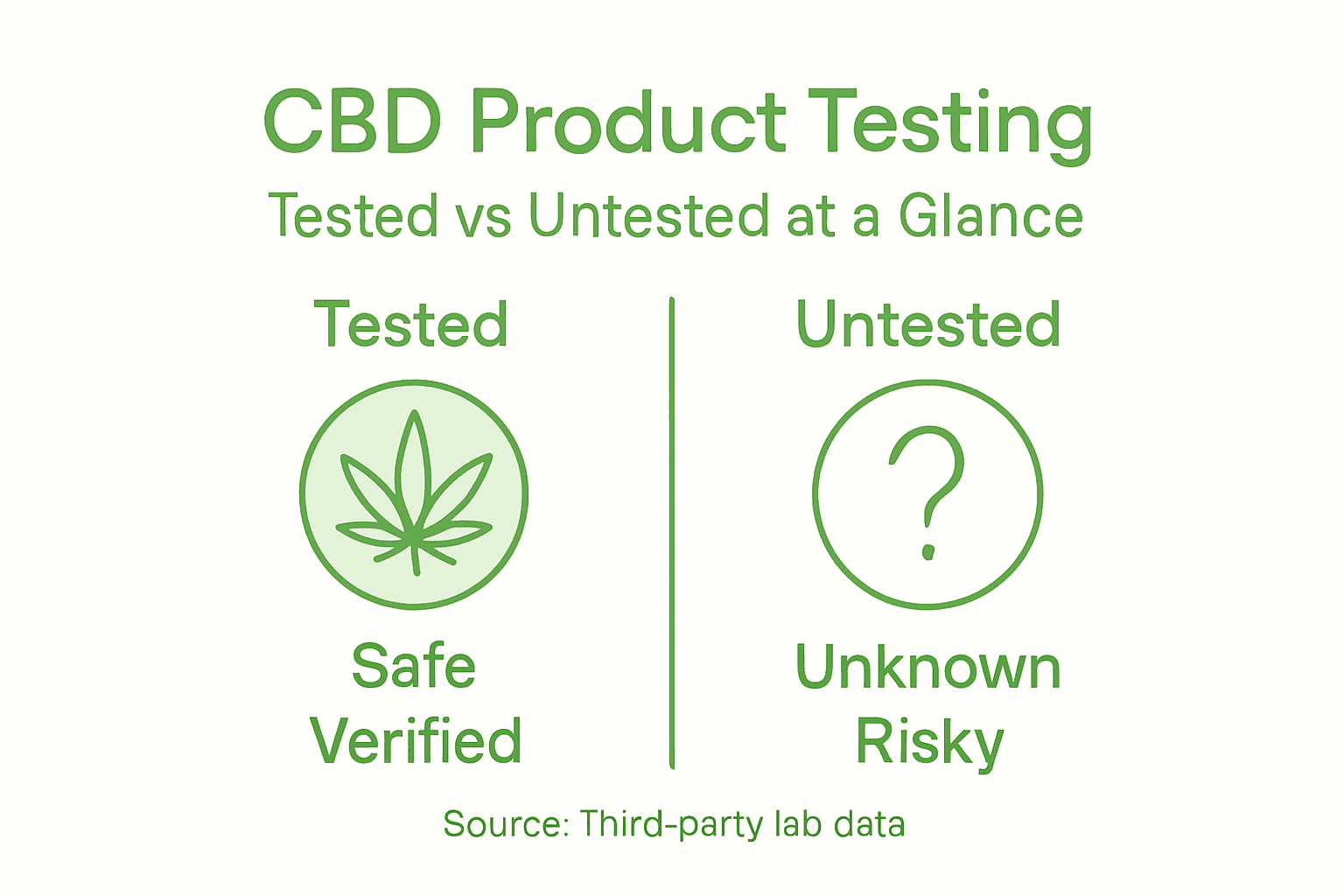
Understanding the importance of CBD testing is the first step to protecting yourself from unverified products that may carry hidden risks like contamination or inaccurate potency. If you want to enjoy cannabis edibles with confidence, choosing products that emphasize transparency and rigorous lab testing is key. Edwin’s Edibles & Elixirs brings you Organic CBD Gummies crafted under strict quality controls to provide safe, consistent effects every time.
Discover how our commitment to purity and fast-acting formulations using proprietary TiME INFUSION® technology can enhance your wellness routine safely. To explore trustworthy options with verified ingredients, visit Edwin’s Edibles & Elixirs and learn more about the benefits of Cannabis Terpenes for flavor and therapeutic support. Take control of your CBD journey today by selecting products backed by thorough testing and full transparency.
CBD testing involves laboratory analysis of cannabis products to verify their safety, potency and quality. It is crucial for ensuring consumers receive accurate information about cannabinoid concentrations, contaminants and overall product integrity.
CBD products undergo several types of tests, including potency testing (for cannabinoid levels), contaminant screening (for pesticides and heavy metals), terpene profiling (for flavor and therapeutic compounds), microbial analysis (for harmful bacteria) and heavy metal testing (for toxic contamination).
To interpret test results, look for a Certificate of Analysis that includes total cannabinoid percentages, THC levels (which should be below 0.3% for legal products), absence of contaminants and batch numbers for traceability.
Untested CBD products may pose serious health risks, including contamination from harmful substances, inaccurate potency levels, potential toxicity and unexpected psychoactive effects. These risks can lead to adverse health reactions and compromised consumer safety.