
If you’ve ever bought a hemp-derived gummy or THC drink and wondered whether it’s actually legal, you’re not alone. What is hemp regulation, exactly? That question gets harder to answer every year, because the rules keep changing. The 2018 Farm Bill opened the market, but a sweeping 2025 federal update now rewrites the definition of hemp itself, effective November 12, 2026. Whether you’re a consumer shopping for quality products or a vendor trying to stay compliant, understanding these shifts is no longer optional. It’s essential.
The foundation of hemp legislation explained starts with a single number: 0.3%. The 2018 Farm Bill established hemp as Cannabis sativa L. with no more than 0.3% delta-9 THC by dry weight, separating it legally from marijuana and opening the door for a thriving industry. That definition held for years and gave producers, vendors and consumers a clear line to work within.
Then came P.L. 119-37. This 2025 law fundamentally shifts how hemp is regulated going forward. Under the update, P.L. 119-37 redefines hemp to include total THC (delta-9 THC plus THCA) of no more than 0.3%, excludes synthetic cannabinoids entirely and restricts finished products to no more than 0.4 mg of THC per container.
Here is what that means in plain terms:
This is not a minor adjustment. It is a structural change to the hemp regulatory framework and both consumers and vendors need to understand what it means for the products they buy and sell.
Understanding hemp farming legislation means understanding the USDA’s role as the primary gatekeeper of production. Before a single seed goes in the ground, producers must be licensed and that process is thorough by design.
Here is how the USDA licensing process works:
One rule that surprises many people: a prior felony conviction related to a controlled substance disqualifies a person from participating in USDA hemp production for 10 full years from the date of conviction. This applies to license holders, key participants in a hemp business and employees with certain roles. It is strict and it is enforced.
False information on an application leads to automatic license denial, not just a corrective action. The USDA takes data integrity seriously because the whole system depends on accurate tracking from seed to sale.
Pro Tip: If you are a vendor sourcing hemp products, ask suppliers for their USDA license number and verify it directly through the USDA’s public database. Hemp compliance starts at the source and a licensed producer is your first line of protection against non-compliant products reaching your shelves.
One of the most misunderstood aspects of hemp industry regulations is that no single agency controls everything. The authority is split, layered and sometimes contradictory. Here is how it breaks down.
“USDA regulates hemp production; FDA regulates consumable products for safety and labeling; states and tribal governments add local retail and manufacturing rules.” This three-layer system means a product can be USDA-compliant at the farm level while still violating FDA labeling rules or state retail restrictions.
The USDA’s jurisdiction ends when the hemp leaves the farm. Everything after harvest, processing, packaging, labeling and retail, falls under the FDA or state-level oversight. The FDA controls hemp products intended for human consumption, including edibles, beverages and supplements. It sets the rules on what can and cannot be claimed on a label, what additives are permissible and what testing standards apply.
Here are the key regulatory responsibilities by agency:
Producers are also required to report acreage to the Farm Service Agency for tracking purposes. And if a violation is found to be negligent rather than intentional, producers are limited to one corrective action per growing season before facing more serious penalties. Negligent does not mean harmless. It still requires documented remediation.
Pro Tip: State laws can be stricter than federal rules and they often are. Before you purchase or sell hemp products across state lines, verify how your state tests CBD products and what local limits apply. A product legal in one state may be restricted in another.
The November 12, 2026 deadline is the most significant moment in hemp legal status since the 2018 Farm Bill. The stakes are high. The new law will reclassify many hemp products as marijuana if they exceed total THC limits, potentially eliminating the vast majority of intoxicating hemp products currently on the market.
Here is a side-by-side look at what changes:
| Feature | Pre-2026 definition | Post-2026 definition |
|---|---|---|
| THC measurement | Delta-9 THC only | Total THC (delta-9 + THCA) |
| THC threshold | 0.3% by dry weight | 0.3% total THC |
| Synthetic cannabinoids | Included as hemp | Excluded from hemp definition |
| Per-container THC limit | No hard cap | 0.4 mg per container maximum |
| Products above limits | Legal hemp market | Reclassified as marijuana |
The practical consequences are significant:
What does “container” mean? It sounds simple, but the definition matters enormously. A multi-pack of gummies could be treated as one container or several depending on how FDA rules. Understanding legal THC laws in this context means watching FDA guidance closely as these definitions are finalized.
Pro Tip: If you manufacture hemp edibles, do not wait for FDA to publish its final definitions. Begin now by auditing your current product line against the 0.4 mg per container threshold and mapping out which products you may need to reformulate before the 2026 legal status deadline hits.
Knowing what hemp laws are is one thing. Knowing how to act on that knowledge is another. Both consumers and vendors can take practical, concrete steps to stay on the right side of hemp industry regulations right now.
For vendors, here is the priority order:
For consumers, the checklist is shorter but equally important:
Staying current is not a one-time task. Vendors must continuously track USDA licensing requirements, FDA product standards and state-level rules as they evolve, particularly heading into the pivotal 2026 transition period.
Here is the perspective most coverage skips: stricter regulation is both the best and worst thing that could have happened to the hemp industry at this moment.
On one hand, the new hemp definition targets a genuine problem. Unregulated, high-potency hemp products have been flooding the market for years, sold in gas stations and convenience stores with no age verification and minimal safety testing. Bringing total THC under a consistent federal definition addresses that gap. Consumers deserve to know what they are actually buying. That is a fair and necessary goal.
On the other hand, the 0.4 mg per container limit is extraordinarily low. For context, many state-licensed dispensary edibles contain 5 mg to 10 mg of THC per piece. A 0.4 mg cap essentially removes therapeutic or recreational effect from federally legal hemp products. That forces consumers who want functional hemp-derived products into either the state cannabis market (where it exists) or legal gray zones. It also threatens smaller hemp brands that built legitimate businesses around products that consumers actively value and trust.
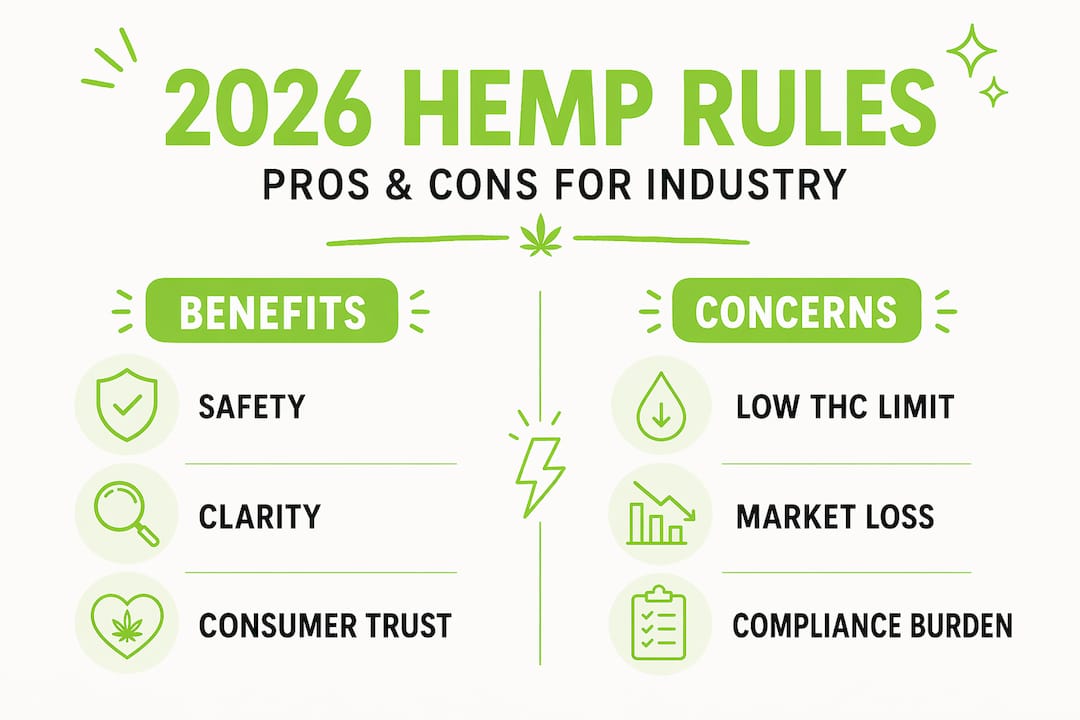
We find this tension genuinely difficult. The goal of protecting public safety is right. But blunt, overly restrictive thresholds risk redirecting consumers toward less regulated alternatives rather than safer ones. The most productive path forward is nuanced rulemaking: clear definitions, rigorous testing, honest labeling and limits calibrated to actual risk rather than political convenience.
The hemp-derived THC market has proven that consumers want alternatives to traditional cannabis channels. The answer is not to eliminate those alternatives. It is to make them genuinely safe and consistently regulated.
Navigating hemp laws is complex, but finding products you can trust should not be. At Edwin’s Edibles & Elixirs, we believe informed consumers make the best choices, which is why we pair every product with the education to back it up. Our small-batch, hemp-derived Delta 9 THC edibles and infused THC beverages are crafted to meet current federal and state standards, with lab testing you can verify. Explore our cannabis edibles guide to understand what you are buying, or visit our hemp compliance resource to see exactly how we navigate the regulatory landscape on your behalf. When the rules evolve, we evolve with them. Learn more about hemp-derived THC and why legal, quality-sourced products make all the difference.
Hemp is federally defined as Cannabis sativa L. containing no more than 0.3% delta-9 THC by dry weight, with a 2025 law updating this to include total THC (delta-9 plus THCA) effective November 2026.
The USDA regulates hemp cultivation and licensing, while the FDA oversees safety and labeling for consumable hemp products; states and tribes impose additional retail and manufacturing requirements on top of federal rules.
Effective November 12, 2026, hemp is redefined to cap total THC at 0.3%, exclude synthetic cannabinoids and limit finished consumer products to 0.4 mg of THC per container.
People with felony convictions related to controlled substances face a 10-year production ban under USDA hemp regulations, applying to license holders and key business participants.
Purchase from vendors who comply with USDA and FDA requirements, share verified lab results for THC content and carry accurate product labeling confirming their products meet current and upcoming legal standards.