
Not all CBD is created equal and the difference often starts in the soil. Many health-conscious shoppers assume that any hemp-derived product is inherently clean and pure, but organic farming standards exist precisely because that assumption carries real risk. Hemp is one of the most sensitive crops on earth and what goes into the ground can end up in your gummy. We believe informed shoppers make better choices, so this article breaks down the science behind organic CBD, how certifications actually work, what contaminant risks look like in practice and how to shop with genuine confidence.
| Point | Details |
|---|---|
| Organic CBD lowers contamination risk | Strict growing standards reduce the chance of harmful pesticide and heavy metal residues in your CBD products. |
| Certification signals regulated quality | USDA organic certification is a third-party verified standard—not just a marketing term. |
| Lab results are non-negotiable | Always check third-party lab results (COAs) for pesticides and heavy metals, even with organic CBD. |
| Hemp’s environment impacts safety | Hemp absorbs contaminants from its environment, making organic growing practices crucial for clean CBD. |
Now that you know purity should never be assumed, let’s clarify what ‘organic CBD’ actually means and how it earns that label.
The word “organic” on a CBD product is not just a feel-good marketing phrase. When it carries real weight, it means the hemp was cultivated under a strict set of farming rules that prohibit most synthetic pesticides, herbicides and fertilizers. Certified organic CBD refers specifically to hemp grown in compliance with the USDA National Organic Program, a regulated framework that governs everything from soil health to pest management.
Organic certification is a regulated, third-party system under USDA’s National Organic Program, meaning an independent certifying agent must verify that a farm meets all requirements before any label can be used. This is fundamentally different from terms like “natural,” “clean,” or “pure,” which carry no legal definition and require zero verification.
Here is a quick comparison to keep the distinction clear:
| Term | Regulated? | Third-party verified? | Synthetic inputs prohibited? |
|---|---|---|---|
| USDA Organic | Yes | Yes | Yes |
| Natural | No | No | No |
| Pure / Clean | No | No | No |
| Non-GMO | Partially | Sometimes | No |
Understanding what organic CBD means helps you cut through the noise when you are scanning product pages. Key requirements for organic hemp certification include:
The certification process itself involves detailed record-keeping, farm inspections and ongoing compliance checks. A brand that claims organic status without a certification number or named certifying agent is waving a flag worth noticing.
Pro Tip: When shopping, search for the USDA Organic seal and then verify the certifying agent’s name on the brand’s website. Legitimate certifications are publicly searchable through the USDA’s organic integrity database.
Understanding the certification is one thing. Now let’s break down why these organic practices actually matter when it comes to your health.
Hemp has a remarkable and somewhat unsettling ability: it pulls substances out of the soil, including substances you do not want in your body. This property is called bioaccumulation. Scientists have actually used hemp to clean up contaminated land through a process called phytoremediation. That impressive ability cuts both ways. Hemp can accumulate contaminants from the growing environment, meaning cleaner, organic inputs are directly tied to safer end products.
Here is how organic and conventional hemp farming compare on key safety factors:
| Safety factor | Organic hemp farming | Conventional hemp farming |
|---|---|---|
| Pesticide exposure | Minimal (prohibited inputs) | Higher potential |
| Heavy metal risk | Reduced through soil standards | Varies by location and practice |
| Synthetic residues | Not permitted | Possible |
| Soil testing requirements | Required for certification | Not always mandated |
The risks are not purely theoretical. Pesticide contamination can occur without rigorous testing and oversight, which is one reason sourcing from systems with stronger controls carries real practical value. Regulatory testing in states with active cannabis oversight programs has turned up residue findings that support why farming philosophy is not just an abstract concern.
When choosing organic CBD, it helps to understand the most common contaminants found in lower-quality products:
“The soil is the story. If you start with clean, nourished earth, you give the plant every reason to stay clean too.” — Grandpa Edwin
That said, organic farming impacts on safety are only one part of the full picture. Even perfectly grown organic hemp can pick up contaminants during extraction, processing, or packaging. This is why farming standards alone are not the finish line.
While organic practices address upstream issues, final product testing is what completes the safety story.
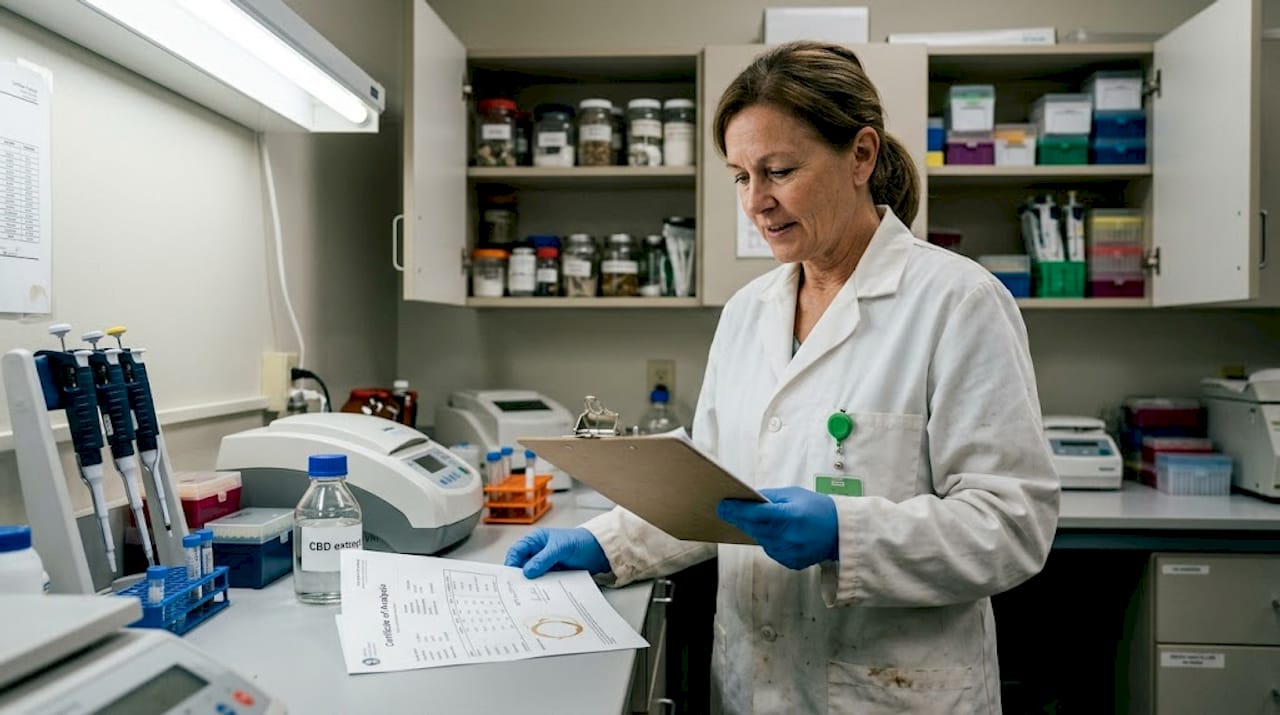
Organic certification covers the farm. It says nothing definitive about what happened during extraction, blending, or filling. Batch-level third-party testing remains crucial because contamination can occur during processing, handling, or through cross-contamination — even when the source hemp was organically grown. This is where a Certificate of Analysis, commonly called a COA, becomes your most important shopping tool.
A COA is a document produced by an independent laboratory that shows exactly what was found in a specific batch of product. Not all COAs are equal, though. When reading lab reports, you want to see:
Some critics argue that finished-product testing should be the primary driver of consumer safety rather than farming philosophy alone. We agree that testing is non-negotiable. Our perspective is that organic farming and lab testing are not competing ideas. They work together, with one reducing upstream risk and the other confirming the outcome.
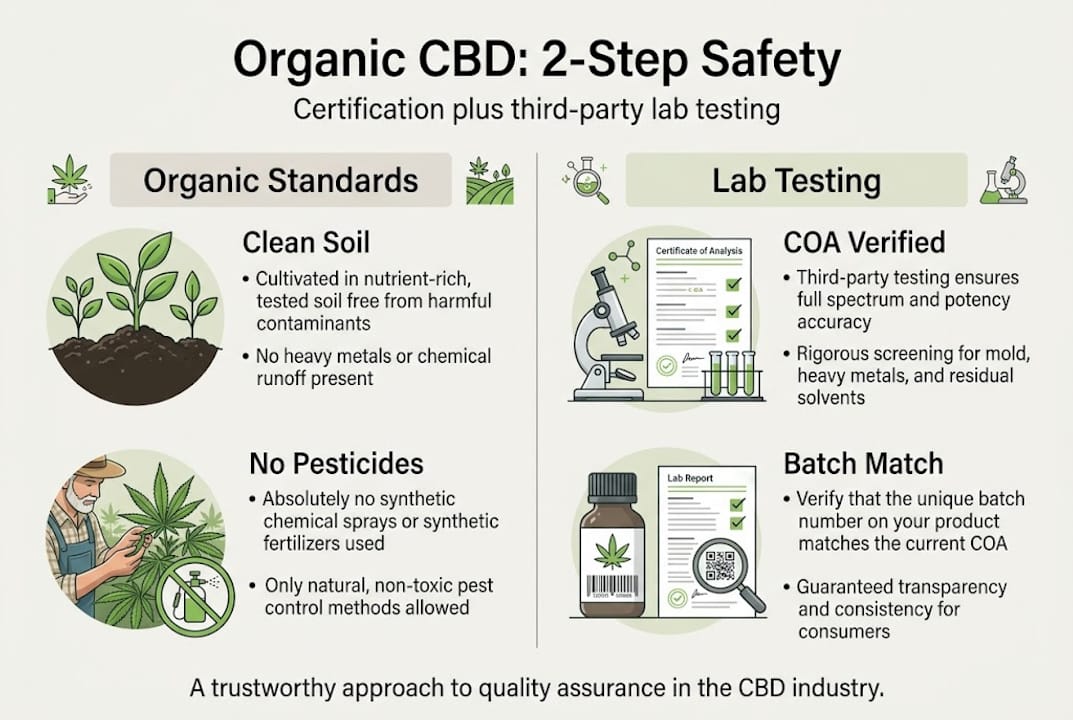
Pro Tip: Always match the COA batch number to the batch number printed on your product. A COA from six months ago for a different batch tells you nothing meaningful about the bottle you are holding.
For genuine CBD wellness safety, the gold standard is an organic farm plus a recent, comprehensive COA from a third-party lab accredited by ISO 17025. That combination gives you the strongest available assurance.
Ready to shop? Here is how to put your knowledge into practice and avoid the most common mistakes.
The CBD market is crowded and marketing language moves faster than regulation. Your best defense is a clear, repeatable checklist you apply every time. Health-conscious shoppers should look for USDA Organic certification combined with COAs that include full pesticide and heavy-metal analysis.
Here is our step-by-step vetting process:
When choosing organic CBD edibles, watch for these red flags:
Pro Tip: Before you buy, do a quick search for the brand name plus “COA” or “lab results.” If nothing comes up or the links are broken, that tells you something important about their transparency culture.
Our organic CBD gummies guide walks through additional product-specific criteria if you want to go even deeper into the selection process.
All this practical advice points to something deeper. What is the real bottom line on organic CBD?
Here is the honest truth we see missing from most guides: organic certification has become a buzzword in many corners of the wellness market, but its measurable, real-world impact on safety is genuinely underrated. When brands lean on the word “organic” without showing certifications or lab results, they are borrowing the credibility of a rigorous system without actually participating in it. That gap between language and substance is where consumer trust erodes.
The smartest strategy is to treat certification and testing as a two-part requirement, not two optional checkboxes. Organic farming reduces the risk of contaminants entering the plant. Lab testing confirms whether any made it through anyway. Neither alone is sufficient. Both together? That is how you build real confidence in what you are putting into your body.
We also think most guides get one thing wrong: they frame organic as purely a farming issue and overlook transparency as a value in itself. A brand that openly shares its sourcing, shows its certifications and publishes complete COAs is demonstrating accountability throughout the supply chain. That matters more than any single label. The organic edible wellness advantages worth caring about are the ones you can actually verify.
Putting all of this together, here is where to find safe, high-quality options and continue your wellness journey.
At Edwin’s Edibles & Elixirs, we take organic sourcing and third-party testing seriously because we believe your wellness deserves nothing less. Our organic CBD gummies are grown under strict standards and backed by transparent lab results so you can shop with real confidence. If you are still building your foundation of knowledge, our cannabis edibles guide covers everything from dosing basics to strain selection in one place. And when you are ready to find the right product for your specific health goals, our guide to choosing CBD edibles helps you match options to your lifestyle with clarity and ease.
Organic CBD reduces the risk of pesticide contamination but does not guarantee a completely residue-free product, since contamination can still occur during processing or handling. Final product lab testing is still essential for full confidence.
Organic certification is a regulated, third-party verified system under USDA’s National Organic Program, while “natural” is an unregulated marketing claim with no defined requirements or verification process.
Because hemp accumulates contaminants from soil and water through bioaccumulation, clean organic growing inputs directly reduce the likelihood of heavy metals and toxins appearing in finished products.
Look for a verified USDA Organic certification and review batch-specific third-party lab reports that cover pesticides and heavy metals, ensuring they match the product batch you are purchasing.