
Most people think all hemp is basically the same, but organic hemp operates under strict USDA standards that conventional hemp never touches. If you care about what goes into your body, understanding the difference between organic and conventional hemp matters more than you might realize. This guide breaks down organic hemp certification, farming practices, quality differences and how to choose products that truly support your wellness goals without unnecessary chemicals or contaminants.
| Point | Details |
|---|---|
| USDA organic rules | Organic hemp must meet USDA National Organic Program standards, including a THC limit of 0.3 percent Delta 9 and a prohibition on synthetic pesticides, fertilizers, GMOs, or irradiation through the three year transition period. |
| Lower pesticide residues | Organic hemp exhibits about 17 times lower median pesticide residues and a lower detection rate than conventional hemp. |
| Lower heavy metal risk | Organic farming practices reduce contamination risk by prohibiting sewage sludge and requiring clean soil management, lowering heavy metal exposure compared with conventional hemp. |
| Certification process | Obtaining organic status requires a three year transition, annual third party audits, extensive recordkeeping and ongoing compliance to maintain the USDA organic seal. |
Organic hemp is Cannabis sativa L. containing ≤0.3% delta-9 THC grown under USDA National Organic Program standards. That THC limit separates legal hemp from marijuana, while organic certification ensures the plant never touches synthetic pesticides, fertilizers, GMOs, or irradiation for at least three years before harvest. This combination creates a product that meets both federal hemp legality and organic purity standards.
Farmers growing organic hemp must submit a detailed Organic System Plan covering every aspect of production. The plan includes crop rotation schedules, soil management strategies, pest control methods using beneficial insects and manure or compost applications. Fields require buffer zones from conventional crops to prevent contamination from drift or runoff. Every input, from seeds to soil amendments, must meet organic standards.
Certification requires annual third-party audits and comprehensive recordkeeping for full traceability. Inspectors verify farming practices, review records and test soil and plant samples. Farmers must document every field activity, input source and harvest detail. This rigorous process ensures the USDA organic seal represents genuine organic integrity, not just marketing claims.
The certification process typically takes three years from the last synthetic input application. During this transition period, farmers follow organic practices but cannot label products as certified organic. Once certified, they maintain status through annual renewals, ongoing compliance and updated system plans. This extended timeline and strict oversight separate authentic organic hemp from products making vague natural or eco-friendly claims.
Pro Tip: Always verify the USDA organic seal on hemp products rather than trusting terms like natural or chemical-free, which lack legal definitions or enforcement standards.
The quality gap between organic and conventional hemp becomes obvious when you examine pesticide residues. Organic hemp shows median pesticide residues 17 times lower than conventional samples, with detection rates around 40% compared to 85% in conventional crops. For health-conscious consumers using hemp edibles daily, this dramatic reduction in chemical exposure matters significantly. Conventional farming often applies synthetic pesticides multiple times per growing season, leaving residues that persist through processing into final products.
Heavy metal bioaccumulation presents another critical safety consideration. Hemp naturally absorbs metals from soil, making organic farming practices essential for preventing contamination. Organic standards prohibit sewage sludge and require clean soil management, reducing heavy metal risks. Conventional operations may use questionable inputs or farm contaminated land without the same restrictions.
| Quality Factor | Organic Hemp | Conventional Hemp |
|---|---|---|
| Pesticide residues | 17x lower median levels | Higher detection rates (~85%) |
| Heavy metals | Reduced bioaccumulation risk | Variable depending on soil management |
| Cannabinoid profile | Similar potency, enhanced purity | Similar potency, potential contaminants |
| Antioxidants | 10-50% higher in some studies | Baseline levels |
| Processing inputs | Organic-certified only | Synthetic solvents and additives allowed |
Cannabinoid profiles remain similar between organic and conventional hemp, but the surrounding matrix differs substantially. Some studies report 10-50% higher antioxidants and beneficial plant compounds in organic crops. While research continues, the absence of synthetic chemicals creates a cleaner product for wellness applications. When you consume organic edibles, you get cannabinoids without the chemical baggage.
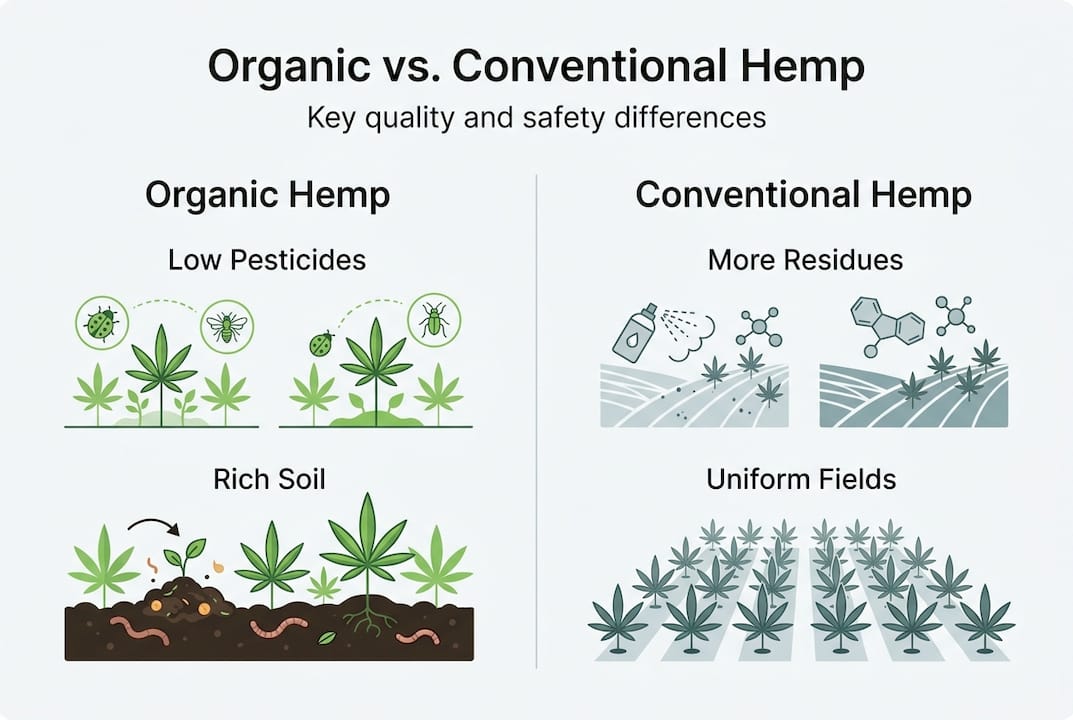
The nutritional advantage extends beyond what labs measure. Organic farming builds soil biology and plant health through natural systems rather than synthetic shortcuts. Healthier plants produce more diverse phytochemical profiles. Conventional operations prioritize yield over plant vitality, potentially compromising secondary metabolite production that contributes to hemp’s wellness benefits.
Pro Tip: Request certificates of analysis showing both cannabinoid content and pesticide screening when buying hemp edibles to verify you’re getting the purity organic certification promises.
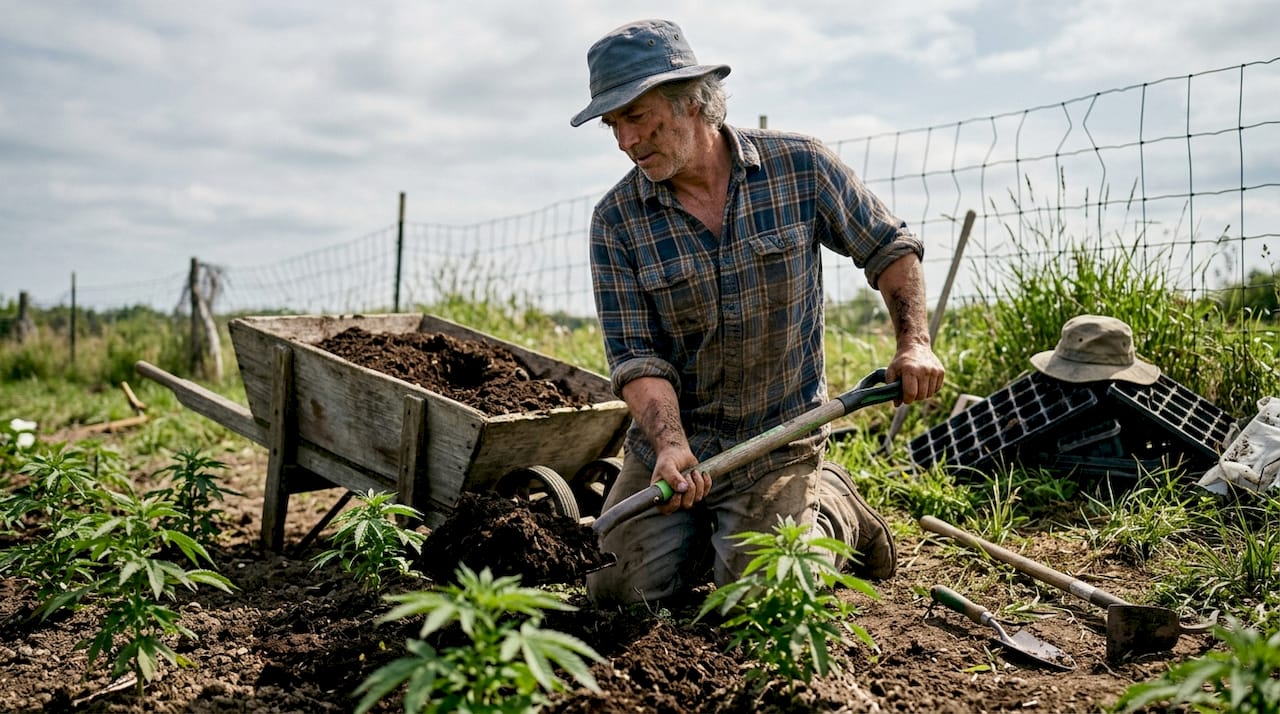
Organic hemp farmers rely on compost, aged manure and cover crops to build soil fertility naturally. These inputs feed soil microbes that convert nutrients into plant-available forms, creating a living soil ecosystem. Conventional farming bypasses this biological process with synthetic fertilizers that provide instant nutrition but degrade soil health over time. The organic approach takes longer to establish but creates resilient growing systems.
Crop rotation prevents pest and disease buildup while balancing soil nutrients. Farmers typically rotate hemp with legumes that fix nitrogen, grains that add organic matter, or other crops that break pest cycles. This diversity contrasts sharply with conventional monoculture systems that depend on chemical inputs to manage problems created by growing the same crop repeatedly.
Pest management in organic systems uses beneficial insects, trap crops and physical barriers instead of synthetic pesticides. Ladybugs control aphids, parasitic wasps manage caterpillars and companion planting deters pests naturally. These methods require more knowledge and observation than spraying chemicals but avoid residue issues entirely. Farmers monitor fields regularly to catch problems early and respond with targeted biological controls.
Organic hemp yields run 20-30% lower than conventional initially due to restricted inputs, but regenerative practices close this gap over several years. As soil biology strengthens and natural systems mature, productivity improves. Some experienced organic operations achieve yields approaching conventional levels while maintaining superior soil health and product purity. The yield penalty becomes less significant as farmers gain experience with organic methods.
| Cultivation Element | Organic Approach | Impact on Yield |
|---|---|---|
| Soil fertility | Compost, manure, cover crops | Builds over 3-5 years |
| Pest control | Beneficial insects, rotation | Requires monitoring, prevents resistance |
| Weed management | Mechanical cultivation, mulch | Labor intensive, no herbicide residues |
| Row spacing | Varies for fiber vs. seed | Optimized for crop type |
| Water management | Drip irrigation, mulching | Efficient use without synthetic aids |
Row spacing and plant density affect both yield and quality. Closer spacing produces more fiber but less seed, while wider spacing allows fuller plant development for seed and cannabinoid production. Organic farming practices optimize these variables without relying on synthetic growth regulators or yield enhancers.
Premium pricing for organic hemp offsets lower yields and higher labor costs. Consumers increasingly value purity and sustainability, creating market demand that supports organic farming economics. As the industry matures, improved techniques and equipment specifically designed for organic production continue narrowing the yield gap.
Pro Tip: Support farmers during their three-year transition to organic certification by buying transitional hemp products, which follow organic practices but can’t yet carry the certified label.
THC testing creates significant compliance challenges for organic hemp farmers. Total THC calculations include both THCA and delta-9 THC and crops testing above 0.3% must be destroyed without compensation. This zero-tolerance policy means a single hot test can eliminate an entire season’s investment. Weather conditions, harvest timing and testing methodology all influence results, adding uncertainty to organic hemp production.
The testing window compounds this risk. Farmers must harvest within 15 days of sampling, but THC levels change as plants mature. Organic farmers lack synthetic growth regulators to control plant development precisely, making timing more challenging. A delayed harvest due to weather or equipment issues can push a compliant crop over the legal limit.
Organic certification excludes marijuana and certain hemp product categories, creating market confusion. While farmers can grow certified organic hemp, processors making extracts or finished products face additional hurdles. Some states developed alternative programs like California’s Comparable to Organic designation to address gaps in federal certification. These state-level variations complicate interstate commerce and consumer understanding.
Buffer zones between organic and conventional fields prevent contamination but reduce usable acreage. Farmers must maintain adequate separation distances, document prevailing wind patterns and sometimes sacrifice productive land to meet organic standards. In regions with many conventional operations, finding suitable organic sites becomes difficult.
Crop rotation requirements limit how frequently farmers can grow hemp on the same land. While rotation benefits soil health, it reduces hemp production capacity. Farmers must plan multi-year crop sequences and find markets for rotation crops that may be less profitable than hemp. This complexity demands business skills beyond basic farming knowledge.
Pro Tip: When buying organic CBD edibles, check if the entire supply chain holds organic certification, not just the farm, since processing can introduce non-organic ingredients.
The USDA organic seal provides the most reliable verification of organic hemp quality. This certification requires third-party audits and comprehensive documentation throughout the supply chain. Products without this seal may use organic ingredients but lack verified compliance. Some brands display certifier logos from organizations like Quality Assurance International or Oregon Tilth, which conduct USDA-accredited organic inspections.
Certificates of analysis reveal what certifications don’t show. Third-party lab reports confirm purity and safety by testing for pesticides, heavy metals, residual solvents and microbial contaminants. Reputable brands publish current COAs for every product batch. If a company won’t provide testing documentation, assume they’re hiding something. Labs should be ISO-accredited and independent from the brand.
Organic hemp offers clear advantages for wellness applications. Lower chemical residues mean fewer potential irritants or toxins interfering with the body’s response to cannabinoids. For people using hemp daily to support calm and relaxation, minimizing synthetic chemical exposure makes sense. The cleaner the product, the more confidently you can use it long term.
Premium organic edibles deliver consistent potency alongside purity benefits. Organic farming’s focus on plant health often produces more stable cannabinoid profiles. Combined with careful processing and testing, this consistency helps you find effective doses and maintain predictable results. Cheap products with inconsistent quality waste money and undermine your wellness routine.
Supply chain transparency separates trustworthy brands from questionable operators. Look for companies that disclose farm sources, processing methods and testing protocols. Brands committed to quality education explain their organic practices and share detailed product information. Vague marketing claims without substantiation suggest corners being cut somewhere.
Pro Tip: Start with lower doses when trying new organic hemp products, even if you have experience with conventional options, since purity differences can affect how your body responds.
Edwin’s Edibles & Elixirs specializes in premium organic hemp-based products that meet the quality standards discussed throughout this guide. Their cannabis edibles use USDA-certified organic hemp and undergo rigorous third-party testing for purity and potency. Whether you’re seeking wellness support or recreational enjoyment, their product line delivers consistent effects without unnecessary chemicals.
Their commitment to organic sourcing aligns with health-conscious consumer values. You’ll find detailed information about farming practices, testing results and proper dosing in their educational resources. When you’re ready to experience the difference organic hemp makes, EE&E provides naturally sourced options backed by transparency and quality assurance. Explore their selection to find premium edibles that support your wellness journey.
Organic hemp is Cannabis sativa containing 0.3% or less delta-9 THC, grown following USDA National Organic Program standards without synthetic pesticides, fertilizers, or GMOs for at least three years. It requires certification through annual third-party audits and comprehensive recordkeeping. The organic designation guarantees farming practices that prioritize soil health, ecological balance and product purity over maximum yields.
Farmers submit detailed Organic System Plans and undergo annual inspections by USDA-accredited certifiers who verify compliance with organic standards. THC testing occurs within 15 days of harvest using approved laboratories that measure total THC including THCA conversion. Crops exceeding 0.3% total THC must be destroyed. Certification also requires soil testing, input documentation and traceability systems that track products from seed to sale.
Organic hemp contains significantly lower pesticide residues, with median levels 17 times lower than conventional samples and detection rates around 40% versus 85%. Some research indicates 10-50% higher antioxidant levels in organic crops. Organic farming prevents heavy metal bioaccumulation through clean soil management and eliminates synthetic chemical exposure entirely. These advantages matter most for people using hemp products daily for wellness purposes.
Organic hemp edibles support relaxation and calm while minimizing exposure to synthetic pesticides and contaminants found in conventional products. The purity of organic hemp allows your body to respond to cannabinoids without chemical interference. Many users incorporate organic hemp into daily wellness routines for consistent effects. While individual results vary, choosing organic ensures you’re not introducing unnecessary toxins alongside beneficial compounds.
Look for the USDA organic seal, which requires third-party certification and cannot be used without proper authorization. Request certificates of analysis from independent, ISO-accredited laboratories showing pesticide screening and contaminant testing for the specific product batch. Verify that the entire supply chain holds organic certification, not just raw hemp, since processing can introduce non-organic ingredients. Reputable brands readily provide this documentation and explain their sourcing transparently.